Library › Special populations and systemic disease › Perioperative cardiovascular evaluation
Perioperative cardiovascular evaluation and management for noncardiac surgery
Cardiovascular evaluation and management of adults having noncardiac surgery, from surgical urgency and risk estimation through testing, timing after infarction and stenting, medication plans, condition-specific care, myocardial injury, and postoperative atrial fibrillation.
What preoperative cardiovascular evaluation decides
Preoperative cardiovascular evaluation estimates the cardiac risk of a planned noncardiac operation, identifies conditions that need treatment in their own right, and sets out the measures that lower risk before, during, and after surgery. The decision to operate belongs to the patient and the surgical team. The cardiology consultation informs that decision; it does not issue "clearance," a word that conveys a judgment without the information the operating team needs.
The governing US document is the 2024 AHA/ACC/ACS/ASNC/
The evaluation answers these questions in order. How urgent is the operation? Is there an active cardiac condition that would be treated even if no surgery were planned? What is the combined procedural and patient risk of a major adverse cardiac event (MACE)? Which conditions not captured by risk scores change the plan? What is the patient's functional capacity? Only then does the question arise whether a biomarker, echocardiogram, stress test, coronary CT angiogram, or invasive study would change management. Cardiovascular testing and treatment around surgery follow the same indications as in a patient not having surgery, timed to avoid unnecessary delay. The 2024 guideline places this within team-based care that includes the surgeon, anesthesiologist, and patient, with shared decision-making about risk, timing, and alternatives such as a less invasive operation.
Burden and mechanisms of perioperative cardiovascular complications
In a US analysis of 10,581,621 hospitalizations for major noncardiac surgery from 2004 to 2013, perioperative major adverse cardiovascular and cerebrovascular events (death, myocardial infarction, or ischemic stroke) occurred in 3.0%, about 150,000 events a year (Smilowitz 2017). Rates were highest after vascular (7.7%), thoracic (6.5%), and transplant surgery (6.3%). Over the decade, perioperative death and infarction declined, while perioperative ischemic stroke rose from 0.52% to 0.77%.
Systematic troponin measurement shows a larger burden than clinical events. In the VISION cohort of 21,842 adults aged 45 years or older, 17.9% met criteria for myocardial injury after noncardiac surgery (MINS) on high-sensitivity troponin T, and 93.1% of them had no ischemic symptom (VISION 2017). Analgesia, sedation, and competing causes of pain mask symptoms after surgery, so most injury is detected only when troponin is measured.
Two mechanisms produce perioperative myocardial injury. Supply-demand imbalance from tachycardia, hypotension, anemia, hypoxemia, and the catecholamine surge of surgery produces ischemia in myocardium supplied by fixed stenoses, the mechanism of secondary infarction in the Fifth Universal Definition of Myocardial Infarction (type 2 in the Fourth Definition). Surgical inflammation, hypercoagulability, and shear stress can also rupture or erode a plaque and cause a primary infarction (type 1 in the Fourth Definition), which can arise from nonobstructive lesions. Both mechanisms operate after surgery, and preoperative coronary anatomy predicts only part of the risk. In the VISION coronary CT angiography cohort, perioperative infarctions occurred across the full range of preoperative coronary anatomy (Sheth 2015). This explains why preoperative revascularization of stable lesions has not reduced perioperative events, and why postoperative surveillance and hemodynamic management carry as much weight as preoperative testing. Perioperative heart failure, arrhythmia, stroke, venous thromboembolism, and cardiac arrest complete the spectrum.
Surgical urgency categories
Urgency is the first step because it determines how much evaluation is possible. The 2024 guideline defines four categories.
| Category | 2024 ACC/AHA definition | Cardiovascular evaluation |
|---|---|---|
| Emergency | Immediate threat to life or limb without surgery; very limited or no time for preoperative evaluation, typically less than 2 hours | Surgery proceeds; cardiovascular care is delivered during and after the operation, with monitoring matched to the patient's disease |
| Urgent | Threat to life or limb, with time for evaluation and for interventions that could reduce MACE or other complications, typically 2 to 24 hours | Focused evaluation; treatment of reversible conditions (rate control, decongestion, correction of anemia) that can be achieved without harmful delay |
| Time-sensitive | Surgery may be delayed up to 3 months for evaluation and management without adversely affecting outcome (for example, many cancer operations) | Full stepwise evaluation; delay is limited and weighed against progression of the surgical disease |
| Elective | The procedure can be delayed to permit complete evaluation and management | Full evaluation; active conditions and recent events are treated first |
Surgical urgency categories from the 2024 ACC/AHA perioperative guideline (Thompson 2024; Cohn 2025).
Procedure-specific risk: low-risk and elevated-risk surgery
The 2024 guideline divides risk by combined procedural and patient characteristics: low risk is a predicted MACE rate below 1%, and elevated risk is 1% or higher. Procedures such as cataract surgery, superficial and breast surgery, dental procedures, and most endoscopy carry low risk in almost any patient. Operations with large fluid shifts, blood loss, prolonged anesthesia, aortic cross-clamping, or postoperative inflammation carry elevated risk, and vascular surgery is the highest-risk setting.
| Framework | Low risk | Intermediate or elevated risk | High risk |
|---|---|---|---|
| 2024 ACC/AHA | Combined patient and procedure MACE risk <1% | Combined MACE risk ≥1% (elevated risk; no separate high category) | |
| Revised Cardiac Risk Index (RCRI) | All other noncardiac surgery | "High-risk surgery" item: intraperitoneal, intrathoracic, or suprainguinal vascular procedures | |
| 2022 ESC (30-day cardiovascular death, myocardial infarction [MI], or stroke) | <1%: for example, eye, thyroid, breast, dental, and superficial surgery | 1% to 5%: for example, major hip and spine surgery, renal transplantation, endovascular aortic aneurysm repair, and intraperitoneal operations such as cholecystectomy or splenectomy | >5%: for example, aortic and major vascular surgery, lung or liver transplantation, duodenal-pancreatic surgery, esophagectomy, and total cystectomy |
| US hospitalizations, 2004–2013 (observed MACCE) | Vascular 7.7%, thoracic 6.5%, transplant 6.3%; all major noncardiac surgery 3.0% (Smilowitz 2017) | ||
Surgical risk classification. The ESC categories are examples from its surgical risk table; the patient's own risk is added to the procedural risk in all frameworks. MACCE, major adverse cardiovascular and cerebrovascular events.
The surgical approach changes risk. Endovascular aortic repair carries lower early cardiac risk than open repair, and laparoscopic and video-assisted operations produce smaller fluid shifts and less pain than open procedures. When high-risk surgery is planned in a patient at high cardiovascular risk, both the ESC and ACC/AHA documents include a less invasive technique in the discussion.
The 2024 ACC/AHA stepwise pathway
The 2024 algorithm restores "active cardiac conditions" as an early step and adds a step for risk modifiers that scores do not capture. It also recommends a structured functional capacity questionnaire, adds natriuretic peptides and troponin as decision tools, and admits coronary CT angiography as an alternative to stress testing in selected patients.
| Step | Question | Result and action |
|---|---|---|
| 1 | What is the surgical urgency? | Emergency: proceed with perioperative surveillance and management. Urgent: proceed after focused optimization. Time-sensitive or elective: continue |
| 2 | Is there an active cardiac condition? | Acute coronary syndrome or myocardial infarction within 60 days, decompensated heart failure, significant or unstable arrhythmia, or severe symptomatic valve disease: elective surgery is deferred and the condition treated according to its own guideline. Recent coronary stenting or stroke: timing rules apply |
| 3 | What is the combined procedural and patient risk? | Low-risk procedure, or calculated MACE risk below 1% (traditionally RCRI 0 to 1): proceed. Elevated risk: continue |
| 4 | Are there risk modifiers? | Severe valve disease, pulmonary hypertension, adult congenital heart disease, recent percutaneous coronary intervention (PCI) or coronary artery bypass grafting (CABG), recent stroke, frailty, cardiac implantable device: condition-specific evaluation and planning |
| 5 | What is the functional capacity? | 4 metabolic equivalents (METs) or more, or Duke Activity Status Index (DASI) above 34, with stable symptoms: proceed. Poor or unknown: continue |
| 6 | Do biomarkers refine risk? | B-type natriuretic peptide (BNP) or N-terminal pro-BNP (NT-proBNP) (Class 2a) and troponin (Class 2b). Normal: proceed. Abnormal (BNP >92 pg/mL, NT-proBNP ≥300 pg/mL, or troponin above the sex-specific 99th percentile): clinical reassessment and a postoperative surveillance plan |
| 7 | Would testing change management? | Stress testing or coronary CT angiography may be considered (Class 2b) only when the result could change management; findings suggesting left main or multivessel disease lead to evaluation for revascularization on standard indications |
Stepwise approach to perioperative cardiac assessment, after Figure 1 of the 2024 ACC/AHA guideline (Thompson 2024; Cohn 2025). Elevated calculated risk is usually defined as RCRI above 1 or a calculated MACE risk of 1% or more. Biomarker units: pg/mL equals ng/L.
The algorithm does not end in "proceed" or "test." All paths end in a perioperative plan that names the medications to continue, hold, or start; intraoperative monitoring; postoperative troponin surveillance where indicated; and follow-up after discharge.
Stepwise perioperative pathway tool
The tool applies the 2024 pathway to one patient: surgical urgency, active conditions and recent events, procedure, the RCRI and the American University of Beirut (AUB)-HAS2 index, the DASI, natriuretic peptide and troponin results, and risk modifiers. It returns both risk indices with their published event rates, the DASI score, and the step at which the pathway resolves.
RCRI event rates are those of the validation cohort (Lee 1999); AUB-HAS2 rates are those of its validation cohort (Dakik 2019). DASI item weights are those of the original questionnaire (Hlatky 1989), maximum 58.2; a score of 34 or less is poor functional capacity in the 2024 guideline. In the tool, calculated risk is elevated when the procedure is not low risk and the RCRI is above 1 or the AUB-HAS2 is 2 or more. Biomarker thresholds and testing classes are those of the 2024 ACC/AHA guideline. The tool does not replace the American College of Surgeons National Surgical Quality Improvement Program (ACS NSQIP) calculators or condition-specific plans for valve disease, devices, and anticoagulation.
Active cardiac conditions and timing after myocardial infarction or stroke
Four conditions lead to deferral of elective and time-sensitive surgery until they are treated: an acute coronary syndrome, decompensated heart failure, a significant or unstable arrhythmia, and severe symptomatic valve disease. They are managed under their own guidelines (non-ST-elevation acute coronary syndrome, acute decompensated heart failure, and noncardiac surgery in aortic stenosis). In urgent surgery, treatment that can be given without harmful delay, such as rate control, diuresis, or correction of electrolytes and anemia, is given before the operation, and the rest of the care continues afterward.
The 60-day interval after myocardial infarction. The 2024 algorithm treats acute coronary syndrome or myocardial infarction within 60 days as a reason to defer elective noncardiac surgery, an interval carried from the 2014 guideline. Its basis is observational. In California discharge data for 563,842 patients having hip surgery, cholecystectomy, colectomy, elective abdominal aortic aneurysm repair, or lower extremity amputation, postoperative infarction fell steeply with time since the index infarction: 32.8% when surgery occurred within 30 days, 18.7% at 31 to 60 days, 8.4% at 61 to 90 days, and 5.9% at 91 to 180 days. Thirty-day mortality was 14.2%, 11.5%, 10.5%, and 9.9% (Livhits 2011). In 5,227,473 Medicare surgeries in patients aged 67 years or older, non-ST-elevation infarction within 30 days of elective surgery roughly doubled the odds of postoperative major adverse cardiovascular and cerebrovascular events whether or not the patient had been revascularized (adjusted odds ratio about 2.1). After revascularization, the excess risk leveled off between 30 and 90 days (after 90 days with a drug-eluting stent) and rose again after 180 days; without revascularization it did not level off (Glance 2025). The interval therefore depends on how the infarction was treated. After complete revascularization with a drug-eluting stent, the stent timing rules govern, because the antiplatelet requirement outlasts 60 days. After an infarction managed medically, with residual ischemia, or with reduced ventricular function, the risk persists longer. Surgery that can wait is scheduled after recovery and after residual ischemia and ventricular function have been assessed on their own indications.
Recent stroke. In 481,183 elective noncardiac operations in Denmark, stroke within 3 months before surgery was associated with an odds ratio for major adverse cardiovascular events of 14.23 compared with no stroke, falling to 4.85 at 3 to 6 months, 3.04 at 6 to 12 months, and 2.47 after 12 months (Jørgensen 2014). The excess was as large for low- and intermediate-risk operations as for high-risk ones. The 2024 guideline supports deferring elective surgery for at least 3 months after a stroke or transient ischemic attack.
Clinical risk indices: RCRI, NSQIP MICA, ACS NSQIP, and AUB-HAS2
The 2024 guideline endorses estimation of perioperative risk with a validated tool and names no single preferred calculator. The choice matters less than integration of the result with the operation, risk modifiers, and functional capacity.
| Index | Variables | Outcome predicted | Performance and limitations |
|---|---|---|---|
| Revised Cardiac Risk Index (Lee 1999) | High-risk surgery; ischemic heart disease; heart failure; cerebrovascular disease; insulin-treated diabetes; creatinine >2.0 mg/dL (1 point per item) | Major cardiac complications (MI, pulmonary edema, ventricular fibrillation or cardiac arrest, complete heart block) during hospitalization | Simple bedside score derived in 2,893 patients and validated in 1,422, all aged 50 years or older and treated at one center; underestimates risk in vascular surgery; C statistic 0.747 when applied to NSQIP data (Gupta 2011) |
| NSQIP Myocardial Infarction or Cardiac Arrest (MICA) (Gupta 2011) | Type of surgery, dependent functional status, abnormal creatinine, American Society of Anesthesiologists (ASA) class, age | Intraoperative or 30-day MI or cardiac arrest | Derived in 211,410 and validated in 257,385 NSQIP patients; C statistic 0.874 in validation; requires online calculation; does not capture heart failure or arrhythmia |
| ACS NSQIP Surgical Risk Calculator (Bilimoria 2013) | Procedure (CPT code) and about 20 patient factors | Procedure-specific cardiac and noncardiac complications and death | Most granular procedural estimate; includes cardiac complications among many outcomes; online only |
| AUB-HAS2 (Dakik 2019) | History of heart disease; symptoms of angina or dyspnea; age ≥75 years; hemoglobin <12 g/dL; vascular surgery; emergency surgery (1 point per item) | Death, MI, or stroke at 30 days | Validation event rates 0.3%, 1.6%, 5.6%, 11.0%, and 17.5% for scores 0, 1, 2, 3, and >3; C statistic 0.82 in validation |
Validated perioperative risk tools named in the 2024 ACC/AHA guideline. ACS NSQIP, American College of Surgeons National Surgical Quality Improvement Program; CPT, Current Procedural Terminology; MI, myocardial infarction.
| RCRI points | Major cardiac complications, derivation cohort | Major cardiac complications, validation cohort |
|---|---|---|
| 0 | 0.5% | 0.4% |
| 1 | 1.3% | 0.9% |
| 2 | 4% | 7% |
| 3 or more | 9% | 11% |
Event rates by Revised Cardiac Risk Index score in the 1999 derivation (2,893 patients) and validation (1,422 patients) cohorts (Lee 1999). Later cohorts that measured troponin systematically report higher event rates at all score levels.
The RCRI item "ischemic heart disease" includes prior infarction, a positive exercise test, current angina, nitrate therapy, or pathologic Q waves; prior revascularization counts only with one of these. "Heart failure" includes a history of heart failure, pulmonary edema, paroxysmal nocturnal dyspnea, an S3, bilateral rales, or vascular redistribution on the chest radiograph. "Cerebrovascular disease" is prior stroke or transient ischemic attack. Because the index was derived with creatine kinase-MB and clinical events, it underestimates the troponin-defined injury that drives current outcome studies.
Risk modifiers that indices do not capture
The 2024 guideline adds a step for conditions that raise risk beyond the score or require a specific plan: severe valvular disease, pulmonary hypertension, adult congenital heart disease, recent PCI or CABG, recent stroke, a cardiac implantable electronic device, and frailty. A patient with an RCRI of 0 and severe aortic stenosis, a Fontan circulation, or a pacing-dependent defibrillator has a perioperative problem that no score expresses.
Frailty. Frailty, the loss of physiologic reserve across organ systems, predicts complications, delirium, institutional discharge, and death after surgery independent of cardiac indices. The 2024 guideline states that preoperative frailty assessment with a validated tool can be useful before elevated-risk surgery in adults aged 65 years or older and in younger adults with perceived frailty (Class 2a). Validated instruments include the Clinical Frailty Scale, the FRAIL scale, the Edmonton Frail Scale, gait speed, and the Short Physical Performance Battery. The ESC recommends frailty assessment from age 70 before intermediate- or high-risk surgery (Class 2a). A frail patient is a candidate for prehabilitation, nutritional support, a less invasive operation, or reconsideration of the operation through shared decision-making.
Older adults, delirium, and cognition. Age raises risk through coronary disease, valve disease, conduction disease, and reduced reserve. Postoperative delirium is associated with longer stays, functional decline, and mortality. Its prevention depends on avoidance of deliriogenic drugs such as benzodiazepines and anticholinergics, adequate analgesia, sleep, early mobilization, and correction of hypoxemia and hypotension. Goals of care and advance directives are documented before high-risk surgery in older adults.
Functional capacity, metabolic equivalents, and the Duke Activity Status Index
Functional capacity predicts perioperative and long-term outcome and determines whether further testing could add information. A capacity of 4 METs, the energy required to climb a flight of stairs, walk up a hill, or do heavy housework, is the threshold used since the 1990s. Below it, or when capacity cannot be judged because of arthritis, neuropathy, claudication, or deconditioning, the pathway continues to biomarkers and selective testing.
Clinician estimates are unreliable. In the Measurement of Exercise Tolerance before Surgery (METS) study of 1,401 adults scheduled for major elective surgery, subjective assessment had 19.2% sensitivity and 94.7% specificity for identifying inability to reach 4 METs on cardiopulmonary exercise testing, and only the DASI score was associated with 30-day death or infarction (Wijeysundera 2018). The 2024 guideline therefore favors a structured questionnaire such as the DASI (Class 2a) and treats a score of 34 or less as poor functional capacity. Ability to climb two flights of stairs is a simple screening question; inability identifies higher risk.
| Can you… | Weight |
|---|---|
| Take care of yourself (eating, dressing, bathing, using the toilet)? | 2.75 |
| Walk indoors, such as around your house? | 1.75 |
| Walk a block or two on level ground? | 2.75 |
| Climb a flight of stairs or walk up a hill? | 5.50 |
| Run a short distance? | 8.00 |
| Do light work around the house (dusting, washing dishes)? | 2.70 |
| Do moderate work around the house (vacuuming, sweeping, carrying groceries)? | 3.50 |
| Do heavy work around the house (scrubbing floors, lifting or moving heavy furniture)? | 8.00 |
| Do yardwork (raking leaves, weeding, pushing a power mower)? | 4.50 |
| Have sexual relations? | 5.25 |
| Participate in moderate recreational activities (golf, bowling, dancing, doubles tennis, throwing a ball)? | 6.00 |
| Participate in strenuous sports (swimming, singles tennis, football, basketball, skiing)? | 7.50 |
Duke Activity Status Index items and weights (Hlatky 1989). The score is the sum of weights for activities performed without difficulty; maximum 58.2.
Cardiopulmonary exercise testing (CPET) measures capacity objectively and is used mainly before major abdominal, thoracic, and vascular surgery and lung resection; its thresholds include anaerobic threshold and peak oxygen uptake (preoperative cardiopulmonary exercise testing). In the METS study, peak oxygen uptake was not itself associated with 30-day death or infarction.
Preoperative natriuretic peptides and baseline troponin
Biomarkers measure what questionnaires and scores estimate: ventricular wall stress and ongoing myocardial injury. In an individual-patient meta-analysis of 18 studies, elevated postoperative natriuretic peptide was the strongest independent predictor of death or nonfatal infarction at 30 days (odds ratio 3.7) and at 180 days or later. Postoperative measurement improved prediction over preoperative values alone (Rodseth 2014). In 10,402 VISION patients, preoperative NT-proBNP of 100 to less than 200, 200 to less than 1,500, and 1,500 pg/mL or higher, compared with less than 100 pg/mL, was associated with adjusted hazard ratios for vascular death or MINS of 2.27, 3.63, and 5.82, with 30-day event rates of 12.3%, 20.8%, and 37.5%. Adding NT-proBNP to the RCRI produced a net reclassification improvement of 258 per 1,000 patients (Duceppe 2020).
| Biomarker | 2024 ACC/AHA population and class | Abnormal threshold | What an abnormal value changes |
|---|---|---|---|
| BNP or NT-proBNP | Known cardiovascular disease, age ≥65 years, or age ≥45 years with symptoms suggesting cardiovascular disease, before elevated-risk surgery: reasonable (Class 2a) | BNP >92 pg/mL; NT-proBNP ≥300 pg/mL | Clinical reassessment for unrecognized heart failure, valve disease, or ischemia; postoperative troponin surveillance; level of postoperative monitoring; informed consent |
| Cardiac troponin (preferably high-sensitivity) | Same population: may be reasonable (Class 2b) | Above the assay-specific, sex-specific 99th percentile upper reference limit | Baseline against which postoperative values are judged; a chronic elevation is distinguished from acute injury; evaluation when the elevation is unexplained |
Preoperative biomarkers in the 2024 ACC/AHA guideline. The CCS uses the same natriuretic peptide thresholds to select patients for postoperative troponin surveillance (Duceppe 2017).
An abnormal biomarker is not an indication for stress testing or angiography by itself; it identifies a patient for closer evaluation, closer monitoring, and postoperative troponin measurement. Natriuretic peptides are higher in older age, kidney disease, and atrial fibrillation and lower in obesity; troponin is chronically elevated in many patients with kidney disease or structural heart disease. The ESC places more weight on high-sensitivity troponin. It recommends measurement before and 24 and 48 hours after intermediate- or high-risk surgery in patients with known cardiovascular disease, cardiovascular risk factors, or age 65 years or older (Class 1); natriuretic peptide measurement is Class 2a.
Resting electrocardiogram and echocardiography before surgery
| Test and setting | 2024 ACC/AHA class |
|---|---|
| 12-lead ECG: known coronary disease, significant arrhythmia, peripheral artery disease, cerebrovascular disease, other significant structural heart disease, or cardiovascular symptoms, before elevated-risk surgery | Reasonable to establish a baseline and guide management (Class 2a) |
| 12-lead ECG with new abnormalities | Further evaluation reasonable to refine risk (Class 2a) |
| 12-lead ECG: asymptomatic, no known cardiovascular disease, elevated-risk surgery | May be considered (Class 2b) |
| 12-lead ECG: asymptomatic, low-risk procedure | Not recommended (Class 3: No Benefit) |
| Assessment of LV function: new dyspnea, examination findings of heart failure, or suspected new or worsening ventricular dysfunction | Recommended (Class 1) |
| Assessment of LV function: known heart failure with worsening dyspnea or other change in clinical status | Reasonable (Class 2a) |
| Routine assessment of LV function in asymptomatic, clinically stable patients | Not recommended (Class 3: No Benefit) |
| Echocardiography for known or clinically suspected moderate or greater valve stenosis or regurgitation | Indicated unless performed within the past year without clinical change |
Resting electrocardiography and echocardiography before noncardiac surgery (Thompson 2024). LV, left ventricular.
The baseline ECG documents Q waves, bundle branch block, left ventricular hypertrophy, QT interval, and rhythm, so that a postoperative tracing can be compared. New findings, such as unsuspected atrial fibrillation, high-grade conduction disease, pathologic Q waves, or marked repolarization abnormalities, prompt evaluation in their own right. Echocardiography is a test for a clinical question: a new murmur, unexplained dyspnea, signs of heart failure, or a change in a known cardiomyopathy. A preserved ejection fraction does not exclude restrictive physiology, severe valve disease, or pulmonary hypertension, and a reduced ejection fraction is not a contraindication to surgery. In unstable patients, focused cardiac ultrasound by trained clinicians can identify tamponade, severe ventricular dysfunction, or hypovolemia before emergency surgery; it does not replace comprehensive transthoracic echocardiography.
Stress testing before noncardiac surgery
The 2024 guideline contains no Class 1 indication for preoperative stress testing. For elevated-risk surgery in a patient with poor or unknown functional capacity and elevated risk on a validated tool, stress testing may be considered to evaluate for inducible ischemia (Class 2b). Routine stress testing is not recommended in patients at low risk, patients with adequate functional capacity and stable symptoms, or patients undergoing low-risk procedures (Class 3: No Benefit). The CCS recommends against preoperative stress testing for risk estimation altogether. The ESC uses echocardiography and stress imaging more liberally.
The test is justified only when a result could change management: revascularization that would be indicated on its own merits, a change in the operation or anesthetic, a decision not to operate, or a different level of postoperative monitoring. If the patient would not undergo revascularization or a change in plan whatever the result, the test only delays surgery.
| Modality | Use before noncardiac surgery | Contraindications and limitations named in the 2024 guideline |
|---|---|---|
| Exercise ECG or exercise imaging | Measures functional capacity and ischemia together; capacity of 4 METs or more is itself reassuring | Inability to exercise, which is common in this population |
| Vasodilator myocardial perfusion imaging (SPECT or PET, regadenoson, adenosine, dipyridamole) | Most common preoperative stress test; extent of reversible defect stratifies risk; PET adds blood flow reserve | Significant arrhythmia (ventricular tachycardia, second- or third-degree atrioventricular block), systolic pressure <90 mm Hg, known or suspected bronchoconstrictive disease, dipyridamole or methylxanthine (aminophylline, caffeine) within 12 hours |
| Dobutamine stress echocardiography | High negative predictive value; number of ischemic segments and ischemic threshold stratify risk; assesses valves at the same time | Critical aortic stenosis, hemodynamically significant LV outflow tract obstruction |
| Stress perfusion cardiac MRI | Accurate for ischemia; perioperative outcome data are limited | Device, claustrophobia, and gadolinium restrictions |
Stress testing modalities before noncardiac surgery. Agent choice, protocols, and reversal: pharmacologic stress testing. Dobutamine echocardiography before surgery: stress echocardiography.
How the extent of ischemia changes the perioperative plan
A positive stress test is not a binary result. Risk follows the extent and severity of ischemia, the ischemic threshold, and markers of left main or multivessel disease, and only a high-risk result changes management.
| Stress result | Perioperative meaning | Usual plan |
|---|---|---|
| Normal perfusion or wall motion | Low risk of perioperative cardiac death or MI (likelihood ratio 0.42 in the vascular surgery meta-analysis) | Proceed |
| Fixed defect without ischemia | Prior infarction; risk depends on ventricular function and heart failure | Proceed with heart failure and rhythm planning |
| Reversible defect in less than 20% of myocardial segments; ischemia in a small territory at a high workload | Did not change the likelihood of perioperative complications (likelihood ratio 1.3) | Proceed with medical therapy and postoperative surveillance; coronary care as for a nonsurgical patient |
| Reversible defect in 20% to 49% of segments | Likelihood ratios 1.6 to 2.9 | Individual decision: medical optimization, monitoring, and consideration of the surgical approach; angiography if findings suggest high-risk anatomy |
| Reversible defect in 50% or more of segments; transient ischemic dilation, ischemia at a low workload or heart rate, hypotensive response, multivessel or left main pattern | Likelihood ratio 11 in the meta-analysis; markers of left main or multivessel disease | Invasive angiography and revascularization when indicated on standard criteria, with timing and antiplatelet plan coordinated with the surgery |
Extent of reversible perfusion defects on dipyridamole imaging and the likelihood of perioperative cardiac death or MI before vascular surgery, from a meta-analysis of 9 studies and 1,179 patients (Etchells 2002); management after the 2024 ACC/AHA guideline, which directs angiography when noninvasive testing suggests left main or multivessel disease.
Even extensive ischemia does not establish that preoperative revascularization helps. In DECREASE-V, 101 of 430 high-risk vascular surgery patients had extensive ischemia on stress testing. Randomization to revascularization (two-vessel disease in 24%, three-vessel in 67%, left main in 8%) did not improve the 30-day composite of death or infarction (43% versus 33%) or 1-year outcome (Poldermans 2007). Other trials in the DECREASE program were later discredited after an institutional research-misconduct investigation, so DECREASE-V carries weight only because its result is consistent with the Coronary Artery Revascularization Prophylaxis (CARP) trial. The decision therefore follows the chronic coronary disease indications: left main stenosis, multivessel disease with reduced ejection fraction, or symptoms not controlled medically. When those indications are absent, a large ischemic burden is managed with medical therapy, hemodynamic planning, and postoperative troponin surveillance, and the surgical team and patient are told the risk. In patients with advanced kidney disease and moderate or severe ischemia, ISCHEMIA-CKD found no reduction in death or infarction with an initial invasive strategy (3-year event rate 36.4% versus 36.7%) and more stroke (Bangalore 2020).
Coronary CT angiography and coronary artery calcium before surgery
Coronary CT angiography (CCTA) entered the 2024 guideline as an anatomic alternative to stress testing. For elevated-risk surgery in a patient with poor or unknown functional capacity and elevated risk on a validated tool, CCTA to detect high-risk coronary anatomy (left main stenosis or severe multivessel disease) may be considered (Class 2b); routine CCTA in low-risk patients, patients with adequate functional capacity and stable symptoms, or those undergoing low-risk procedures is not recommended (Class 3: No Benefit). The strength of CCTA is its negative predictive value: absence of obstructive disease makes a perioperative coronary event unlikely, and it can exclude left main disease quickly. Heavy calcification causes blooming that overestimates stenosis, equivocal results are common, and the contrast load can be relevant in kidney disease.
In the VISION CCTA cohort of 955 patients, CCTA added independent prognostic information to the RCRI: adjusted hazard ratios for cardiovascular death or infarction at 30 days were 1.51 for nonobstructive, 2.05 for obstructive, and 3.76 for extensive obstructive disease (left main, three-vessel, or two-vessel disease including the proximal left anterior descending artery). Per 1,000 patients, CCTA appropriately moved a net 17 of the 77 patients with an event to a higher risk category but inappropriately moved a net 98 of the 923 patients without an event to a higher category (Sheth 2015). Inappropriate upgrades outnumbered appropriate ones more than fivefold. Overestimation of risk leads to delay, angiography, and stents that complicate surgery, which explains the Class 2b recommendation. Acquisition, Coronary Artery Disease Reporting and Data System (CAD-RADS) reporting, and calcium scoring technique follow the methods of coronary CT angiography and calcium scoring.
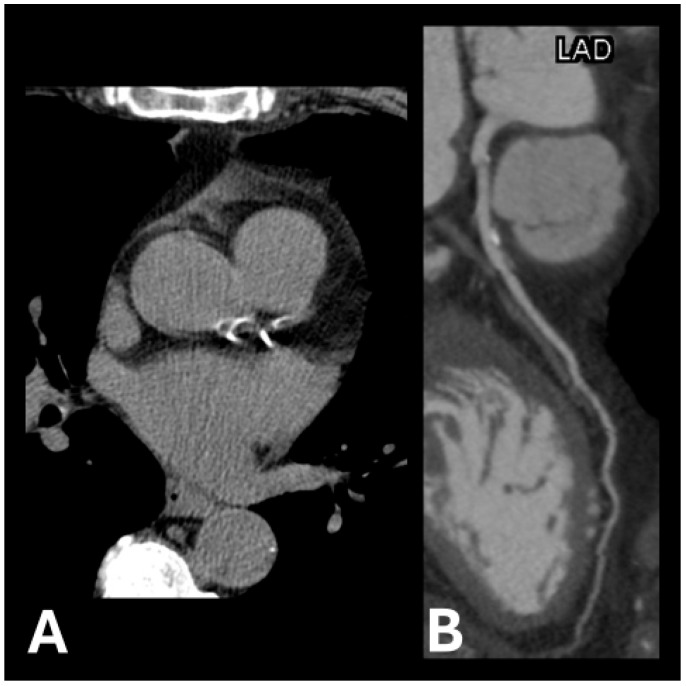
Coronary artery calcium. Many surgical patients already have a chest CT, from cancer staging, lung cancer screening, or trauma evaluation, on which coronary calcium is visible. The 2016 SCCT/STR guideline recommends that coronary calcium be reported on all noncontrast chest CT examinations, as an estimated Agatston score or a visual grade (Hecht 2017). The 2024 stepwise algorithm omits calcium scoring, although observational data show a graded relation to perioperative events. In 2,554 patients with a nongated chest CT within a year before intermediate- or high-risk surgery, perioperative death or infarction rose from 2.9% with no visible calcium to 12.6% with the heaviest burden, and adding the calcium estimate to the RCRI improved discrimination. In 4,491 patients having lung cancer surgery, any coronary calcium was associated with perioperative cardiovascular events (odds ratio 1.75). In liver transplant candidates, a calcium score above 400 predicted early complications, and a lower score had a very high negative predictive value for obstructive disease (Kyriakoulis 2025). Absent calcium on an existing scan supports proceeding without further testing. Heavy calcium identifies established atherosclerosis that warrants statin therapy and risk factor treatment, but it does not by itself justify stress testing or angiography before surgery. Incidental calcium on nongated CT is reported under the conventions in coronary calcium on nongated chest CT.
Invasive coronary angiography and prophylactic revascularization
Routine preoperative invasive coronary angiography is not recommended to improve perioperative outcomes (Class 3: No Benefit). Revascularization before noncardiac surgery is performed only when it would be indicated without the surgery: acute coronary syndrome, significant left main disease, or other anatomy and symptoms for which revascularization improves outcome under the chronic coronary disease indications.
The CARP trial screened 5,859 patients scheduled for vascular surgery at 18 Veterans Affairs centers and randomized 510 with significant coronary disease to revascularization (PCI in 59%, CABG in 41%) or none before surgery. Mortality at 2.7 years was 22% versus 23% (relative risk 0.98), and troponin-defined postoperative infarction occurred in 12% versus 14% (McFalls 2004). Revascularization delayed surgery (median 54 versus 18 days from randomization). Patients were excluded from randomization if angiography showed left main stenosis of 50% or more, or if they had a left ventricular ejection fraction below 20% or severe aortic stenosis. CARP therefore does not inform their management. In left main disease, revascularization follows the indications for chronic coronary disease, and severe aortic stenosis is managed along the pathway for valvular heart disease before surgery. Revascularization before surgery adds the procedural risk, the delay, and, with a stent, an antiplatelet obligation that conflicts with the operation. When revascularization is indicated and surgery is time-sensitive, CABG, balloon angioplasty, or a stent strategy compatible with a short dual antiplatelet course is chosen with the surgical timetable in view.
Noncardiac surgery after coronary stenting
After coronary stenting, the governing question is whether surgery requires interruption of antiplatelet therapy during the period of high stent thrombosis risk, which is greatest in the first month and higher after stenting for an acute coronary syndrome.
| Preceding procedure | Timing of elective or time-sensitive surgery that requires antiplatelet interruption (2024 ACC/AHA) |
|---|---|
| Balloon angioplasty without stent | Elective surgery delayed at least 14 days |
| Any stent within 30 days | Surgery requiring interruption of antiplatelet therapy is harmful (Class 3: Harm); if surgery cannot wait, dual antiplatelet therapy is continued |
| Drug-eluting stent for acute coronary syndrome | Elective surgery delayed at least 12 months when possible |
| Drug-eluting stent for chronic coronary disease | Delay of at least 6 months is reasonable (Class 2a) |
| Time-sensitive surgery after drug-eluting stent | May be considered from 3 months when the risk of delay exceeds the ischemic and stent thrombosis risk (Class 2b) |
| Surgery within 30 days of bare-metal stent or 3 months of drug-eluting stent that cannot be delayed | Dual antiplatelet therapy continued unless bleeding risk prohibits; intravenous antiplatelet bridging (cangrelor) in selected patients |
| Any prior PCI | Aspirin continued through surgery when bleeding risk allows; P2Y12 inhibitor restarted as soon as hemostasis permits |
Timing of noncardiac surgery after percutaneous coronary intervention (Thompson 2024; Cohn 2025). Agent-specific interruption and bridging: dual antiplatelet therapy before surgery.
When a P2Y12 inhibitor must be stopped, the interruption is the shortest the drug allows: clopidogrel 5 days, ticagrelor 3 to 5 days, and prasugrel 7 days before surgery (perioperative antiplatelet management). Aspirin is stopped only for operations in which a small bleed is catastrophic, such as intracranial, spinal canal, and posterior eye chamber surgery. The ESC allows time-sensitive surgery from 1 month after PCI for chronic coronary disease. Surgery after a recent stent is planned with the interventional cardiologist, and the record states the stent date, indication, and complexity; the antiplatelet plan; and the clinician responsible for restarting therapy.
Perioperative medication management
Most cardiovascular drugs are continued through surgery. The exceptions follow from specific trials and pharmacology.
| Drug class | 2024 ACC/AHA position | Evidence and details |
|---|---|---|
| Beta-blockers | Continued in patients taking them (Class 1); when a new long-term indication exists, starting is reasonable far enough ahead to assess tolerance, ideally more than 7 days before surgery (Class 2b); starting on the day of surgery is harmful (Class 3: Harm) | POISE: metoprolol succinate started 2 to 4 hours before surgery reduced MI (4.2% vs 5.7%) and increased death (3.1% vs 2.3%) and stroke (1.0% vs 0.5%) (POISE 2008); perioperative beta-blockade |
| Statins | Continued (Class 1); started in statin-naive patients who meet standard indications, for long-term use (Class 1) | No intravenous form; resumed promptly; perioperative statin therapy |
| ACE inhibitors, ARBs, ARNI | Continuation reasonable in HFrEF (Class 2a); omission 24 hours before elevated-risk surgery may limit hypotension in selected patients treated for hypertension with controlled pressure (Class 2b) | Stop-or-Not: no difference in death or major complications (22% in both groups); intraoperative hypotension 54% with continuation vs 41% with discontinuation (Legrand 2024); renin-angiotensin inhibitors around surgery |
| SGLT2 inhibitors | Discontinued 3 to 4 days before surgery to reduce perioperative ketoacidosis (Class 1): canagliflozin, dapagliflozin, and empagliflozin 3 days; ertugliflozin 4 days | Restarted when the patient is eating and drinking normally and is clinically stable; SGLT2 inhibitors before surgery |
| GLP-1 receptor agonists and tirzepatide | Aspiration risk assessed individually; continuation, liquid diet, or withholding by anesthesia protocol | Aspiration risk before procedures |
| Aspirin | Continued after PCI; not started to prevent perioperative events; primary-prevention aspirin can be stopped | POISE-2: no effect on death or MI (7.0% vs 7.1%); major bleeding 4.6% vs 3.8% (Devereaux 2014) |
| Alpha-2 agonists | Clonidine not started for perioperative risk reduction; chronic clonidine continued to avoid rebound hypertension | POISE-2: no reduction in death or MI; hypotension 47.6% vs 37.1%; nonfatal cardiac arrest 0.3% vs 0.1% (Devereaux 2014) |
| Calcium channel blockers, nitrates, ranolazine, other antihypertensives | Continued in most patients | Antianginal drugs around surgery |
| Diuretics | Commonly held on the morning of surgery in euvolemic patients; continued or given intravenously in congestion | Volume status and potassium checked before and after surgery |
| Antiarrhythmic drugs and digoxin | Continued; intravenous substitutes planned when oral intake is interrupted | Electrolytes and QT monitored |
| Oral anticoagulants | Interrupted by drug, kidney function, and bleeding risk; routine bridging is harmful (Class 3: Harm); bridging of warfarin can be effective at high thrombotic risk (Class 2a); resumption is reasonable once hemostasis is achieved (Class 2a) | Direct oral anticoagulant interruption and bridging |
Perioperative cardiovascular medication plan (Thompson 2024). ACE, angiotensin-converting enzyme; ARB, angiotensin receptor blocker; ARNI, angiotensin receptor-neprilysin inhibitor; HFrEF, heart failure with reduced ejection fraction; SGLT2, sodium-glucose cotransporter 2.
| Indication for anticoagulation | High thrombotic risk features in the 2024 ACC/AHA guideline |
|---|---|
| Venous thromboembolism | Recent venous thromboembolism (within 1 to 3 months); active cancer with high thrombotic risk; severe thrombophilia or antiphospholipid antibodies |
| Atrial fibrillation | CHA₂DS₂-VASc 7 or more, or 5 to 6 with recent stroke or TIA; atrial fibrillation with rheumatic valve disease |
| Mechanical valve | Mechanical mitral valve; caged-ball or tilting-disc valve; any mechanical valve with stroke or TIA within 3 months |
| Other | Cardioembolic stroke within 3 months; left ventricular thrombus within 3 months |
Conditions at high thrombotic risk in which heparin bridging of interrupted warfarin can be considered; most other patients interrupt anticoagulation without bridging (Thompson 2024). Mechanical valve bridging: prosthetic heart valves.
Heart failure and cardiomyopathy before surgery
Heart failure is an RCRI item and a major predictor of postoperative death and readmission. Decompensated heart failure is an active condition: elective surgery waits until the patient is euvolemic on optimized therapy. Symptomatic heart failure carries more risk than a low ejection fraction alone. A compensated patient with an ejection fraction of 25% and no recent hospitalization can tolerate surgery better than a patient with a preserved ejection fraction, severe pulmonary hypertension, and diuretic-resistant congestion. Natriuretic peptide level, recent hospitalization, functional class, right ventricular function, and severity of functional mitral regurgitation describe the reserve more accurately than ejection fraction.
Guideline-directed therapy is continued, with the SGLT2 inhibitor held for 3 to 4 days and the renin-angiotensin inhibitor dose reviewed for hypotension risk. Volume is managed with daily weights and examination after surgery, since fluid given during surgery mobilizes in the first postoperative days. Postoperative heart failure is treated as acute decompensated heart failure. Patients with cardiac amyloidosis have restrictive physiology, autonomic dysfunction, and conduction disease behind a normal ejection fraction and tolerate vasodilation, hypovolemia, and tachyarrhythmia poorly. Patients supported by a durable left ventricular assist device (LVAD) need planning with the implanting center for anticoagulation, Doppler blood pressure, right ventricular function, and device settings (noncardiac surgery during LVAD support).
Valvular heart disease before surgery
Aortic stenosis. Undiagnosed severe aortic stenosis carries a high rate of complications during noncardiac surgery, because anesthetic vasodilation, blood loss, and tachycardia lower preload and coronary perfusion in a hypertrophied ventricle. Patients who meet standard criteria for valve intervention have it before elective noncardiac surgery when possible (Class 1), with transcatheter replacement or balloon valvuloplasty as options when surgery cannot wait. Asymptomatic moderate or greater stenosis with normal ventricular function permits elective surgery (Class 2a) with anesthetic management that maintains sinus rhythm, a normal heart rate, preload, and systemic vascular resistance (noncardiac surgery in aortic stenosis). The ESC states that aortic valve replacement should be considered after heart team discussion in asymptomatic severe aortic stenosis before elective noncardiac surgery (Class 2a).
Mitral stenosis. Patients with severe rheumatic mitral stenosis tolerate tachycardia poorly, because a shorter diastole raises left atrial pressure, and loss of atrial contraction can cause pulmonary edema. Rate control, maintenance of sinus rhythm, and avoidance of volume overload govern management. Symptomatic severe stenosis that meets criteria for intervention is treated before elective high-risk surgery, by balloon commissurotomy when valve anatomy is favorable.
Regurgitant lesions. Chronic mitral and aortic regurgitation are tolerated better than stenosis because afterload reduction from anesthesia increases forward flow; bradycardia lengthens diastole and worsens aortic regurgitation. Severe regurgitation with symptoms, ventricular dilation, or reduced ejection fraction is evaluated for intervention before elective surgery, and asymptomatic severe regurgitation with preserved ventricular function generally permits surgery with monitoring (mitral regurgitation).
Prosthetic valves. Bioprosthetic valves require no change in therapy. Mechanical valves require an anticoagulation plan based on valve type and position; a contemporary bileaflet mechanical aortic valve without other risk factors is managed without bridging, while a mechanical mitral valve or older-generation valve is bridged.
Endocarditis prophylaxis. Antibiotic prophylaxis against endocarditis is reserved for patients at highest risk of an adverse outcome who undergo dental procedures involving manipulation of gingival tissue or the periapical region of teeth, or perforation of the oral mucosa. The highest-risk groups are patients with a prosthetic valve, including a transcatheter valve, or prosthetic material used for valve repair; prior endocarditis; or valve regurgitation from a structurally abnormal valve after cardiac transplantation. Congenital heart disease qualifies when it is unrepaired and cyanotic, repaired with prosthetic material within the past 6 months, or repaired with a residual shunt or regurgitation at or next to a prosthetic patch or device. In the 2020 ACC/AHA valve guideline (Otto 2021), prophylaxis in these patients is reasonable (Class 2a), and prophylaxis for gastrointestinal or genitourinary procedures without active infection is not recommended (Class 3: No Benefit). The 2021 AHA scientific statement retained the same highest-risk groups (Wilson 2021). The 2023 ESC guideline (Delgado 2023) adds ventricular assist devices implanted as destination therapy to the highest-risk groups. It allows prophylaxis to be considered before selected invasive respiratory, gastrointestinal, genitourinary, skin, or musculoskeletal procedures in highest-risk patients (Class 2b). Antibiotic regimens and the qualifying dental procedures are listed with the prophylaxis recommendations for infective endocarditis.
| Lesion | Hemodynamic goals during anesthesia | Conditions that cause decompensation |
|---|---|---|
| Severe aortic stenosis | Sinus rhythm, normal heart rate, preserved preload and systemic vascular resistance; vasopressor ready at induction | Vasodilation, hypovolemia, tachycardia, loss of atrial contraction |
| Severe mitral stenosis | Slow heart rate, sinus rhythm, cautious volume | Tachycardia, atrial fibrillation, volume overload, hypoxemia raising pulmonary pressure |
| Obstructive hypertrophic cardiomyopathy | Full preload, maintained afterload, slow heart rate, phenylephrine for hypotension | Hypovolemia, vasodilation, tachycardia, catecholamine inotropes |
| Severe aortic or mitral regurgitation | Normal to slightly high heart rate, afterload reduction, preserved preload | Bradycardia (aortic regurgitation), hypertension, myocardial depression |
| Severe pulmonary hypertension or right ventricular dysfunction | Maintained systemic pressure and right ventricular perfusion, oxygenation, normocapnia | Hypoxemia, hypercapnia, acidosis, high airway pressure, abrupt preload change, induction of anesthesia |
| Fontan circulation | Adequate preload, low pulmonary vascular resistance, spontaneous ventilation when feasible, sinus rhythm | Hypovolemia, positive-pressure ventilation, hypoxemia, tachyarrhythmia |
Lesion-specific hemodynamic goals and causes of decompensation during anesthesia.
Hypertrophic cardiomyopathy before noncardiac surgery
Hypertrophic cardiomyopathy (HCM) is a risk modifier because dynamic left ventricular outflow tract obstruction worsens with the common intraoperative stresses: hypovolemia from fasting and blood loss, vasodilation from induction agents and neuraxial blockade, tachycardia from pain or light anesthesia, and catecholamine inotropes given for hypotension. Treatment of hypotension with epinephrine or dobutamine can start a cycle in which the drug increases the gradient, systolic anterior motion, and mitral regurgitation and lowers output further.
The preoperative evaluation documents the resting and provoked gradient by recent echocardiography, ventricular function, mitral regurgitation, rhythm (atrial fibrillation is common and poorly tolerated), and device status. Beta-blockers and nondihydropyridine calcium channel blockers are continued; cardiac myosin inhibitors are reviewed with the treating HCM team because of their half-lives and drug interactions. Intraoperative management maintains preload, uses phenylephrine or another pure vasoconstrictor for hypotension, slows the heart rate, and avoids inotropes. Transesophageal echocardiography identifies systolic anterior motion as the cause of unexplained hypotension. An implanted defibrillator has tachytherapies suspended during electrocautery with continuous monitoring and external defibrillation available. Patients with nonobstructive disease and preserved function proceed with standard care, while patients with severe obstruction and symptoms are evaluated for septal reduction or medical intensification before elective high-risk surgery (anesthesia and noncardiac surgery in HCM).
Pulmonary hypertension and adult congenital heart disease
Pulmonary hypertension. Severe pulmonary hypertension and right ventricular dysfunction raise perioperative mortality, heart failure, and arrhythmia, with the highest risk at induction of anesthesia and the start of positive-pressure ventilation. Risk rises with right ventricular dysfunction, high right atrial pressure, low cardiac output, advanced functional class, emergency surgery, and high-risk procedures. Pulmonary arterial hypertension therapy is never interrupted, and elective surgery in patients with pulmonary arterial or chronic thromboembolic pulmonary hypertension is performed at a center with pulmonary hypertension expertise. Right heart catheterization is performed when the hemodynamic phenotype is uncertain and the result would change management (noncardiac surgery in pulmonary hypertension).
Adult congenital heart disease. Risk depends on the lesion and its physiology. Patients with a Fontan circulation have no subpulmonary ventricle, so pulmonary blood flow depends on low pulmonary vascular resistance and adequate preload; positive-pressure ventilation, hypovolemia, and tachyarrhythmia reduce output. Eisenmenger syndrome confers very high risk: a fall in systemic vascular resistance increases right-to-left shunting and hypoxemia, and elective procedures are avoided when possible. Cyanotic patients have erythrocytosis, bleeding tendency, and risk of paradoxical embolism through intravenous lines, which are fitted with air filters. The 2024 guideline directs patients with pulmonary hypertension or complex congenital heart disease to subspecialist evaluation before elective surgery, and elevated-risk operations in complex lesions are performed at centers with adult congenital heart disease and cardiac anesthesia expertise. Repaired simple lesions without residua carry little added risk.
Arrhythmias, conduction disease, and cardiac implantable devices
Atrial fibrillation with a controlled ventricular rate and a stable anticoagulation plan does not delay surgery; uncontrolled rate, symptomatic ventricular arrhythmia, and high-grade atrioventricular block are active conditions. Bifascicular block and first-degree atrioventricular block without symptoms rarely progress during surgery and do not require temporary pacing; symptomatic bradycardia, Mobitz II block, and third-degree block are evaluated for pacing before elective surgery under the indications in bradycardia and atrioventricular block. A long QT interval leads to avoidance of QT-prolonging antiemetics and correction of potassium and magnesium. Frequent premature ventricular complexes without structural disease do not change the plan; ventricular tachycardia leads to evaluation of the substrate.
Pacemakers and defibrillators require a plan for electromagnetic interference from monopolar electrosurgery: the device type, pacing dependence, programmed magnet response, distance of the surgical field from the generator, and the clinician who will reprogram and restore therapies. A magnet suspends defibrillator tachytherapies but does not produce asynchronous pacing in most defibrillators, so a pacing-dependent patient with a defibrillator needs reprogramming when interference is expected. The plan varies with device type and surgical site (perioperative device plan tool; preoperative evaluation of the device patient; perioperative pacemaker management).
Blood pressure, anemia, sleep apnea, and other modifiable conditions
Hypertension. Hypertension below 180/110 mm Hg is not a reason to delay surgery; deferral of elective major surgery may be considered when systolic pressure is 180 mm Hg or higher or diastolic pressure 110 mm Hg or higher (Thompson 2024; Cohn 2025). Most antihypertensive drugs are continued (perioperative hypertension; severe postoperative hypertension).
Anemia and transfusion. Preoperative anemia is associated with mortality, MINS, and transfusion. When time allows, its cause is identified and treated, including intravenous iron for iron deficiency before major surgery. In FOCUS, 2,016 patients aged 50 years or older with cardiovascular disease or risk factors who had hip fracture surgery were randomized to a liberal strategy (transfusion at hemoglobin below 10 g/dL) or a restrictive one (symptoms or hemoglobin below 8 g/dL). Death or inability to walk at 60 days was similar (35.2% versus 34.7%), and in-hospital acute coronary syndrome or death did not differ significantly (4.3% versus 5.2%) (Carson 2011). A restrictive threshold of about 8 g/dL is used in stable patients with cardiovascular disease, with transfusion for ischemic symptoms or active bleeding. Tranexamic acid reduces bleeding. In POISE-3, among 9,535 patients, the composite bleeding outcome occurred in 9.1% versus 11.7% with placebo (hazard ratio 0.76). The composite cardiovascular outcome was 14.2% versus 13.9%, and noninferiority was not established at the trial's margin (Devereaux 2022).
Obstructive sleep apnea and obesity. Untreated sleep apnea increases postoperative hypoxemia, atrial fibrillation, and respiratory events, particularly with opioids. Screening with a questionnaire such as STOP-Bang, continuation of positive airway pressure after surgery, opioid-sparing analgesia, and monitored beds for high-risk patients are standard. Severe obesity complicates airway management, echocardiographic windows, and stress test choice.
Diabetes, kidney disease, and smoking. Hyperglycemia increases infection and cardiovascular events; elective surgery is commonly deferred when diabetes is markedly uncontrolled. Chronic kidney disease raises MINS, heart failure, and bleeding risk and changes drug dosing and contrast decisions. The CCS recommends facilitating smoking cessation before surgery.
Anesthesia choice, intraoperative hemodynamics, and monitoring
Anesthetic technique. The choice between general, neuraxial, regional, and monitored anesthesia care belongs to the anesthesia team and depends on the operation, airway, anticoagulation (neuraxial techniques require antithrombotic interruption; neuraxial anesthesia and anticoagulants), and the cardiac lesion. No anesthetic technique has been shown to reduce perioperative MACE. Neuraxial anesthesia produces sympathectomy and vasodilation, which matters in fixed outflow obstruction and pulmonary hypertension, while general anesthesia adds the hemodynamic stress of induction, intubation, and positive-pressure ventilation.
Intraoperative hypotension. Hypotension is the most common modifiable intraoperative stress. In a systematic review, end-organ injury was associated with a mean arterial pressure below 80 mm Hg for 10 minutes or longer and below 70 mm Hg for shorter periods, and risk rose with longer exposure below 65 to 60 mm Hg and with any exposure below 55 to 50 mm Hg (Wesselink 2018). The 2024 guideline recommends maintaining an intraoperative mean arterial pressure of at least 60 to 65 mm Hg or systolic pressure of at least 90 mm Hg, and prompt treatment of postoperative hypotension below those levels. Associations do not establish that higher targets help. In the POISE-3 hypotension-avoidance trial of 7,490 patients taking antihypertensive drugs, a strategy that held drugs before surgery and targeted a mean arterial pressure of 80 mm Hg or more produced the same rate of major vascular complications as a strategy that continued drugs and targeted 60 mm Hg or more (13.9% versus 14.0%) (Marcucci 2023).
Monitoring. Continuous ECG, pulse oximetry, and blood pressure are standard. An arterial line is used for high-risk patients and lesions with narrow hemodynamic margins. Intraoperative transesophageal echocardiography is reasonable for unexplained, persistent hemodynamic instability and in selected high-risk patients (transesophageal echocardiography in noncardiac surgery and critical care). Routine pulmonary artery catheterization did not reduce mortality in a randomized trial of 1,994 high-risk surgical patients (in-hospital death 7.8% versus 7.7%) and was associated with more pulmonary embolism (Sandham 2003). It is reserved for selected patients with severe pulmonary hypertension, right ventricular failure, or shock in whom pressures will guide therapy. Normothermia, adequate analgesia, and avoidance of tachycardia continue into recovery, when most perioperative infarctions occur.
Myocardial injury after noncardiac surgery (MINS)
MINS is defined as an elevated postoperative troponin above the 99th percentile upper reference limit attributable to ischemia, within 30 days after surgery, with or without symptoms (Ruetzler 2021). It is an outcome construct for the perioperative setting that spans more than one mechanism. The Fifth Universal Definition of Myocardial Infarction (2026) keeps MINS separate from its infarction categories. Perioperative myocardial injury is an acute troponin rise above the sex-specific 99th percentile upper reference limit after surgery, and MINS is the subset judged most likely ischemic, without unexpected physiologic stress from surgery or a nonischemic cardiac cause. Procedure-related infarction in the Fifth Definition applies only to cardiac procedures, so an infarction after noncardiac surgery is classified as primary or secondary. Perioperative injury or MINS leads to an ECG and, when feasible, coronary or cardiac imaging to confirm or exclude primary or secondary infarction (Mills 2026). With high-sensitivity troponin T, the VISION criteria for MINS are a peak of 20 to less than 65 ng/L with an absolute change of 5 ng/L or more, or a peak of 65 ng/L or more, judged due to ischemia (VISION 2017). In 15,065 VISION patients, MINS on fourth-generation troponin T (0.03 ng/mL or higher) occurred in 8.0%. Of these patients, 58.2% would not have met the universal definition of myocardial infarction then in use and only 15.8% had an ischemic symptom; MINS was independently associated with 30-day death (adjusted hazard ratio 3.87) (Botto 2014). With high-sensitivity troponin T, peak values of 20 to less than 65, 65 to less than 1,000, and 1,000 ng/L or higher were associated with 30-day mortality of 3.0%, 9.1%, and 29.6%, and an absolute change of 5 ng/L or more carried an adjusted hazard ratio of 4.69 (VISION 2017).
Surveillance. The 2024 guideline states that in patients with known cardiovascular disease, symptoms of cardiovascular disease, or age 65 years or older with cardiovascular risk factors who undergo elevated-risk surgery, troponin measurement at 24 and 48 hours after surgery may be reasonable (Class 2b). Routine postoperative troponin screening after low-risk surgery without signs or symptoms of ischemia is not indicated (Class 3: No Benefit). Up to 40% of patients with cardiovascular disease or risk factors have a troponin above the upper reference limit before surgery, so a preoperative value is essential whenever postoperative troponin testing is planned. It separates chronic injury from perioperative injury (Mills 2026). The CCS recommends daily troponin for 48 to 72 hours after surgery in patients with an elevated preoperative natriuretic peptide or, when none was measured, an RCRI of 1 or more, age 45 to 64 years with significant cardiovascular disease, or age 65 years or older.
| Category | Criteria | Management |
|---|---|---|
| Primary myocardial infarction (type 1 in the Fourth Definition) | Acute injury with ischemic symptoms, new ischemic ECG changes, or new pathologic Q waves; confirmed by imaging that shows an acute coronary pathology (atherothrombosis, dissection, vasospasm, or embolism) or a new regional wall motion abnormality or loss of viable myocardium in an ischemic pattern | Acute coronary syndrome treatment, with antithrombotic intensity and invasive timing set against surgical bleeding risk |
| Secondary myocardial infarction (type 2 in the Fourth Definition) | Acute injury with ischemic symptoms, new ischemic ECG changes, or new pathologic Q waves during an acute condition causing supply-demand mismatch (tachycardia, hypotension, anemia, hypoxemia); likely with known coronary disease, and confirmed by obstructive coronary disease without an acute coronary pathology, or a new regional wall motion abnormality or loss of viable myocardium in an ischemic pattern | Correction of the cause; angiography only for persistent ischemia, instability, or high-risk features |
| MINS without ischemic features | Troponin above the sex-specific 99th percentile with a change from the preoperative value and no symptom, ECG, or imaging evidence of ischemia | Search for the cause; cardiovascular risk factor optimization; outpatient cardiology follow-up |
| Nonischemic acute injury | Pulmonary embolism, sepsis, myocarditis, takotsubo syndrome, cardioversion, acute heart failure | Treatment of the underlying condition |
| Chronic injury | Two or more values above the sex-specific 99th percentile in a stable setting, without a change from the preoperative value | No acute treatment; reflects structural heart or kidney disease |
Classification of postoperative troponin elevation under the Fifth Universal Definition of Myocardial Infarction (Mills 2026), which replaced types 1 to 5 of the Fourth Definition (Thygesen 2018), and the MINS construct (Botto 2014; Ruetzler 2021). Acute injury is a rise and/or fall of troponin with at least one value above the sex-specific 99th percentile upper reference limit. Procedure-related infarction in the Fifth Definition applies only after cardiac procedures. Primary versus secondary infarction outside surgery: non-ST-elevation acute coronary syndrome.
Evaluation. An elevated postoperative troponin leads to a repeat value to establish the trajectory, an ECG compared with the preoperative tracing, assessment for symptoms, and a search for hypotension, bleeding, anemia, hypoxemia, sepsis, tachyarrhythmia, heart failure, and pulmonary embolism. Echocardiography is obtained when new wall motion abnormality, heart failure, or a nonischemic cause would change management. ST-elevation infarction after surgery is managed with primary PCI when bleeding risk allows anticoagulation; recent major surgery is a contraindication to fibrinolysis in most patients.
Treatment. No therapy has been proven for all MINS. In MANAGE, 1,754 patients with MINS were randomized to dabigatran 110 mg twice daily or placebo. Dabigatran reduced the composite of vascular death, nonfatal infarction, nonhemorrhagic stroke, peripheral arterial thrombosis, amputation, and symptomatic venous thromboembolism (11% versus 15%; hazard ratio 0.72) without a significant increase in the composite of life-threatening, major, and critical-organ bleeding (3% versus 4%). Study drug discontinuation reached 46% (Devereaux 2018). The 2024 guideline states that antithrombotic therapy may be considered to reduce thromboembolic events after MINS (Class 2b), and that outpatient follow-up for cardiovascular risk optimization is reasonable (Class 2a). The cause is treated, statin therapy is started when indicated, aspirin is considered for patients with coronary disease and acceptable bleeding risk, and the patient is evaluated after discharge for coronary disease on standard indications. The CCS recommends long-term aspirin and statin therapy after MINS.
Postoperative atrial fibrillation after noncardiac surgery
New atrial fibrillation occurs more often after thoracic surgery, especially lung resection and esophagectomy, and in older patients and those with elevated preoperative natriuretic peptides. In 1,729,360 surgical hospitalizations in California, including cardiac surgery, 1.43% had new perioperative atrial fibrillation. At 1 year after noncardiac surgery, stroke occurred in 1.47% of patients with perioperative atrial fibrillation and 0.36% of those without, an adjusted hazard ratio of 2.0, an association stronger than after cardiac surgery (Gialdini 2014). A surgical trigger therefore does not make the rhythm benign.
Acute management. Treatment of triggers that contribute to rapid atrial fibrillation, such as sepsis, anemia, pain, hypovolemia, hypoxemia, electrolyte disturbance, and withdrawal of beta-blockers, is reasonable (Class 2a). Rate control with beta-blockers, or nondihydropyridine calcium channel blockers when ventricular function is preserved, is first line; amiodarone is used for rate or rhythm control in hypotension or reduced ejection fraction; synchronized cardioversion is used for instability (acute management of atrial fibrillation).
Anticoagulation and follow-up. In new-onset atrial fibrillation after noncardiac surgery, postoperative anticoagulation can be beneficial after weighing thromboembolic risk against surgical bleeding (Class 2a). Outpatient follow-up for thromboembolic risk stratification and rhythm surveillance is recommended (Class 1), because recurrence after discharge is common. The CHA₂DS₂-VASc score and bleeding risk are documented at discharge, and the discharge summary names who will reassess the rhythm and the anticoagulation decision. Prevention is not established. In COP-AF, perioperative colchicine in 3,209 patients having major thoracic surgery did not significantly reduce clinically important atrial fibrillation (6.4% versus 7.5%) or MINS and increased noninfectious diarrhea (Conen 2023). Incidence and prophylaxis differ after cardiac surgery (postoperative atrial fibrillation after cardiac surgery).
Perioperative stroke, venous thromboembolism, and cardiac arrest
Stroke. Perioperative ischemic stroke rose in US hospitalizations from 0.52% to 0.77% between 2004 and 2013 (Smilowitz 2017). Most perioperative strokes are embolic, from atrial fibrillation, aortic atheroma, or carotid disease, and some follow hypoperfusion. Risk factors are prior stroke (especially within 3 months), atrial fibrillation, carotid and vascular surgery, and interruption of anticoagulation. New neurologic deficits after surgery are treated as acute stroke; thrombectomy remains available after recent surgery, while intravenous thrombolysis is restricted after recent major surgery.
Venous thromboembolism. Surgery, immobility, cancer, and prior thrombosis raise risk, and pharmacologic or mechanical prophylaxis is prescribed according to procedure and patient risk. Postoperative dyspnea, tachycardia, hypoxemia, or troponin rise without a coronary explanation raises the question of pulmonary embolism, managed as in pulmonary embolism with anticoagulation timing agreed with the surgeon.
Perioperative cardiac arrest. Intraoperative arrest has distinct causes: anesthetic drug effects, hypovolemia and hemorrhage, hypoxemia, high spinal block, anaphylaxis, local anesthetic systemic toxicity, gas embolism, tension pneumothorax, and vagal reflexes, in addition to ischemia and arrhythmia. Because it is witnessed and monitored, treatment begins immediately. Resuscitation follows advanced life support with attention to the reversible causes specific to anesthesia.
Special surgical populations
Vascular surgery. Patients having vascular surgery have the highest prevalence of coronary disease and the highest observed MACE rates. They are also the population in which CARP and DECREASE-V showed no benefit from prophylactic revascularization. Statins and antiplatelet therapy are indicated for the vascular disease itself (peripheral artery disease), and endovascular options lower early cardiac risk.
Kidney and liver transplant candidates. Transplant candidates are evaluated for coronary disease differently because they wait months to years, undergo high-risk surgery at short notice, and receive an allocated organ. The 2022 AHA scientific statement found that routine screening and revascularization of asymptomatic candidates have not been shown to improve outcomes and favors a risk-guided approach with echocardiography, attention to symptoms, and testing directed by risk factors (Cheng 2022). In liver transplant candidates, echocardiography screens for portopulmonary hypertension and cirrhotic cardiomyopathy, and CCTA or calcium scoring is used at many centers to exclude obstructive disease. In kidney failure, ISCHEMIA-CKD showed no benefit of an initial invasive strategy in stable disease with moderate or severe ischemia (Bangalore 2020).
Cancer surgery. Cancer operations are usually time-sensitive, so the 3-month window governs testing and stent decisions. Prior anthracyclines, HER2-targeted therapy, immune checkpoint inhibitors, and mediastinal radiation can cause cardiomyopathy, valve disease, coronary disease, and constriction that warrant echocardiography and biomarkers before surgery (cardio-oncology risk assessment and surveillance). Cancer adds venous thromboembolism and bleeding risk.
Bariatric surgery and patients taking incretin therapy. Unrecognized heart failure with preserved ejection fraction, pulmonary hypertension, and sleep apnea are sought before bariatric surgery; GLP-1 receptor agonist therapy is planned around aspiration risk (aspiration risk before procedures).
Pregnancy. Noncardiac surgery during pregnancy follows obstetric and anesthetic principles with cardiac care integrated (heart disease in pregnancy).
Preoperative tests that do not change management
Low-value preoperative testing delays surgery, generates incidental findings, and leads to procedures that carry their own risk. Under the 2024 guideline, these tests and actions are not indicated.
- A resting ECG before a low-risk procedure in an asymptomatic patient (Class 3: No Benefit).
- Echocardiographic assessment of ventricular function in asymptomatic, clinically stable patients (Class 3: No Benefit), and repeat echocardiography within a year without clinical change.
- Stress testing or CCTA in patients at low risk, with adequate functional capacity and stable symptoms, or having low-risk procedures (Class 3: No Benefit).
- Routine preoperative invasive coronary angiography (Class 3: No Benefit).
- Routine postoperative troponin screening after low-risk surgery without signs or symptoms of ischemia (Class 3: No Benefit).
- Stress testing in a patient who would not undergo revascularization or any change in plan whatever the result.
- Delay of urgent surgery for cardiac testing, and delay of elective surgery for blood pressure below 180/110 mm Hg.
- Prophylactic revascularization of stable coronary disease to "prepare" a patient for surgery (CARP, DECREASE-V).
The consultation note and follow-up after discharge
The note is written for a team that will act overnight without the consultant present. It states the estimated risk and its basis (score, functional capacity, biomarkers), whether surgery can proceed, should be delayed, or needs a specific intervention first, and why. It lists the medications to continue, hold (with the date of the last dose), or start; the antiplatelet and anticoagulant plan with restart timing; lesion-specific hemodynamic goals and monitoring; device instructions; postoperative troponin and ECG surveillance when indicated; the most likely cardiovascular complication and its first-line treatment; and the name of the clinician responsible for follow-up.
Surgery reveals cardiovascular disease that existed before it. Patients with MINS, perioperative infarction, new atrial fibrillation, new heart failure, or a markedly elevated natriuretic peptide have higher risk of death and cardiovascular events for at least a year and are seen in cardiovascular follow-up after discharge, with evaluation for coronary disease, anticoagulation decisions, and prevention on standard indications.
How US, European, and Canadian guidance differ
| Topic | 2024 ACC/AHA (reaffirmed 2026) | 2022 ESC | 2017 CCS |
|---|---|---|---|
| Risk estimation | Validated tool (RCRI, NSQIP, AUB-HAS2); MACE <1% versus ≥1% | Surgical risk <1%, 1% to 5%, >5% combined with patient factors | RCRI |
| Preoperative biomarkers | BNP or NT-proBNP Class 2a; troponin Class 2b; at-risk patients before elevated-risk surgery | High-sensitivity troponin before and 24 and 48 hours after intermediate- or high-risk surgery (Class 1); BNP or NT-proBNP Class 2a | BNP or NT-proBNP strongly recommended for age ≥65, age 45 to 64 with significant cardiovascular disease, or RCRI ≥1 |
| Imaging and stress testing | Stress testing and CCTA Class 2b in selected patients; routine testing Class 3 | More liberal use of echocardiography and stress imaging | Against routine echocardiography, CCTA, exercise testing, CPET, and stress imaging for risk estimation |
| Surgery after drug-eluting stent | 12 months after acute coronary syndrome; ≥6 months after PCI for chronic disease; time-sensitive from 3 months | 6 months after elective PCI, 12 months after acute coronary syndrome; time-sensitive from 1 month | Not among its strong recommendations |
| Postoperative troponin | 24 and 48 hours in at-risk patients after elevated-risk surgery (Class 2b) | Part of the Class 1 high-sensitivity troponin strategy | Daily for 48 to 72 hours in at-risk patients |
| Renin-angiotensin inhibitors | Held 24 hours in selected hypertensive patients (Class 2b); continued in HFrEF (Class 2a) | — | Withheld starting 24 hours before surgery |
| Aspirin | Continued after PCI; not started for surgery | — | Against initiation or continuation for prevention, except recent stent or carotid endarterectomy |
| Beta-blockers and alpha-2 agonists | Chronic therapy continued; not started on the day of surgery | — | Against initiation within 24 hours before surgery |
Comparison of the governing perioperative guidelines (Thompson 2024; Halvorsen 2022; Duceppe 2017; Cohn 2025).
References
- Thompson A, Fleischmann KE, Smilowitz NR, et al. 2024 AHA/ACC/ACS/ASNC/HRS/SCA/SCCT/SCMR/SVM guideline for perioperative cardiovascular management for noncardiac surgery: a report of the American College of Cardiology/American Heart Association Joint Committee on Clinical Practice Guidelines. Circulation. 2024;150:e351–e442. doi:10.1161/CIR.0000000000001285
- Correction to: 2024 AHA/ACC/ACS/ASNC/HRS/SCA/SCCT/SCMR/SVM guideline for perioperative cardiovascular management for noncardiac surgery. Circulation. 2024;150:e466. doi:10.1161/CIR.0000000000001298
- Thompson A, Fleischmann KE, Smilowitz NR, et al. 2026 AHA/ACC/ACS/ASNC/HRS/SCA/SCCT/SCMR/SVM guideline for perioperative cardiovascular management for noncardiac surgery (reaffirmation of the 2024 guideline). Circulation. 2026;154:e413–e504. doi:10.1161/CIR.0000000000001472
- Halvorsen S, Mehilli J, Cassese S, et al. 2022 ESC guidelines on cardiovascular assessment and management of patients undergoing non-cardiac surgery. Eur Heart J. 2022;43:3826–3924 (correction: Eur Heart J. 2023;44:4421). doi:10.1093/eurheartj/ehac270
- Duceppe E, Parlow J, MacDonald P, et al. Canadian Cardiovascular Society guidelines on perioperative cardiac risk assessment and management for patients who undergo noncardiac surgery. Can J Cardiol. 2017;33:17–32 (erratum: Can J Cardiol. 2017;33:1735). doi:10.1016/j.cjca.2016.09.008
- Cohn SL. 2024 ACC/AHA guideline on perioperative cardiovascular management before noncardiac surgery: what's new? Cleve Clin J Med. 2025;92:213–219. doi:10.3949/ccjm.92a.24125
- Lee TH, Marcantonio ER, Mangione CM, et al. Derivation and prospective validation of a simple index for prediction of cardiac risk of major noncardiac surgery. Circulation. 1999;100:1043–1049. doi:10.1161/01.cir.100.10.1043
- Gupta PK, Gupta H, Sundaram A, et al. Development and validation of a risk calculator for prediction of cardiac risk after surgery. Circulation. 2011;124:381–387. doi:10.1161/CIRCULATIONAHA.110.015701
- Bilimoria KY, Liu Y, Paruch JL, et al. Development and evaluation of the universal ACS NSQIP surgical risk calculator: a decision aid and informed consent tool for patients and surgeons. J Am Coll Surg. 2013;217:833–842. doi:10.1016/j.jamcollsurg.2013.07.385
- Dakik HA, Chehab O, Eldirani M, et al. A new index for pre-operative cardiovascular evaluation. J Am Coll Cardiol. 2019;73:3067–3078. doi:10.1016/j.jacc.2019.04.023
- Hlatky MA, Boineau RE, Higginbotham MB, et al. A brief self-administered questionnaire to determine functional capacity (the Duke Activity Status Index). Am J Cardiol. 1989;64:651–654. doi:10.1016/0002-9149(89)90496-7
- Wijeysundera DN, Pearse RM, Shulman MA, et al. Assessment of functional capacity before major non-cardiac surgery: an international, prospective cohort study (METS). Lancet. 2018;391:2631–2640. doi:10.1016/S0140-6736(18)31131-0
- Duceppe E, Patel A, Chan MTV, et al. Preoperative N-terminal pro-B-type natriuretic peptide and cardiovascular events after noncardiac surgery: a cohort study. Ann Intern Med. 2020;172:96–104. doi:10.7326/M19-2501
- Rodseth RN, Biccard BM, Le Manach Y, et al. The prognostic value of pre-operative and post-operative B-type natriuretic peptides in patients undergoing noncardiac surgery: B-type natriuretic peptide and N-terminal fragment of pro-B-type natriuretic peptide: a systematic review and individual patient data meta-analysis. J Am Coll Cardiol. 2014;63:170–180. doi:10.1016/j.jacc.2013.08.1630
- Smilowitz NR, Gupta N, Ramakrishna H, et al. Perioperative major adverse cardiovascular and cerebrovascular events associated with noncardiac surgery. JAMA Cardiol. 2017;2:181–187. doi:10.1001/jamacardio.2016.4792
- Writing Committee for the VISION Study Investigators; Devereaux PJ, Biccard BM, Sigamani A, et al. Association of postoperative high-sensitivity troponin levels with myocardial injury and 30-day mortality among patients undergoing noncardiac surgery. JAMA. 2017;317:1642–1651. doi:10.1001/jama.2017.4360
- Botto F, Alonso-Coello P, Chan MT, et al. Myocardial injury after noncardiac surgery: a large, international, prospective cohort study establishing diagnostic criteria, characteristics, predictors, and 30-day outcomes. Anesthesiology. 2014;120:564–578. doi:10.1097/ALN.0000000000000113
- Thygesen K, Alpert JS, Jaffe AS, et al. Fourth universal definition of myocardial infarction (2018). Circulation. 2018;138:e618–e651. doi:10.1161/CIR.0000000000000617
- Livhits M, Ko CY, Leonardi MJ, et al. Risk of surgery following recent myocardial infarction. Ann Surg. 2011;253:857–864. doi:10.1097/SLA.0b013e3182125196
- Glance LG, Joynt Maddox KE, Thomas S, et al. Time since prior NSTEMI and major adverse cardiovascular and cerebrovascular events after noncardiac surgery. JAMA Surg. 2025;160:45–54. doi:10.1001/jamasurg.2024.4683
- Jørgensen ME, Torp-Pedersen C, Gislason GH, et al. Time elapsed after ischemic stroke and risk of adverse cardiovascular events and mortality following elective noncardiac surgery. JAMA. 2014;312:269–277. doi:10.1001/jama.2014.8165
- Etchells E, Meade M, Tomlinson G, Cook D. Semiquantitative dipyridamole myocardial stress perfusion imaging for cardiac risk assessment before noncardiac vascular surgery: a meta-analysis. J Vasc Surg. 2002;36:534–540. doi:10.1067/mva.2002.126563
- Sheth T, Chan M, Butler C, et al. Prognostic capabilities of coronary computed tomographic angiography before non-cardiac surgery: prospective cohort study. BMJ. 2015;350:h1907. doi:10.1136/bmj.h1907
- Kyriakoulis I, Kumar SS, Lianos GD, et al. Coronary computed angiography and coronary artery calcium score for preoperative cardiovascular risk stratification in patients undergoing noncardiac surgery. J Cardiovasc Dev Dis. 2025;12:159. doi:10.3390/jcdd12040159
- Hecht HS, Cronin P, Blaha MJ, et al. 2016 SCCT/STR guidelines for coronary artery calcium scoring of noncontrast noncardiac chest CT scans. J Cardiovasc Comput Tomogr. 2017;11:74–84. doi:10.1016/j.jcct.2016.11.003
- McFalls EO, Ward HB, Moritz TE, et al. Coronary-artery revascularization before elective major vascular surgery. N Engl J Med. 2004;351:2795–2804. doi:10.1056/NEJMoa041905
- Poldermans D, Schouten O, Vidakovic R, et al. A clinical randomized trial to evaluate the safety of a noninvasive approach in high-risk patients undergoing major vascular surgery: the DECREASE-V pilot study. J Am Coll Cardiol. 2007;49:1763–1769. doi:10.1016/j.jacc.2006.11.052
- Bangalore S, Maron DJ, O'Brien SM, et al. Management of coronary disease in patients with advanced kidney disease (ISCHEMIA-CKD). N Engl J Med. 2020;382:1608–1618. doi:10.1056/NEJMoa1915925
- POISE Study Group; Devereaux PJ, Yang H, Yusuf S, et al. Effects of extended-release metoprolol succinate in patients undergoing non-cardiac surgery (POISE trial): a randomised controlled trial. Lancet. 2008;371:1839–1847. doi:10.1016/S0140-6736(08)60601-7
- Devereaux PJ, Mrkobrada M, Sessler DI, et al. Aspirin in patients undergoing noncardiac surgery (POISE-2). N Engl J Med. 2014;370:1494–1503. doi:10.1056/NEJMoa1401105
- Devereaux PJ, Sessler DI, Leslie K, et al. Clonidine in patients undergoing noncardiac surgery (POISE-2). N Engl J Med. 2014;370:1504–1513. doi:10.1056/NEJMoa1401106
- Legrand M, Falcone J, Cholley B, et al. Continuation vs discontinuation of renin-angiotensin system inhibitors before major noncardiac surgery: the Stop-or-Not randomized clinical trial. JAMA. 2024;332:970–978. doi:10.1001/jama.2024.17123
- Devereaux PJ, Marcucci M, Painter TW, et al. Tranexamic acid in patients undergoing noncardiac surgery (POISE-3). N Engl J Med. 2022;386:1986–1997. doi:10.1056/NEJMoa2201171
- Marcucci M, Painter TW, Conen D, et al. Hypotension-avoidance versus hypertension-avoidance strategies in noncardiac surgery: an international randomized controlled trial. Ann Intern Med. 2023;176:605–614. doi:10.7326/M22-3157
- Wesselink EM, Kappen TH, Torn HM, et al. Intraoperative hypotension and the risk of postoperative adverse outcomes: a systematic review. Br J Anaesth. 2018;121:706–721. doi:10.1016/j.bja.2018.04.036
- Sandham JD, Hull RD, Brant RF, et al. A randomized, controlled trial of the use of pulmonary-artery catheters in high-risk surgical patients. N Engl J Med. 2003;348:5–14. doi:10.1056/NEJMoa021108
- Devereaux PJ, Duceppe E, Guyatt G, et al. Dabigatran in patients with myocardial injury after non-cardiac surgery (MANAGE): an international, randomised, placebo-controlled trial. Lancet. 2018;391:2325–2334. doi:10.1016/S0140-6736(18)30832-8
- Gialdini G, Nearing K, Bhave PD, et al. Perioperative atrial fibrillation and the long-term risk of ischemic stroke. JAMA. 2014;312:616–622. doi:10.1001/jama.2014.9143
- Conen D, Ke Wang M, Popova E, et al. Effect of colchicine on perioperative atrial fibrillation and myocardial injury after non-cardiac surgery in patients undergoing major thoracic surgery (COP-AF): an international randomised trial. Lancet. 2023;402:1627–1635. doi:10.1016/S0140-6736(23)01689-6
- Carson JL, Terrin ML, Noveck H, et al. Liberal or restrictive transfusion in high-risk patients after hip surgery (FOCUS). N Engl J Med. 2011;365:2453–2462. doi:10.1056/NEJMoa1012452
- Cheng XS, VanWagner LB, Costa SP, et al. Emerging evidence on coronary heart disease screening in kidney and liver transplantation candidates: a scientific statement from the American Heart Association. Circulation. 2022;146:e299–e324. doi:10.1161/CIR.0000000000001104
- Mills NL, Newby LK, Zaman S, et al. Fifth universal definition of myocardial infarction (2026). J Am Coll Cardiol. 2026;88:1314–1368. doi:10.1016/j.jacc.2026.07.025
- Ruetzler K, Smilowitz NR, Berger JS, et al. Diagnosis and management of patients with myocardial injury after noncardiac surgery: a scientific statement from the American Heart Association. Circulation. 2021;144:e287–e305. doi:10.1161/CIR.0000000000001024
- Otto CM, Nishimura RA, Bonow RO, et al. 2020 ACC/AHA guideline for the management of patients with valvular heart disease: a report of the American College of Cardiology/American Heart Association Joint Committee on Clinical Practice Guidelines. Circulation. 2021;143:e72–e227. doi:10.1161/CIR.0000000000000923
- Wilson WR, Gewitz M, Lockhart PB, et al. Prevention of viridans group streptococcal infective endocarditis: a scientific statement from the American Heart Association. Circulation. 2021;143:e963–e978. doi:10.1161/CIR.0000000000000969
- Delgado V, Ajmone Marsan N, de Waha S, et al. 2023 ESC guidelines for the management of endocarditis. Eur Heart J. 2023;44:3948–4042. doi:10.1093/eurheartj/ehad193