Library › Prevention › Nutrition and physical activity
Nutrition and physical activity for cardiovascular health
Dietary patterns, nutrients, foods, supplements, and nutrition counseling, followed by physical activity guidelines, dose, intensity, safety, and exercise prescription for adults with and without cardiovascular disease.
A heart-healthy dietary pattern and regular physical activity are Class 1 recommendations in US guidelines for primary prevention and for chronic coronary disease. The pattern emphasizes vegetables, fruits, legumes, nuts, whole grains, and fish, replaces saturated fat with unsaturated fat, and limits sodium, processed meat, refined carbohydrate, added sugar, and sweetened beverages. The Mediterranean pattern has the strongest outcome evidence (PREDIMED, Lyon, CORDIOPREV), and the Dietary Approaches to Stop Hypertension (DASH) pattern has the strongest blood pressure evidence. Adults are advised to accumulate 150 to 300 minutes per week of moderate or 75 to 150 minutes of vigorous aerobic activity, with muscle strengthening on 2 or more days. The largest gain in survival comes from moving an inactive person to any regular activity.
Diet and physical inactivity as causes of cardiovascular death
Suboptimal diet is the leading modifiable cause of death worldwide. The Global Burden of Disease study attributed 11 million deaths and 255 million disability-adjusted life-years in 2017 to dietary risks, most of them cardiovascular. The three leading dietary risks were high sodium intake (3 million deaths), low intake of whole grains (3 million), and low intake of fruit (2 million) (GBD 2017 Diet Collaborators 2019). The burden came more from foods that were missing from the diet than from foods in excess, which has shaped modern guidance toward adding vegetables, fruit, legumes, nuts, and whole grains as much as removing salt, sugar, and processed meat.
Physical inactivity carries a similar population burden. About 80% of US adults and adolescents are insufficiently active (Piercy 2018). Inactivity, poor diet, and excess weight cluster in the same people and share pathways (blood pressure, atherogenic lipoproteins, insulin resistance, inflammation, and thrombosis), so the two behaviors are assessed and treated together. Diet and physical activity are two of the eight components of the American Heart Association (AHA) Life's Essential 8 construct of cardiovascular health (Lloyd-Jones 2022). Diet is scored with the Mediterranean Eating Pattern for Americans (MEPA) screener and activity with weekly minutes of moderate or vigorous activity (Life's Essential 8 scoring). Diet, activity, and sleep do not enter the PREVENT equations, so the cardiovascular health score adds behavioral targets that a risk estimate does not show.
Dietary patterns in place of single nutrients
Nutrition science moved from single nutrients to whole dietary patterns for three reasons. Foods contain many nutrients that act together, so isolating one (fat, cholesterol, or a vitamin) misses the effect of the food. Replacing a nutrient always means adding something else, and the replacement decides the effect: saturated fat replaced by polyunsaturated fat lowers coronary risk, whereas saturated fat replaced by refined starch and sugar does not. Finally, single-nutrient supplement trials (beta-carotene, vitamin E, folic acid, vitamin D, and over-the-counter omega-3 fatty acids) have been neutral or harmful, while pattern trials have reduced events. The 2021 AHA dietary guidance therefore describes features of a pattern that apply across cultures, budgets, and settings (Lichtenstein 2021).
| Feature of a heart-healthy dietary pattern | What it means in practice |
|---|---|
| 1. Energy intake matched to expenditure | Intake and physical activity adjusted to reach and keep a healthy body weight; portion awareness |
| 2. Plenty and a variety of fruits and vegetables | Deeply colored vegetables and fruits, whole forms preferred to juice |
| 3. Whole grains in place of refined grains | At least half of grains whole; whole-grain bread, brown rice, oats, barley |
| 4. Healthy sources of protein | Mostly plant protein (legumes, nuts); fish and seafood regularly; low-fat or fat-free dairy in place of full-fat; lean meat and poultry if desired; processed meat limited |
| 5. Liquid plant oils in place of tropical oils and animal fats | Olive, canola, soybean, corn, sunflower, and similar oils in place of butter, lard, tallow, coconut and palm oil, and partially hydrogenated fats |
| 6. Minimally processed foods in place of ultra-processed foods | Foods recognizable as their source; fewer packaged snacks, sweets, and ready meals |
| 7. Minimal added sugars | Beverages and foods with added sugars minimized |
| 8. Little or no salt | Foods prepared with little or no salt; low-sodium choices in packaged and restaurant foods |
| 9. Alcohol limited | Those who do not drink are not advised to start; those who drink limit intake |
| 10. Guidance applies wherever food is prepared or consumed | Home, restaurant, workplace, and institutional food; structural barriers addressed |
The ten features of the 2021 AHA scientific statement on dietary guidance to improve cardiovascular health (Lichtenstein 2021). The statement also lists the structural challenges to adherence: targeted marketing of unhealthy foods, neighborhood food environments, food and nutrition insecurity, and structural racism.
The 2026 American College of Cardiology (ACC) scientific statement on nutrition for the prevention and management of cardiovascular disease takes the same position. Overall diet quality is the target: minimally processed plant foods with healthy fats and proteins; water and other unsweetened drinks as the main beverages; and limits on refined starches, added sugars, sodium, unhealthy fats, and highly processed foods of poor nutritional quality. Alcohol is generally limited or avoided. The statement directs attention to the availability, affordability, accessibility, and use of nutritious food, and it calls for combining dietary counseling, medical nutrition therapy, food-is-medicine programs, and policy. It adds that a nutrient-rich diet is necessary during weight loss with glucagon-like peptide-1 (GLP-1) receptor agonists (Hu 2026).
US and European dietary recommendations for cardiovascular prevention
The major guidelines agree on the pattern and differ in detail. The 2019 ACC/AHA primary prevention guideline recommends a diet emphasizing vegetables, fruits, legumes, nuts, whole grains, and fish (Class 1). Replacing saturated fat with monounsaturated and polyunsaturated fat, reducing dietary cholesterol and sodium, and minimizing processed meat, refined carbohydrate, and sweetened beverages can be beneficial (Class 2a). Trans fat is avoided (Class 3: Harm) (Arnett 2019). The 2023 chronic coronary disease guideline repeats the pattern as Class 1 and adds saturated fat below 6% of calories and sodium below 2,300 mg/day as Class 2a (lifestyle in chronic coronary disease) (Virani 2023). The 2026 dyslipidemia guideline makes a heart-healthy dietary pattern a Class 1 recommendation for all adults and recommends against dietary supplements to lower low-density lipoprotein cholesterol (LDL-C) or triglycerides (diet in LDL lowering) (Blumenthal 2026). The 2025 hypertension guideline recommends a DASH-type pattern, sodium below 2,300 mg/day moving toward an ideal below 1,500 mg/day, and potassium preferably from food (lifestyle treatment of hypertension) (Jones 2025).
| Element | 2019 ACC/AHA primary prevention and 2023 chronic coronary disease | 2021 AHA dietary guidance and 2026 ACC statement | Dietary Guidelines for Americans, 2025–2030 | 2021 ESC prevention |
|---|---|---|---|---|
| Overall pattern | Vegetables, fruits, legumes, nuts, whole grains, fish (Class 1) | Pattern-based; minimally processed plant foods, healthy fats and proteins | Whole, nutrient-dense foods; protein at all meals; limit highly processed foods | Mediterranean or similar pattern; more plant, less animal food |
| Saturated fat | Replace with unsaturated fat (2a); below 6% of calories in chronic coronary disease (2a) | Liquid plant oils in place of tropical oils and animal fats | No more than 10% of calories; butter or beef tallow listed as options, olive oil prioritized | Below 10% of energy, replaced by unsaturated fat |
| Dairy | Not specified beyond the pattern | Low-fat or fat-free | Three servings a day, full-fat with no added sugars | Not a separate target |
| Sodium | Reduce (2a); below 2,300 mg/day in chronic coronary disease (2a) | Little or no salt | Below 2,300 mg/day from age 14 | Salt below 5 g/day (about 2 g of sodium) |
| Added sugars | Minimize sweetened beverages (2a) | Minimize; water and unsweetened drinks preferred | None recommended; no more than 10 g per meal | Limit free sugars and sugar-sweetened beverages |
| Protein | Plant protein and fish emphasized | Mostly plant; fish regularly; processed meat limited | 1.2 to 1.6 g/kg per day from animal and plant sources | Less red and processed meat; fish weekly |
| Alcohol | Not recommended for cardiovascular protection (Class 3: No Benefit in chronic coronary disease) | Do not start; limit or avoid | Consume less; specific groups avoid entirely | Limit to 100 g of pure alcohol a week |
Comparison of dietary recommendations. Classes are from the 2019 ACC/AHA primary prevention guideline (Arnett 2019) and the 2023 chronic coronary disease guideline (Virani 2023); the remaining columns are from the 2021 AHA statement (Lichtenstein 2021), the 2026 ACC statement (Hu 2026), the Dietary Guidelines for Americans, 2025–2030 (USDA and HHS 2026), and the 2021 European Society of Cardiology (ESC) prevention guideline (Visseren 2021).
The Dietary Guidelines for Americans, 2025–2030, released in January 2026, depart from cardiology guidance in two places. They list full-fat dairy, butter, and beef tallow among acceptable fat sources while keeping saturated fat below 10% of calories, and they raise the protein target to 1.2 to 1.6 g/kg per day. They also state that no amount of added sugar or non-nutritive sweetener is part of a healthy diet, cap added sugar at 10 g per meal, and name highly processed foods as a category to limit (USDA and HHS 2026). For patients with atherosclerotic disease or elevated LDL-C, the cardiology guidelines' lower saturated fat target and preference for unsaturated plant oils and low-fat dairy are the basis of advice. Saturated fat raises LDL-C, and its replacement by polyunsaturated fat reduces events (Sacks 2017).
The Mediterranean diet: components and outcome trials
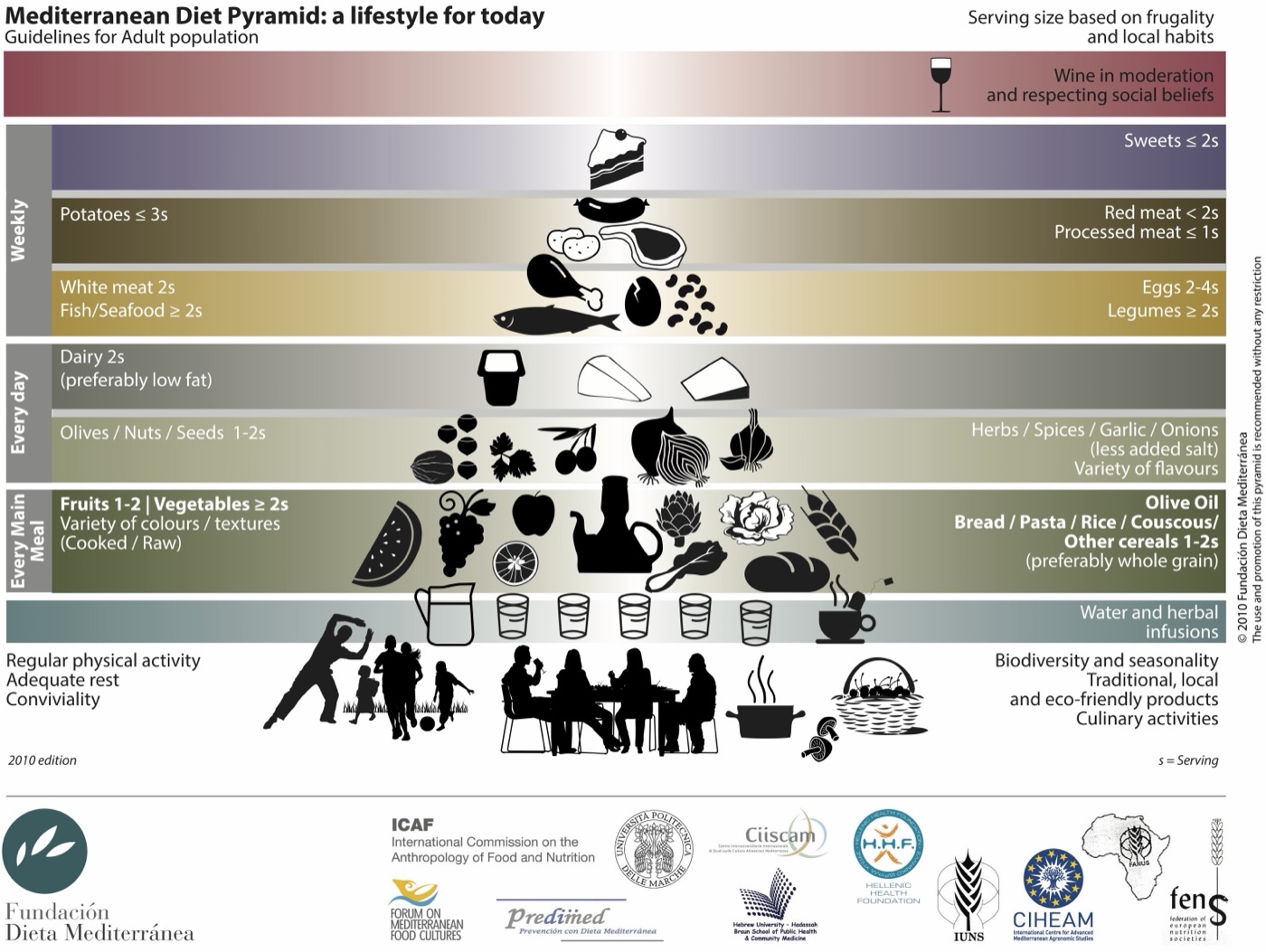
The traditional Mediterranean diet, described from the dietary habits of Crete, southern Italy, and Greece in the mid-twentieth century, is based on vegetables, fruits, legumes, whole grains, nuts, and seeds, with extra-virgin olive oil as the main added fat. Fish and seafood are eaten at least twice a week; poultry, eggs, cheese, and yogurt in moderate amounts; and red and processed meat and sweets rarely. Herbs, spices, garlic, and onion replace much of the salt. Wine with meals is part of the traditional description, but neither US nor European guidance recommends starting alcohol for cardiovascular benefit. The pattern is high in monounsaturated fat, fiber, polyphenols, and plant protein, and low in saturated fat, refined starch, and added sugar.

PREDIMED: primary prevention, retraction, and republication
PREDIMED (Prevención con Dieta Mediterránea) enrolled 7,447 adults aged 55 to 80 years (57% women) at high cardiovascular risk without cardiovascular disease, at 11 sites in Spain. Participants were assigned to a Mediterranean diet supplemented with extra-virgin olive oil (about 1 L per week supplied free to the household), a Mediterranean diet supplemented with mixed nuts (30 g per day: walnuts, hazelnuts, and almonds), or a control diet with advice to reduce dietary fat. Diets were not calorie-restricted, and physical activity was not promoted. Dietitians delivered quarterly individual and group sessions. The primary end point was myocardial infarction, stroke, or cardiovascular death. The trial was stopped after a median of 4.8 years on the basis of a prespecified interim analysis.
The original report appeared in 2013. An independent statistical analysis of baseline characteristics across published randomized trials then suggested that PREDIMED's baseline variables were more similar or more different than chance allocation would produce. The investigators identified protocol deviations: household members of participants had been enrolled and assigned to the same group without randomization; at one of the 11 sites, whole clinics had been assigned to the same group; and another site had used randomization tables inconsistently. In June 2018 the 2013 article was retracted and a reanalysis was published. The reanalysis adjusted for baseline characteristics and propensity scores and repeated the analysis after removing the 1,588 participants whose assignment was known or suspected to have departed from the protocol (Estruch 2018).
The primary end point occurred in 96 participants in the olive oil group (3.8%), 83 in the nut group (3.4%), and 109 in the control group (4.4%). The hazard ratio (HR) was 0.69 (95% confidence interval [CI], 0.53 to 0.91) for the olive oil diet and 0.72 (0.54 to 0.95) for the nut diet, results similar to the original report and unchanged after excluding participants with protocol deviations. Stroke accounted for most of the difference; myocardial infarction and cardiovascular death were not significantly reduced individually. Because a subset of the population was not randomized, the republished paper describes the results as estimates that do not rely solely on randomization, and guideline writers cite it as supportive evidence that falls short of definitive. The control group received less intensive dietary instruction during the early years of the trial and did not reduce fat intake much, so PREDIMED compares a Mediterranean diet with a typical Spanish diet more than with a true low-fat diet. The 2018 reanalysis is the version cited as reducing major cardiovascular events by about 30% (diet in LDL lowering).
Lyon Diet Heart Study and CORDIOPREV: secondary prevention
The Lyon Diet Heart Study randomized 605 patients after a first myocardial infarction to a Mediterranean-type diet enriched in alpha-linolenic acid (supplied as a canola-oil-based margarine) or to a prudent Western-type diet. The intermediate analysis at 27 months showed a protective effect large enough to stop the trial. At a mean follow-up of 46 months, cardiac death and nonfatal myocardial infarction occurred in 14 patients in the Mediterranean group and 44 in the control group (P = 0.0001), and adjusted risk ratios for the three composite outcomes ranged from 0.28 to 0.53. Total cholesterol, systolic pressure, and leukocyte count still predicted recurrence in both groups (de Lorgeril 1999). The trial was small, open, and single-country, and the control diet was not well characterized; its effect size has not been reproduced. Its main legacy is that a dietary pattern changed hard outcomes after infarction at a time when lipid levels did not differ much between the groups.
CORDIOPREV, a single-center trial in Córdoba, Spain, compared a Mediterranean diet rich in extra-virgin olive oil with a low-fat diet rich in complex carbohydrates in 1,002 patients aged 20 to 75 years with established coronary heart disease (82.5% men). Dietitians delivered the interventions for 7 years. The primary composite of myocardial infarction, revascularization, ischemic stroke, peripheral artery disease, and cardiovascular death occurred in 87 patients in the Mediterranean group and 111 in the low-fat group (28.1 vs 37.7 per 1,000 person-years). Multivariable-adjusted HRs ranged from 0.719 (0.541 to 0.957) to 0.753 (0.568 to 0.998). The benefit was confined to men (67 of 414 vs 94 of 413 events; HR 0.669), and no difference was found in the 175 women (Delgado-Lista 2022). CORDIOPREV was the first long-term trial against an active low-fat comparator in secondary prevention. Its limits are the single center, the open design for participants, and the small number of women.
| Trial | Population | Intervention and comparator | Principal result |
|---|---|---|---|
| Lyon Diet Heart Study (final report 1999) | 605 patients after first myocardial infarction | Mediterranean diet enriched in alpha-linolenic acid vs prudent Western diet | Cardiac death or nonfatal MI 14 vs 44 events at 46 months; adjusted risk ratios 0.28 to 0.53 |
| PREDIMED (republished 2018) | 7,447 adults at high risk without CVD | Mediterranean diet with olive oil or nuts vs advice to reduce fat | MI, stroke, or CV death: HR 0.69 (olive oil) and 0.72 (nuts); mainly stroke |
| CORDIOPREV (2022) | 1,002 patients with coronary heart disease | Mediterranean diet vs low-fat diet for 7 years | Major cardiovascular events: adjusted HR 0.72 to 0.75; benefit in men |
| DASH (1997) | 459 adults, systolic <160 and diastolic 80–95 mm Hg | Controlled feeding: combination diet vs fruit and vegetable diet vs control, 8 weeks | Blood pressure −5.5/−3.0 mm Hg overall; −11.4/−5.5 mm Hg in hypertension |
| DASH-Sodium (2001) | 412 adults | DASH or control diet at 3 sodium levels, 30 days per level | DASH with low sodium vs control with high sodium: systolic −7.1 mm Hg without and −11.5 mm Hg with hypertension |
| OmniHeart (2005) | 164 adults with prehypertension or stage 1 hypertension | Crossover: carbohydrate-rich vs protein-rich vs unsaturated-fat-rich DASH-type diets | Protein and unsaturated fat versions lowered systolic pressure a further 1.3 to 1.4 mm Hg (2.9 to 3.5 in hypertension) |
| Portfolio diet (2003) | 46 adults with hyperlipidemia | Plant sterols, soy protein, viscous fiber, and almonds vs low-saturated-fat diet with or without lovastatin 20 mg, 1 month | LDL-C −28.6% (portfolio), −30.9% (lovastatin), −8.0% (control) |
| Lifestyle Heart Trial (5-year report 1998) | 48 patients with coronary disease | 10% fat whole-food vegetarian diet, exercise, stress management, group support vs usual care | Diameter stenosis −3.1 vs +11.8 percentage points; 25 vs 45 cardiac events |
| WHI Dietary Modification Trial (2006) | 48,835 postmenopausal women | Low-fat diet with more fruit, vegetables, and grains vs comparison, 8.1 years | Coronary heart disease HR 0.97 (0.90 to 1.06); stroke and total CVD unchanged |
| Look AHEAD (2013) | 5,145 adults with type 2 diabetes and overweight or obesity | Intensive lifestyle intervention for weight loss vs diabetes support and education | Stopped for futility at 9.6 years; HR 0.95 (0.83 to 1.09) |
Randomized dietary pattern and lifestyle trials with cardiovascular or risk-factor end points (de Lorgeril 1999; Estruch 2018; Delgado-Lista 2022; Appel 1997; Sacks 2001; Appel 2005; Jenkins 2003; Ornish 1998; Howard 2006; Look AHEAD Research Group 2013). MI, myocardial infarction; CV, cardiovascular; CVD, cardiovascular disease.
The DASH eating pattern, DASH-Sodium, and OmniHeart
The DASH trial tested whole diets under controlled feeding, with sodium intake and body weight held constant. A combination diet rich in fruits, vegetables, and low-fat dairy and reduced in saturated and total fat lowered blood pressure by 5.5/3.0 mm Hg more than a typical American control diet, and by 11.4/5.5 mm Hg in the 133 participants with hypertension. A diet rich only in fruits and vegetables lowered systolic pressure by 2.8 mm Hg (Appel 1997). The effect appeared within 2 weeks. The DASH pattern provides about 4,700 mg of potassium, 1,240 mg of calcium, and 500 mg of magnesium per 2,100 kcal with 27% of energy from fat and 6% from saturated fat. It contains 8 to 10 servings of fruits and vegetables a day, 2 to 3 servings of low-fat dairy, whole grains, poultry, fish, and nuts, and limited red meat, sweets, and sugar-sweetened beverages.
DASH-Sodium assigned 412 adults to the DASH or control diet and fed participants three sodium levels (high, intermediate, and low, corresponding to about 3,450, 2,300, and 1,150 mg/day) for 30 days per level in random order. Lowering sodium reduced blood pressure on both diets, in participants with and without hypertension, in Black and other participants, and in women and men. The DASH diet lowered pressure at all three sodium levels. Compared with the control diet at high sodium, the DASH diet at low sodium lowered systolic pressure by 7.1 mm Hg in participants without hypertension and by 11.5 mm Hg in those with hypertension (Sacks 2001). The two interventions are additive, which is why the hypertension guideline pairs them. The 2025 guideline gives the expected systolic reduction in hypertension as about 5 to 8 mm Hg for the DASH pattern and 6 to 8 mm Hg for sodium reduction (lifestyle effects on blood pressure).
OmniHeart and macronutrient substitution. The Optimal Macronutrient Intake Trial for Heart Health asked what should replace saturated fat within a DASH-type diet. In a crossover feeding study of 164 adults with prehypertension or stage 1 hypertension, a diet in which about 10% of energy from carbohydrate was replaced by protein (about half from plants) lowered systolic pressure by a further 1.4 mm Hg (3.5 mm Hg in hypertension), LDL-C by 3.3 mg/dL, and triglycerides by 15.7 mg/dL, compared with the carbohydrate-rich version. Replacing the same carbohydrate with unsaturated, mainly monounsaturated, fat lowered systolic pressure by 1.3 mm Hg (2.9 mm Hg in hypertension), raised high-density lipoprotein cholesterol (HDL-C), and lowered triglycerides by 9.6 mg/dL without changing LDL-C (Appel 2005). The trial supports a DASH-type pattern that uses plant oils, nuts, and legumes in place of part of the refined starch.
Vegetarian, vegan, and plant-based patterns
Vegetarian diets exclude meat and fish; lacto-ovo vegetarian diets include dairy and eggs; vegan diets exclude all animal products; and plant-forward or flexitarian patterns emphasize plant foods without excluding animal foods. Controlled trials show lower LDL-C, body weight, and blood pressure on vegetarian and vegan diets, and cohort studies associate them with lower coronary disease. The quality of plant food matters. In three large US cohorts with more than 4.8 million person-years, a healthful plant-based diet index (whole grains, fruits, vegetables, nuts, legumes, oils, tea, and coffee) was associated with lower coronary heart disease (HR 0.75 between extreme deciles), whereas an unhealthful plant-based index weighted toward refined grains, potatoes, sweets, and sugar-sweetened beverages was associated with higher risk (HR 1.32) (Satija 2017). A vegan diet requires a reliable source of vitamin B12 and attention to vitamin D, calcium, iodine, iron, zinc, and long-chain omega-3 fatty acids.
The portfolio diet
The portfolio diet combines four food groups that lower LDL-C through different mechanisms: plant sterols or stanols (about 1 g per 1,000 kcal, which reduce intestinal cholesterol absorption), soy and other plant protein (about 21 g per 1,000 kcal), viscous soluble fiber from oats, barley, psyllium, okra, and eggplant (about 10 g per 1,000 kcal, which binds bile acids), and nuts (about 14 g of almonds per 1,000 kcal), on a background low in saturated fat. Under metabolic control for 1 month in 46 adults with hyperlipidemia, the portfolio lowered LDL-C by 28.6%, similar to lovastatin 20 mg (30.9%) and more than the low-saturated-fat control diet (8.0%) (Jenkins 2003). When patients chose their own food with dietary advice over 6 months, the reduction was 13% to 14%, the size of effect expected outside a feeding study (Jenkins 2011). The portfolio is the dietary option with the largest LDL-C effect and suits patients with statin intolerance, those who decline drugs, and those close to an LDL-C goal; it does not replace a statin in patients whose risk calls for drug therapy.
Nordic and other regional healthy patterns
Healthy patterns are not specific to the Mediterranean. The healthy Nordic diet uses rapeseed (canola) oil, whole-grain rye, oats and barley, berries, root vegetables and cabbages, legumes, and fatty fish, and in short trials lowers LDL-C and blood pressure modestly compared with a typical Nordic diet. Traditional Japanese and Okinawan diets based on vegetables, soy, fish, and rice with little red meat, and traditional South Asian, West African, Latin American, and Caribbean diets built on legumes, vegetables, whole grains, and spices, can all be adapted to the same features. The adaptation matters for adherence: the features of a heart-healthy pattern are expressed in the foods, flavors, and meal structures a patient already uses.
Low-fat diets and the diet–heart hypothesis
The diet–heart hypothesis, developed in the 1950s, held that dietary saturated fat and cholesterol raise serum cholesterol and thereby coronary disease. Cross-country comparisons and metabolic ward studies supported the first step, and the LDL-C link has since been established by genetics and drug trials. Translating it into public advice produced a general low-fat message, and the food industry replaced fat with refined starch and sugar. The Women's Health Initiative Dietary Modification Trial tested a low-fat pattern in 48,835 postmenopausal women for 8.1 years. Fat intake fell by 8.2% of energy, but saturated fat fell by only 2.9% of energy and LDL-C by 3.55 mg/dL. Coronary heart disease (HR 0.97, 0.90 to 1.06), stroke, and total cardiovascular disease did not change (Howard 2006). The result reflects a modest dietary contrast and a reduction in total fat without a deliberate shift in fat quality. The modern interpretation is that the type of fat and the replacing nutrient matter more than total fat. The AHA presidential advisory concludes that replacing saturated fat with polyunsaturated vegetable oil reduced cardiovascular disease by about 30% in randomized trials, similar to the reduction achieved by statin therapy, whereas replacement with refined carbohydrate and sugar did not (Sacks 2017).
Very low-fat diets (about 10% of energy from fat, mainly whole plant foods) are used in intensive lifestyle programs. In the Lifestyle Heart Trial, 48 patients with moderate to severe coronary disease were randomized to a 10% fat whole-food vegetarian diet with aerobic exercise, stress management, smoking cessation, and group support, or to usual care. Average percent diameter stenosis decreased by 1.75 percentage points at 1 year and 3.1 points at 5 years in the intervention group and increased by 2.3 and 11.8 points in controls; 25 cardiac events occurred in 28 intervention patients and 45 in 20 controls (Ornish 1998). Only 35 patients completed 5-year angiography, no lipid-lowering drugs were used, and the intervention combined several components, so the trial shows feasibility and plausibility; the effect of the diet alone remains unmeasured.
Low-carbohydrate diets, ketogenic diets, and time-restricted eating
Low-carbohydrate diets (usually below 26% of energy or 130 g/day of carbohydrate) and ketogenic diets (usually below 50 g/day) lower triglycerides and raise HDL-C, and in type 2 diabetes they lower hemoglobin A1c in the short term. Their effect on LDL-C depends on the fat that replaces carbohydrate: diets rich in butter, cream, coconut oil, and fatty meat can raise LDL-C markedly in some people, whereas versions based on plant oils, nuts, fish, and nonstarchy vegetables do not. No randomized trial has tested low-carbohydrate or ketogenic diets against cardiovascular outcomes. For weight loss, macronutrient composition matters less than adherence: in DIETFITS, 609 adults randomized to a healthy low-fat or healthy low-carbohydrate diet lost 5.3 and 6.0 kg at 12 months, a nonsignificant difference, and neither genotype nor insulin secretion predicted which diet worked better (Gardner 2018).
Intermittent fasting (alternate-day fasting or 5:2 regimens) and time-restricted eating (eating within a 6- to 10-hour window) reduce calorie intake without calorie counting. In a 12-month trial in 139 adults with obesity, time-restricted eating from 8 a.m. to 4 p.m. with calorie restriction produced weight loss of 8.0 kg, not significantly different from calorie restriction alone (6.3 kg); blood pressure and metabolic risk factors also did not differ (Liu 2022). Fasting regimens are therefore one way to achieve a calorie deficit, without a cardiovascular benefit beyond that of the weight lost. In patients taking insulin or sulfonylureas, fasting requires adjustment of glucose-lowering drugs to avoid hypoglycemia. Very-low-calorie diets, meal replacements, and bariatric surgery are obesity treatments in their own right.
Dietary fats: saturated, trans, unsaturated, and dietary cholesterol
Saturated fat and its replacement. Saturated fatty acids, mainly palmitic, myristic, and lauric acids, raise LDL-C by downregulating hepatic LDL receptors. Stearic acid has little effect on LDL-C. The main US sources are mixed dishes, processed and red meat, full-fat dairy, butter, baked goods, and tropical oils. Replacing saturated fat with polyunsaturated fat (linoleic acid from soybean, corn, sunflower, and walnut oils, and alpha-linolenic acid from canola, flax, and walnuts) lowers LDL-C and coronary events; replacement with monounsaturated fat from olive oil, canola oil, avocados, and nuts lowers LDL-C and is the basis of the Mediterranean pattern. Replacing saturated fat with refined carbohydrate lowers LDL-C and HDL-C, raises triglycerides, and does not reduce events (Sacks 2017). LDL-C falls by roughly 10% when saturated fat is replaced with unsaturated fat within a heart-healthy pattern (LDL-C response to diet). Individual saturated-fat-containing foods differ: fermented dairy such as yogurt and cheese is associated with neutral or lower risk in cohorts despite its saturated fat content, whereas processed meat is associated with higher risk.
Industrial trans fat. Partially hydrogenated vegetable oils raise LDL-C, lower HDL-C, raise lipoprotein(a) and triglycerides, and promote inflammation and endothelial dysfunction; per calorie, trans fat is the most harmful dietary fat. In 2015 the US Food and Drug Administration determined that partially hydrogenated oils are no longer generally recognized as safe, with compliance required from 2018 and extended for some products to 2020, and the World Health Organization calls for elimination of industrial trans fat worldwide. Small amounts of naturally occurring trans fat remain in dairy and ruminant meat. The 2019 guideline classifies trans fat intake as Class 3: Harm (Arnett 2019).
Unsaturated fats, seed oils, and olive oil. Seed oils (soybean, canola, corn, sunflower, safflower) are rich in linoleic acid. Claims that linoleic acid promotes inflammation through arachidonic acid are not supported by human studies: higher linoleic acid intake and higher blood linoleic acid levels are associated with lower coronary disease and mortality in cohort meta-analyses (Marklund 2019), and replacement of saturated fat with these oils lowers LDL-C. Extra-virgin olive oil adds phenolic compounds to its monounsaturated fat, and it was the supplemented food in one PREDIMED arm and in CORDIOPREV. Guidance favors liquid plant oils as the main added fat; the choice among them can follow cuisine and cost.
Dietary cholesterol and eggs
Dietary cholesterol raises LDL-C less than saturated fat does, and the response varies widely between people. The 2015–2020 Dietary Guidelines removed the 300 mg/day limit, a change often misread as a statement that dietary cholesterol does not matter. The AHA science advisory on dietary cholesterol concludes that cohort studies generally do not show an association with cardiovascular disease, that intakes above average raise LDL-C in intervention studies, and that guidance should rest on healthy patterns that are inherently low in cholesterol (Carson 2020). In pooled US cohorts of 29,615 adults followed for a median of 17.5 years, an additional 300 mg/day of dietary cholesterol was associated with higher incident cardiovascular disease (adjusted HR 1.17) and all-cause mortality (HR 1.18), and an additional half egg a day with a smaller increase in risk (Zhong 2019). The AHA advisory allows up to one egg a day for healthy people within a heart-healthy pattern, up to two a day for older adults with normal lipid levels, and more eggs and dairy in moderation for vegetarians who do not eat meat. Patients with dyslipidemia, particularly those with diabetes or at risk of heart failure, are advised to be cautious with cholesterol-rich foods such as egg yolks. Within a heart-healthy pattern, eggs are eaten without the processed meat, butter, and refined bread that often accompany them.
Fish, seafood, and omega-3 fatty acids
Fish and seafood supply the long-chain omega-3 fatty acids eicosapentaenoic acid (EPA) and docosahexaenoic acid (DHA), and they often replace less healthy protein. Cohort studies associate eating fish once or twice a week with lower coronary death and sudden cardiac death, and the AHA science advisory recommends one to two seafood meals a week, preferably oily fish such as salmon, sardines, herring, mackerel, and trout, and not fried (Rimm 2018). Fish low in mercury is advised in pregnancy. Plant omega-3 (alpha-linolenic acid from flax, chia, walnuts, and canola) converts poorly to EPA and DHA but is itself associated with lower risk.
Supplements have not reproduced the association. In VITAL, 25,871 US adults without cardiovascular disease were assigned to 1 g/day of marine omega-3 fatty acids or placebo for a median of 5.3 years. Major cardiovascular events were not reduced (HR 0.92, 0.80 to 1.06), although myocardial infarction, a secondary end point, was lower (HR 0.72) (Manson 2019a). In ASCEND, 15,480 adults with diabetes without cardiovascular disease took 1 g/day of omega-3 fatty acids or olive oil placebo for 7.4 years; serious vascular events occurred in 8.9% and 9.2% (rate ratio 0.97, 0.87 to 1.08) (ASCEND Study Collaborative Group 2018). Over-the-counter fish oil is therefore not used for cardiovascular prevention, and the 2026 dyslipidemia guideline recommends against supplements to lower LDL-C or triglycerides. Prescription icosapent ethyl at 4 g/day reduced ischemic events in REDUCE-IT in statin-treated patients with elevated triglycerides, whereas an EPA-DHA carboxylic acid formulation was neutral in STRENGTH; the comparator oils differed (omega-3 fatty acids as lipid-lowering drugs; icosapent ethyl in hypertriglyceridemia). High-dose omega-3 products increase the risk of atrial fibrillation, which matters in patients with or at risk of the arrhythmia (atrial fibrillation risk factors).
Sodium, potassium, and salt substitutes
Average US sodium intake is about 3,400 mg/day, and more than 70% comes from packaged, processed, and restaurant food, with the salt shaker a minor source. Sodium raises blood pressure through extracellular volume expansion, increased vascular resistance, and effects on the sympathetic nervous system and the renin-angiotensin system. The pressure response is larger in older adults, Black adults, and patients with hypertension, chronic kidney disease, or diabetes (sodium and blood pressure regulation). The 2025 hypertension guideline recommends sodium below 2,300 mg/day, moving toward an ideal below 1,500 mg/day (Class 1). Lowering intake from 4,500 mg/day or more to 1,500 to 2,300 mg/day reduces pressure by about 7/3 mm Hg in hypertension and 3/2 mm Hg in normotension (Jones 2025). The Dietary Guidelines for Americans keep the limit of 2,300 mg/day from age 14, and the 2021 ESC guideline sets salt below 5 g/day, about 2 g of sodium (USDA and HHS 2026; Visseren 2021). One teaspoon of table salt contains about 2,300 mg of sodium.
The relation between sodium and hard outcomes has been debated because some cohorts found higher event rates at low intake (a J-shaped curve). Those cohorts estimated intake from a single spot urine sample, included sick people who eat less, and could not separate low sodium from low total food intake. In pooled cohorts with repeated 24-hour urine collections, higher sodium excretion was associated with higher cardiovascular risk in a linear, dose-dependent fashion (Ma 2022). In the 10- to 15-year follow-up of the Trials of Hypertension Prevention, participants assigned to sodium reduction had a 25% lower risk of cardiovascular events after adjustment (Cook 2007). The largest randomized outcome trial of reduced sodium intake used a potassium-enriched salt substitute, so its effect combines sodium reduction with added potassium.
Potassium-enriched salt substitutes and the SSaSS trial
In the Salt Substitute and Stroke Study (SSaSS), 600 villages in rural China were cluster-randomized to a salt substitute (75% sodium chloride and 25% potassium chloride by mass) or to regular salt. The 20,995 participants (mean age 65.4 years) had a history of stroke (72.6%) or were 60 years or older with hypertension. Over a mean of 4.74 years, stroke occurred at 29.14 vs 33.65 events per 1,000 person-years (rate ratio 0.86, 0.77 to 0.96), major cardiovascular events at 49.09 vs 56.29 (rate ratio 0.87), and death at 39.28 vs 44.61 (rate ratio 0.88). Serious adverse events attributed to hyperkalemia did not differ (3.35 vs 3.30 per 1,000 person-years) (Neal 2021). The 2025 hypertension guideline finds potassium-based substitutes useful when most sodium comes from home cooking and seasoning (Class 2a). SSaSS excluded people with known serious kidney disease and those taking potassium-sparing diuretics or potassium supplements, so its safety data do not extend to advanced chronic kidney disease. In advanced chronic kidney disease and in patients taking drugs that raise potassium (renin-angiotensin system inhibitors, mineralocorticoid receptor antagonists, potassium-sparing diuretics, trimethoprim), substitutes are used only with monitoring of serum potassium.
Dietary potassium
Potassium lowers blood pressure through natriuresis and vasodilation and blunts the pressor effect of sodium, and the sodium-to-potassium ratio predicts cardiovascular risk better than either alone. Foods richest in potassium are vegetables, legumes, fruits (bananas, oranges, and melons), potatoes, nuts, dairy, and fish. The 2025 guideline lists a target of 3,500 to 5,000 mg/day, ideally from food, with supplements kept moderate (below about 3,100 mg/day) and serum potassium monitored in chronic kidney disease or with drugs that reduce potassium excretion (potassium in hypertension). In chronic kidney disease, potassium restriction is reserved for patients with hyperkalemia and is not applied as a blanket rule that removes fruit and vegetables (diet in chronic kidney disease).
Sodium restriction in heart failure: SODIUM-HF
Sodium restriction had long been standard advice in heart failure without outcome evidence. SODIUM-HF randomized 806 outpatients with chronic heart failure in New York Heart Association class II or III, receiving guideline-directed therapy at 26 sites in six countries, to a low-sodium diet below 1,500 mg/day or usual care. Median sodium intake fell from 2,286 to 1,658 mg/day in the low-sodium group and from 2,119 to 2,073 mg/day with usual care. At 12 months, the composite of cardiovascular hospitalization, cardiovascular emergency department visit, or death occurred in 15% and 17% (HR 0.89, 0.63 to 1.26). Death occurred in 6% and 4% (HR 1.38, 0.73 to 2.60), and quality of life and New York Heart Association class improved modestly with the low-sodium diet (Ezekowitz 2022). The 2022 heart failure guideline finds avoidance of excessive sodium intake reasonable to reduce congestive symptoms (Class 2a), without a numeric target (Heidenreich 2022). Very strict restriction can reduce calorie and protein intake in patients who already eat poorly (self-care in heart failure; sodium during admission for decompensation).
Exceptions to sodium restriction. In neurogenic orthostatic hypotension, postural tachycardia syndrome, and recurrent vasovagal syncope with low salt intake, extra salt and fluid are part of treatment (nonpharmacologic treatment of orthostatic hypotension). At the end of life, sodium and fluid restrictions are relaxed in favor of food the patient enjoys (sodium and fluid liberalization in palliative care). Endurance athletes training in heat lose substantial sodium in sweat, and the Dietary Guidelines note that highly active people may need more.
Carbohydrate quality: whole grains, fiber, added sugars, and sweeteners
Carbohydrate quality matters more than quantity. Whole grains keep the bran and germ, with their fiber, magnesium, and phytochemicals, and are digested more slowly than refined flour. The glycemic index ranks how much a carbohydrate food raises blood glucose relative to glucose, and the glycemic load multiplies it by the amount eaten; diets with a high glycemic load are associated with type 2 diabetes and coronary disease, mostly through refined grains, potatoes, and sugar. Low intake of whole grains is one of the three leading dietary risks for death worldwide (GBD 2017 Diet Collaborators 2019).
Dietary fiber. Adults in the United States eat about 15 g/day of fiber against a recommendation of about 14 g per 1,000 kcal (25 g/day for women and 38 g/day for men). Higher fiber intake is associated with lower coronary disease, stroke, type 2 diabetes, and mortality in a dose-dependent fashion. Viscous soluble fiber (beta-glucan from oats and barley, psyllium, pectin, and the fiber of legumes, okra, and eggplant) forms a gel that binds bile acids, and 5 to 10 g/day lowers LDL-C by a few percent to about 10% (fiber and plant sterols in LDL lowering). Fiber also slows glucose absorption and feeds colonic bacteria that produce short-chain fatty acids.
Added sugars and sugar-sweetened beverages
Added sugars are sugars and syrups added in processing or preparation, as distinct from sugars naturally present in fruit and milk. Sugar-sweetened beverages (sodas, fruit drinks, sweetened coffee and tea, and energy drinks) are the largest single source in the US diet. Liquid sugar does not produce the satiety of solid food, and fructose is metabolized in the liver, where it drives de novo lipogenesis, triglyceride-rich lipoprotein secretion, hepatic fat, and uric acid. In a nationally representative US cohort, adults consuming 10% to 24.9% of calories from added sugar had a 30% higher risk of cardiovascular death than those consuming less than 10%, and those consuming 25% or more had nearly three times the risk (HR 2.75, 1.40 to 5.42) (Yang 2014). The AHA advises limiting added sugars to no more than 100 kcal/day (about 25 g) for women and 150 kcal/day (about 36 g) for men (Johnson 2009). The Dietary Guidelines for Americans, 2025–2030, state that no amount of added sugar is recommended and cap intake at 10 g per meal (USDA and HHS 2026).
Non-nutritive sweeteners
Non-nutritive sweeteners include aspartame, sucralose, saccharin, acesulfame potassium, stevia extracts, and sugar alcohols such as erythritol and xylitol. Replacing sugar-sweetened beverages with artificially sweetened ones reduces calorie intake in the short term, but cohort studies associate high intake of sweetened beverages with weight gain, diabetes, and cardiovascular events, an association confounded by reverse causation (people at risk switch to them). In 2023 the World Health Organization advised against using non-nutritive sweeteners for weight control (WHO 2023). The International Agency for Research on Cancer classified aspartame as possibly carcinogenic to humans (Group 2B), and the Joint Food and Agriculture Organization/World Health Organization Expert Committee on Food Additives kept its acceptable daily intake of 40 mg/kg of body weight (Riboli 2023). In metabolomic studies of 4,139 patients undergoing cardiac evaluation, higher circulating erythritol was associated with major adverse cardiovascular events over 3 years (fourth vs first quartile adjusted HR 1.80 in a US cohort and 2.21 in a European cohort). Erythritol enhanced platelet reactivity in vitro and thrombosis in animals, and ingestion of a typical serving raised plasma levels above the thresholds associated with platelet effects for more than 2 days (Witkowski 2023). Erythritol is also produced endogenously, so circulating levels partly reflect metabolism, and no randomized outcome trial exists. Water and unsweetened beverages are the preferred replacement for sugar-sweetened drinks. The Dietary Guidelines advise limiting non-nutritive sweeteners.
Ultra-processed foods
The NOVA classification groups foods by processing: unprocessed or minimally processed foods, processed culinary ingredients (oils, butter, sugar, salt), processed foods (canned vegetables, cheese, freshly made bread), and ultra-processed foods. Ultra-processed foods are industrial formulations made mostly from substances extracted from foods or synthesized, with additives such as emulsifiers, flavors, colors, and sweeteners that are rarely used in home cooking; examples are soft drinks, packaged snacks, confectionery, reconstituted meat products, and many ready meals and breakfast cereals. They supply more than half of the calories in the US diet. In an inpatient crossover trial, 20 adults offered ultra-processed or unprocessed diets matched for presented calories, sugar, sodium, fiber, and macronutrients ate 508 kcal/day more and gained weight on the ultra-processed diet (Hall 2019). An umbrella review of 45 pooled analyses found convincing evidence associating greater ultra-processed food exposure with cardiovascular death (risk ratio 1.50) and type 2 diabetes, although the certainty of the cardiovascular estimate was graded very low (Lane 2024). The category is heterogeneous: whole-grain bread and plain yogurt can fall into it while differing greatly from soft drinks and processed meat. The 2021 AHA guidance and the 2026 ACC statement advise minimally processed foods in place of ultra-processed foods, and the Dietary Guidelines for Americans, 2025–2030, advise limiting highly processed foods.
Foods and beverages and their cardiovascular associations
| Food or beverage | Evidence | Guidance |
|---|---|---|
| Vegetables and fruits | Cohort studies show lower coronary disease, stroke, and mortality, with most of the benefit by about 5 servings a day; low fruit intake is a leading global dietary risk | Plenty and a variety; whole fruit in place of juice |
| Legumes and pulses (beans, lentils, chickpeas, peas, soy) | Lower LDL-C in trials; associated with lower coronary disease; supply plant protein, fiber, potassium, and magnesium | Regular intake as a protein source in place of red and processed meat |
| Nuts and seeds | Lower LDL-C in trials; one of the PREDIMED supplements (30 g/day); associated with lower coronary death | About a handful (28 to 30 g) most days, unsalted |
| Whole grains | Associated with lower coronary disease, diabetes, and mortality; low intake is a leading global dietary risk | Whole grains in place of refined grains |
| Fish and seafood | Associated with lower coronary and sudden cardiac death | One to two unfried seafood meals a week |
| Red meat (unprocessed) | Associated with modestly higher coronary disease and diabetes, varying with what replaces it | Limited; lean cuts; replaced by plant protein, fish, or poultry |
| Processed meat (bacon, sausage, ham, deli meats) | Associated with higher coronary disease, diabetes, and mortality; high in sodium and preservatives | Minimized (Class 2a in the 2019 guideline) |
| Dairy | Neutral to modestly lower risk in cohorts; fermented dairy (yogurt, cheese) neutral or favorable | Low-fat or fat-free (AHA); full-fat without added sugar (Dietary Guidelines 2025–2030) |
| Eggs | Higher dietary cholesterol associated with higher risk in some pooled cohorts | Up to about one a day in healthy people within a heart-healthy pattern |
| Coffee | Moderate intake associated with lower mortality; randomized data show no increase in atrial fibrillation | No restriction needed for cardiovascular reasons; unsweetened and filtered preferred |
| Tea | Green and black tea associated with modestly lower cardiovascular risk | Unsweetened |
| Cocoa and dark chocolate | Cocoa flavanols lower blood pressure slightly; COSMOS cocoa extract did not reduce total cardiovascular events | Chocolate is a high-calorie, sugar-containing food; not recommended for cardiovascular protection |
| Sugar-sweetened beverages | Associated with weight gain, diabetes, and cardiovascular death | Avoided; replaced by water and unsweetened drinks |
| Alcohol | No level shown to protect the heart; raises blood pressure, atrial fibrillation, and cardiomyopathy risk in a dose-related fashion | Not started for health; limited or avoided |
Associations from prospective cohorts unless a trial is named (Lichtenstein 2021; Hu 2026; Rimm 2018; Carson 2020; Sesso 2022a; Wong 2026).
Coffee and tea
Coffee is the main source of caffeine in US adults. Cohort studies associate two to three cups a day with lower mortality, cardiovascular disease, and heart failure. Unfiltered coffee (boiled, French press, Turkish) contains diterpenes (cafestol and kahweol) that raise LDL-C, whereas paper-filtered coffee does not. Caffeine raises blood pressure acutely in people who do not drink it regularly; tolerance develops with habitual use. In the CRAVE trial, 100 adults wearing continuous electrocardiographic monitors and activity trackers were randomly instructed to drink or avoid caffeinated coffee on alternate days. Coffee did not change premature atrial contractions (58 vs 53 a day) but increased premature ventricular contractions (154 vs 102 a day), increased steps by about 1,000 a day, and reduced sleep by 36 minutes (Marcus 2023). In DECAF, 200 coffee drinkers with persistent atrial fibrillation or flutter planned for cardioversion were randomized to continue caffeinated coffee (about one cup a day) or abstain from coffee and caffeine for 6 months. Recurrence was lower with coffee (47% vs 64%; HR 0.61, 0.42 to 0.89), with no difference in adverse events (Wong 2026). The 2023 atrial fibrillation guideline finds abstention from caffeine of no benefit for preventing atrial fibrillation (Class 3: No Benefit), although patients who identify caffeine as a trigger may reduce symptoms by avoiding it (caffeine in atrial fibrillation). Energy drinks combine large doses of caffeine with other stimulants and sugar and are associated with arrhythmia and QT prolongation in case reports; they are not equivalent to coffee.
Cocoa, chocolate, and flavanols
Cocoa flavanols increase nitric oxide bioavailability, improve flow-mediated dilation, and lower blood pressure by a few millimeters of mercury in short trials. COSMOS randomized 21,442 older US adults to a cocoa extract supplement (500 mg/day of flavanols) or placebo. Over a median of 3.6 years, total cardiovascular events were not significantly reduced (410 vs 456; HR 0.90, 0.78 to 1.02). Cardiovascular death, a secondary end point, was 27% lower (HR 0.73, 0.54 to 0.98), and a per-protocol analysis supported a reduction in total events (HR 0.85) (Sesso 2022a). The supplement provided flavanols without the sugar, fat, and calories of chocolate, so the result does not translate into advice to eat chocolate. With a neutral primary end point, cocoa extract is not recommended for cardiovascular prevention.
Alcohol within the dietary pattern
Observational studies once suggested that light drinking protects the heart. The apparent benefit is explained by confounding (former drinkers who stopped because of illness counted as abstainers, and better health and socioeconomic status among light drinkers), and genetic studies show a monotonic increase in blood pressure and cardiovascular risk with intake. Alcohol raises blood pressure, triglycerides, and the risk of atrial fibrillation, hemorrhagic stroke, and dilated cardiomyopathy. The chronic coronary disease guideline advises patients who drink to limit intake to 1 drink a day for women and 2 for men (Class 2a) and recommends against alcohol for cardiovascular protection (Class 3: No Benefit) (alcohol in chronic coronary disease). The 2025 hypertension guideline recommends avoidance or the same limits; halving intake lowers pressure by about 5.5/4.0 mm Hg in heavy drinkers (alcohol and blood pressure). In atrial fibrillation, abstinence in patients drinking 10 or more drinks a week reduced recurrence (alcohol in atrial fibrillation). The Dietary Guidelines for Americans advise consuming less alcohol for better overall health and name groups who avoid it completely (USDA and HHS 2026). Heavy drinking causes alcohol-related cardiomyopathy and holiday heart syndrome, and alcohol use disorder is treated as a substance use disorder.
Dietary supplements and cardiovascular outcomes
More than half of US adults take at least one dietary supplement, and about a third take a multivitamin. Supplements are regulated as foods, without the premarket review applied to drugs, so content, purity, and dose are not verified before sale, and products marketed for heart health often contain undisclosed or variable ingredients.
| Supplement | Outcome evidence | Recommendation |
|---|---|---|
| Multivitamin | COSMOS: composite cardiovascular outcome HR 0.98; Physicians' Health Study II (14,641 men, 11 years): major cardiovascular events HR 1.01 | USPSTF: insufficient evidence (I) for cardiovascular prevention |
| Vitamin E | Neutral in primary and secondary prevention trials; more heart failure (RR 1.13) and heart failure hospitalization (RR 1.21) with 400 IU/day in HOPE-TOO | USPSTF recommends against (D) |
| Beta-carotene | Increased lung cancer and cardiovascular death in smokers | USPSTF recommends against (D) |
| Vitamin D | VITAL: major cardiovascular events HR 0.97 (0.85 to 1.12) with 2,000 IU/day | No cardiovascular indication; USPSTF insufficient evidence (I) |
| Folic acid and B vitamins | Lowered homocysteine without reducing coronary events in Western trials | No cardiovascular indication |
| Omega-3 fatty acids (over the counter) | VITAL HR 0.92 (0.80 to 1.06); ASCEND rate ratio 0.97 | Not recommended for prevention; prescription icosapent ethyl is a drug with its own indication |
| Calcium | Supplements, unlike dietary calcium, associated with myocardial infarction in some meta-analyses (RR 1.31 in trials of calcium without vitamin D) | Dietary calcium preferred; supplements for bone health only when intake is inadequate |
| Coenzyme Q10 | Small heart failure trial with fewer events; no consistent benefit for statin-associated muscle symptoms | No routine cardiovascular use; may reduce warfarin effect |
| Garlic | Small reductions in blood pressure and cholesterol in short trials; antiplatelet effect | No cardiovascular indication; bleeding interaction with anticoagulants |
| Magnesium | Small blood pressure reduction in meta-analyses of supplementation | Correct deficiency, especially with diuretics; no outcome indication |
| Plant sterols and stanols (2 g/day) | Lower LDL-C by up to about 10%; no outcome trial | Adjunct within a heart-healthy diet |
| Red yeast rice | Contains monacolin K (lovastatin) in variable amounts; some products contain citrinin | Not recommended; no advantage over a generic statin |
USPSTF, US Preventive Services Task Force; RR, relative risk. Grades from the 2022 vitamin, mineral, and multivitamin recommendation (USPSTF 2022a); trial results from COSMOS, VITAL, ASCEND, Physicians' Health Study II, and HOPE-TOO and a meta-analysis of calcium supplements (Sesso 2022b; Manson 2019a; Manson 2019b; ASCEND Study Collaborative Group 2018; Sesso 2012; Lonn 2005; Bolland 2010).
The 2022 USPSTF statement recommends against beta-carotene and vitamin E supplements for the prevention of cardiovascular disease or cancer (grade D) and finds the evidence insufficient for multivitamins and other single or paired nutrients (grade I) in community-dwelling, nonpregnant adults (USPSTF 2022a). Supplements interact with cardiovascular drugs: St. John's wort, ginseng, and coenzyme Q10 reduce the effect of warfarin; garlic, ginkgo, and high-dose fish oil add antiplatelet effects; and potassium-containing products add to the effect of drugs that raise potassium (herbal products, supplements, and food interactions; supplements and warfarin). Vitamin E, vitamin D, and other supplements tested in heart failure with reduced ejection fraction (HFrEF) did not improve outcomes (agents without benefit in HFrEF).
Diet and individual risk factors: LDL cholesterol, triglycerides, blood pressure, and glucose
The size of the dietary effect differs by risk factor. For LDL-C, replacing saturated fat with unsaturated fat lowers levels by roughly 10%, and soluble fiber and plant sterols both add a few percent to about 10%. A patient with LDL-C of 160 mg/dL can expect at most a 10% to 15% reduction from diet alone, whereas a high-intensity statin lowers it by half (diet and LDL-C). Triglycerides respond more: weight loss and reduced refined carbohydrate, added sugar, and alcohol lower them substantially. Triglycerides of 500 to 999 mg/dL call for total fat of about 20% to 25% of calories with no alcohol and little added sugar, whereas 1,000 mg/dL or higher calls for a very low-fat diet (10% to 15% of calories) to prevent pancreatitis (diet in hypertriglyceridemia). Blood pressure responds to the DASH pattern, sodium reduction, potassium, weight loss, and alcohol reduction, with effects that are roughly additive (measured effects of lifestyle on blood pressure).
Diet in diabetes and cardiometabolic risk. In type 2 diabetes and prediabetes, the Mediterranean, DASH, vegetarian, and lower-carbohydrate patterns all lower hemoglobin A1c and cardiovascular risk factors, and weight loss is the main driver of glycemic improvement. In the Diabetes Prevention Program, an intensive lifestyle program targeting 7% weight loss and 150 minutes a week of activity reduced the incidence of diabetes by 58% compared with placebo, more than metformin (31%) (Knowler 2002). In Look AHEAD, an intensive lifestyle intervention in 5,145 adults with type 2 diabetes and overweight or obesity produced weight loss of 8.6% at 1 year and 6.0% at study end. Cardiovascular events were not reduced (HR 0.95, 0.83 to 1.09), and the trial was stopped for futility at 9.6 years (Look AHEAD Research Group 2013). The control group received good risk-factor treatment and lost weight too, and the between-group difference narrowed over time. Lifestyle change improves glycemia, blood pressure, mobility, sleep apnea, and kidney outcomes in diabetes, but outcome reduction in that population has come from drugs.
Calorie balance and weight. Weight loss of at least 5% improves blood pressure, glucose, and triglycerides, and the 2025 hypertension guideline gives about 1 mm Hg of systolic reduction per kilogram lost (weight loss in hypertension). Calorie restriction produces the loss; the macronutrient pattern determines the quality of the diet and the risk-factor response. GLP-1 receptor agonists and tirzepatide produce larger and more durable weight loss than diet alone (weight loss with semaglutide and tirzepatide). During drug-induced weight loss, lean mass falls along with fat, reduced appetite can lower protein and micronutrient intake, and gastrointestinal adverse effects limit the volume eaten. Nutrition during treatment therefore emphasizes adequate protein spread across meals, a nutrient-dense heart-healthy pattern, hydration, and resistance training to preserve muscle (Hu 2026).
Diet in heart failure, cachexia, kidney disease, older adults, and warfarin therapy
Heart failure and cardiac cachexia. Diet in heart failure balances congestion against malnutrition. Sodium advice is framed as avoidance of excessive intake (Class 2a) after SODIUM-HF, and routine fluid restriction is not supported; restriction is reserved for hyponatremia and refractory congestion (self-care in HFrEF). In a trial of 504 outpatients with chronic heart failure, liberal fluid advice and restriction to 1,500 mL/day produced similar health status at 3 months, with more thirst distress on restriction (fluid restriction and thirst). Cardiac cachexia is defined by consensus as loss of at least 5% of body weight over 12 months or less (corrected for fluid) with features such as reduced muscle strength, fatigue, anorexia, low fat-free mass index, and abnormal biochemistry (anemia, low albumin, inflammation). It predicts death independently of ejection fraction (Evans 2008). Gut edema, hepatic congestion, early satiety, inflammation, and drug effects reduce intake and absorption. Management combines dietitian assessment, adequate energy and protein, small frequent meals, attention to diuretic-induced losses of potassium, magnesium, and thiamine, resistance exercise, and treatment of the heart failure itself. Patients with obesity and heart failure with preserved ejection fraction benefit from intentional weight loss with diet, exercise, and incretin drugs (semaglutide and tirzepatide in obesity-related HFpEF).
Chronic kidney disease. The 2024 Kidney Disease: Improving Global Outcomes (KDIGO) guideline suggests sodium intake below 2,000 mg/day and protein of 0.8 g/kg per day in stages G3 to G5, advises a plant-dominant diet with few ultra-processed foods, and individualizes potassium restriction (lifestyle and diet in chronic kidney disease).
Warfarin and vitamin K. Green leafy vegetables are the main source of vitamin K₁. Patients taking warfarin are advised to keep vitamin K intake consistent while continuing to eat these foods, because avoidance makes the international normalized ratio more sensitive to small changes (vitamin K intake and warfarin). Direct oral anticoagulants have no dietary vitamin K interaction, which removes the issue for most patients with atrial fibrillation.
Older adults. Intentional weight loss in older adults with obesity is combined with resistance exercise and adequate protein to preserve muscle and function. Strict sodium or fluid restriction can reduce food intake in patients with poor appetite (nutrition in older adults with cardiovascular disease).
Assessment of diet quality
No method measures dietary intake without error. A 24-hour recall captures the previous day in detail, and repeated recalls on nonconsecutive days estimate usual intake; the Automated Self-Administered 24-Hour Dietary Assessment Tool standardizes it. Food frequency questionnaires ask how often foods were eaten over months, rank individuals well, and are used in cohort studies, but take 30 to 60 minutes. Food records kept for 3 to 7 days are accurate but burdensome and change the behavior they record. Biomarkers (24-hour urinary sodium and potassium, plasma fatty acids, carotenoids) objectively measure specific intakes. Diet quality indices score adherence to a pattern: the Healthy Eating Index measures alignment with the Dietary Guidelines for Americans on a 100-point scale, and Mediterranean and DASH scores rate adherence to those patterns.
In clinical practice, brief screeners take a few minutes. Life's Essential 8 scores diet with the 16-item MEPA screener, which asks how often 16 foods and food groups are eaten, among them olive oil, green leafy vegetables, berries, fish, beans, whole grains, nuts, red meat, butter and cream, sweets, and fast food. A score of 15 or 16 earns 100 points for the diet component and 0 to 3 earns 0 points (MEPA scoring in Life's Essential 8). The 14-item Mediterranean Diet Adherence Screener used in PREDIMED serves the same purpose. A screener result identifies the specific food groups to change, which makes the counseling concrete: a patient who scores 0 on green leafy vegetables, nuts, fish, and sweets has four targets.
Nutrition counseling, dietitian referral, and the social determinants of diet
The US Preventive Services Task Force (USPSTF) recommends offering or referring adults with cardiovascular risk factors (hypertension or elevated blood pressure, dyslipidemia, or mixed or multiple risk factors) to behavioral counseling to promote a healthy diet and physical activity (grade B) (USPSTF 2020). For adults without risk factors, the decision is individualized (grade C) (USPSTF 2022b). The effective interventions in the evidence reviews were moderate to high intensity, with a median of several hours of contact over 6 to 18 months, delivered by dietitians, nutritionists, health educators, or trained counselors, individually or in groups. They produced small improvements in blood pressure, LDL-C, weight, and cardiovascular events.
Brief counseling by clinicians. The 5 A's framework structures brief counseling: assess (current diet, activity, readiness to change, barriers), advise (clear, personalized advice linked to the patient's condition), agree (collaborative, specific goals), assist (skills, resources, referral, and help with barriers), and arrange (follow-up and referral). Motivational interviewing is a patient-centered method that explores ambivalence, uses open questions, reflective listening, and summaries, elicits the patient's own reasons for change, and supports self-efficacy; it avoids confrontation and unsolicited advice. Effective behavior-change techniques include specific goals set as behaviors ("two servings of vegetables at dinner", "a 20-minute walk after lunch") in place of outcomes; self-monitoring with food records, apps, or step counts; feedback; problem solving; and planning for lapses. Advice is most effective when tied to the patient's own goals and test results, such as an elevated blood pressure, LDL-C, or hemoglobin A1c.
Registered dietitian referral and medical nutrition therapy. Medical nutrition therapy is individualized assessment, diagnosis, intervention, and follow-up by a registered dietitian nutritionist. Medicare Part B covers it for diabetes, for chronic kidney disease not on dialysis, and for 3 years after kidney transplantation, with 3 hours in the first year and 2 hours in subsequent years on a physician's referral. It does not cover medical nutrition therapy for hypertension, dyslipidemia, or coronary disease outside cardiac rehabilitation, although many commercial plans do. Intensive behavioral therapy for obesity in primary care and the Medicare Diabetes Prevention Program are separate covered benefits.
Food insecurity, cost, and social determinants of diet
Food insecurity, limited or uncertain access to adequate food, affects more than one in ten US households and is associated with hypertension, diabetes, cardiovascular disease, and poorer control of these conditions. Nutrition insecurity, the lack of consistent access to food that promotes health, is broader. Low-income neighborhoods often have fewer supermarkets and more fast-food and convenience outlets, healthy foods cost more per calorie, and time, cooking skills, equipment, and transportation constrain choices. The 2023 chronic coronary disease guideline recommends routine assessment of social determinants of health, including food security, to inform lifestyle recommendations (Class 1) (Virani 2023). Validated two-item screens ask whether, within the past 12 months, the household worried that food would run out before there was money to buy more, and whether the food bought did not last. Positive screens lead to referral to the Supplemental Nutrition Assistance Program (SNAP), the Special Supplemental Nutrition Program for Women, Infants, and Children (WIC), food banks, and community resources. Food-is-medicine programs provide food as part of care: medically tailored meals for patients with serious illness, medically tailored groceries, and produce prescriptions. Medically tailored meals after hospitalization have been associated with fewer admissions and lower costs, and the AHA presidential advisory calls for randomized trials with clinical outcomes (Volpp 2023). Lower-cost versions of a healthy pattern use dried or canned legumes, frozen vegetables and fruit, canned fish, oats, brown rice, eggs, peanut butter, and vegetable oils.
Cultural adaptation of dietary advice
Dietary advice built around one cuisine fails patients from other food traditions. Cultural adaptation keeps the features of a heart-healthy pattern and expresses them in familiar foods: in South Asian diets, whole-grain roti, dal and other legumes, vegetable curries cooked with less ghee and coconut oil and with mustard or canola oil, and less fried snack food and white rice; in Hispanic and Latin American diets, beans, corn tortillas, salsas, avocado, and grilled fish or chicken in place of fried meats, lard, and sweetened drinks; in African American Southern cooking, greens prepared with smoked turkey or herbs in place of salt pork, baked in place of fried foods, and whole-grain cornbread; in East Asian diets, reduced soy sauce and pickled foods, more vegetables, tofu, and fish, and brown rice in place of part of the white rice. Religious fasting (Ramadan, Lent, and Hindu and Jain observances) changes meal timing and drug schedules and is planned with the patient. Language-concordant materials, community health workers, faith-based programs, and family involvement improve uptake. South Asian ancestry carries higher cardiometabolic risk at a given body mass index.
Barriers to dietary and activity change and adherence
Adherence declines over months in lifestyle trials. Barriers include habit, taste preferences, cost, time, family food choices, work schedules, low health literacy, depression, food environment, and marketing. Patients also overestimate how healthy their own diet is. Strategies with evidence include specific behavioral goals, self-monitoring, regular contact, group programs, involvement of household members, environmental changes at home (what is bought and kept in the kitchen), meal planning, and cooking skills. Relapse is expected and planned for, and setbacks are treated as information and are not counted as failure. Sustained change in PREDIMED was supported by free provision of olive oil or nuts and quarterly dietitian sessions for years, which illustrates the support that long-term change requires.
Nutrition counseling in cardiac rehabilitation
Nutritional counseling is one of the core components of cardiac rehabilitation in the 2024 AHA and American Association of Cardiovascular and Pulmonary Rehabilitation (AACVPR) update (core components of cardiac rehabilitation) (Brown 2024). At entry, a registered dietitian or trained staff member assesses the dietary pattern with a validated screener or recall, along with energy intake, saturated fat, sodium, added sugar, alcohol, eating behaviors, food security, cultural food preferences, and the patient's goals. Body weight, waist circumference, body mass index, lipids, blood pressure, and hemoglobin A1c are recorded. The dietitian sets an individualized plan toward a heart-healthy pattern, adapted to comorbidities: sodium and fluid management in heart failure, carbohydrate distribution and hypoglycemia prevention in diabetes, protein and potassium in chronic kidney disease, vitamin K consistency on warfarin, and calorie reduction for weight loss or protein sufficiency in frailty. Delivery combines individual counseling, group education, cooking demonstrations, grocery-store tours, label reading, and involvement of the household member who shops and cooks. The goal at completion is sustained adherence to the prescribed dietary pattern, documented by a repeat screener (nutrition and weight management within rehabilitation).
Intensive cardiac rehabilitation lifestyle programs
Intensive cardiac rehabilitation is a Medicare benefit of up to 72 one-hour sessions, up to 6 per day, over up to 18 weeks, for programs approved individually by the Centers for Medicare & Medicaid Services (Medicare coverage of intensive cardiac rehabilitation). The approved programs are the Ornish program, the Pritikin program, and the Benson-Henry Institute Cardiac Wellness Program. The Ornish program pairs a very-low-fat whole-food plant-based diet (about 10% of energy from fat) with exercise, stress management, and group support, and derives from the Lifestyle Heart Trial. The Pritikin program combines a low-fat, high-fiber diet built on whole grains, vegetables, fruit, legumes, and fish with supervised exercise and intensive education, and cohort studies of participants show large short-term reductions in LDL-C, triglycerides, blood pressure, glucose, and weight. The Benson-Henry program emphasizes mind-body relaxation, stress management, and cognitive-behavioral skills with exercise and nutrition. No randomized trial has compared intensive with standard rehabilitation for hard outcomes. Intensive programs suit patients who want extensive lifestyle change and have access to a program; standard rehabilitation remains the default.
Environmental sustainability of diets
Food systems produce about a quarter to a third of global greenhouse gas emissions and use most freshwater and agricultural land. Animal foods, especially beef and lamb, have the largest footprint per gram of protein, and legumes, grains, and nuts the smallest. The EAT-Lancet Commission's planetary health diet is a flexible plant-rich pattern with modest amounts of fish, poultry, and dairy and little red meat, designed to meet both health and environmental targets, and its 2025 update extends the analysis to food system justice (Rockström 2025). The Mediterranean, DASH, and plant-forward patterns that reduce cardiovascular risk also have lower environmental impact than the typical US diet, so health and sustainability advice point in the same direction. Reducing food waste is part of both.
Physical activity, fitness, and cardiovascular outcomes
Physical activity is bodily movement produced by skeletal muscle that raises energy expenditure; exercise is planned, structured, repetitive activity done to improve or maintain fitness; and cardiorespiratory fitness is the capacity of the circulation and muscles to supply and use oxygen, measured as peak oxygen uptake or estimated in metabolic equivalents (METs). Activity is a behavior and fitness a physiological trait that is partly inherited and partly trained, and both predict outcomes.
Prospective cohorts consistently associate regular leisure-time activity with lower coronary disease, stroke, heart failure, atrial fibrillation, type 2 diabetes, several cancers, dementia, depression, and death. In a pooled analysis of 661,137 adults followed for a median of 14.2 years, adults who reported some leisure-time activity below the recommended minimum had 20% lower mortality than inactive adults (HR 0.80). Mortality was 31% lower at one to two times the minimum of 7.5 MET-hours per week (equivalent to 150 minutes of moderate activity) and 37% lower at two to three times. The benefit leveled off at three to five times the minimum (HR 0.61), and there was no evidence of harm at ten times or more (HR 0.69). Cardiovascular mortality followed the same curve (Arem 2015). Randomized evidence for hard outcomes comes from exercise-based cardiac rehabilitation in coronary disease and heart failure (outcomes of exercise-based rehabilitation), and in older adults the LIFE trial showed that a structured walking, strength, and balance program reduced major mobility disability (30.1% vs 35.5%; HR 0.82) (Pahor 2014). No trial has randomized healthy adults to long-term activity with cardiovascular events as the end point, so the primary prevention estimates are observational.
Mechanisms of benefit from exercise
Regular aerobic exercise lowers resting blood pressure and the blood pressure response to submaximal work, lowers triglycerides and modestly raises HDL-C with little effect on LDL-C, increases insulin sensitivity for hours after a session and over the longer term, reduces visceral fat, and helps maintain weight. It improves endothelial nitric oxide production and flow-mediated dilation, increases vagal tone and heart rate variability, lowers resting heart rate, lowers markers of inflammation, and reduces platelet reactivity at rest. Training increases stroke volume, plasma volume, capillary density, and mitochondrial content of skeletal muscle, so a given submaximal workload requires a lower heart rate and myocardial oxygen demand, which raises the anginal threshold. Resistance training adds muscle mass and strength, improves glucose disposal, and preserves function in older age. Measured changes in traditional risk factors explain only part of the lower event rate in active people; the rest is attributed to direct effects on the vessel wall, the autonomic nervous system, and the myocardium.
Exercise and blood pressure. In hypertension, aerobic training lowers systolic pressure by about 4 to 8 mm Hg, dynamic resistance training by about 2 to 7 mm Hg, and isometric handgrip training by about 5 to 10 mm Hg, according to the 2025 guideline. Aerobic exercise lowers systolic pressure by about 2 mm Hg per additional 30 minutes weekly, with the largest effect near 150 minutes per week (exercise and blood pressure). A single session lowers pressure for up to 24 hours (postexercise hypotension), so frequent sessions sustain the effect.
Cardiorespiratory fitness as a clinical vital sign
Cardiorespiratory fitness predicts mortality more strongly than smoking, hypertension, hypercholesterolemia, or diabetes in many cohorts and improves risk classification when added to traditional factors. The AHA scientific statement on fitness as a clinical vital sign recommends that fitness be estimated at least yearly, by exercise testing when available or by validated non-exercise equations that use age, sex, body mass index, resting heart rate, and self-reported activity (Ross 2016). In men referred for exercise testing, a 1-MET increase in exercise capacity conferred a 12% improvement in survival, and a capacity below 5 METs identifies high risk (exercise capacity and prognosis). Fitness responds to training, and the largest prognostic gain occurs when a person moves out of the least fit category. Measured peak oxygen uptake from cardiopulmonary testing is more accurate than treadmill estimates (estimated and measured METs).
Physical activity recommendations for adults
The Physical Activity Guidelines for Americans, 2nd edition, issued by the US Department of Health and Human Services in 2018, are the US federal standard (Piercy 2018). They were built on a systematic review by an advisory committee and set these targets for adults.
| Population | Aerobic activity | Muscle strengthening and other |
|---|---|---|
| Adults (18–64 years) | 150 to 300 minutes per week of moderate intensity, or 75 to 150 minutes of vigorous intensity, or an equivalent combination, preferably spread through the week; additional benefit beyond 300 minutes of moderate activity | Muscle-strengthening activity of moderate or greater intensity involving all major muscle groups on 2 or more days per week; move more and sit less |
| Older adults (65 years and older) | The adult targets as far as abilities and conditions allow; effort set relative to fitness | Multicomponent activity that includes balance training, aerobic, and muscle-strengthening activity; strengthening on 2 or more days |
| Pregnancy and postpartum | At least 150 minutes per week of moderate aerobic activity; women who did vigorous activity before pregnancy can continue | Under the supervision of the obstetric care provider |
| Adults with chronic conditions or disabilities | The adult targets when able; otherwise regular activity according to abilities, avoiding inactivity | Muscle strengthening on 2 or more days when able; activity type and amount guided by a health care professional |
| All adults | Some activity is better than none; any amount produces some benefit | Bouts of any length count toward the total; the earlier requirement of bouts of at least 10 minutes was removed |
Physical Activity Guidelines for Americans, 2nd edition (Piercy 2018). Vigorous minutes count roughly double moderate minutes, so 150 minutes of moderate activity equals about 75 minutes of vigorous activity; the equivalent volume is 500 to 1,000 MET-minutes per week.
Cardiology guidelines adopt these targets. The 2019 ACC/AHA primary prevention guideline recommends that adults be routinely counseled at health care visits to optimize a physically active lifestyle (Class 1). It recommends at least 150 minutes per week of accumulated moderate-intensity or 75 minutes of vigorous-intensity aerobic activity (Class 1). For adults unable to meet that minimum, some moderate or vigorous activity, even below the target, can be beneficial (Class 2a), and decreasing sedentary behavior may be reasonable (Class 2b) (Arnett 2019). The 2023 chronic coronary disease guideline recommends the same aerobic minimum with resistance training on 2 or more days per week (Class 1) (activity in chronic coronary disease). The 2023 atrial fibrillation guideline sets a target of 210 minutes per week of moderate-to-vigorous exercise in patients with atrial fibrillation (Class 1) (exercise target in atrial fibrillation). The 2021 ESC prevention guideline recommends 150 to 300 minutes per week of moderate or 75 to 150 minutes of vigorous aerobic activity, resistance exercise on 2 or more days, and reduced sedentary time (Visseren 2021).
The 2026 ACC statement on exercise prescription
The 2026 ACC scientific statement on exercise prescriptions for cardiovascular health in adults asks that exercise be prescribed as a routine part of cardiovascular care instead of being offered as general advice. Prescriptions are individualized to the cardiovascular condition, functional capacity, symptoms, goals, and preferences, with resistance training added to aerobic exercise for most adults. Routine exercise testing is not required before starting exercise in most asymptomatic or clinically stable people, although testing can inform an individualized prescription. Wearable devices and virtual or home-based rehabilitation can support participation. Cardiac rehabilitation is first-line for many patients with cardiovascular disease, and patients who cannot attend a formal program still receive an individualized exercise prescription. The statement notes that the greatest gains occur when inactive people begin regular activity and that about 5,000 to 7,000 steps per day are associated with lower cardiovascular and all-cause mortality for many adults (Myers 2026).
Exercise intensity: METs, heart rate reserve, perceived exertion, and the talk test
One MET is the energy cost of sitting at rest, conventionally an oxygen uptake of 3.5 mL/kg/min. Absolute intensity is the energy expenditure of an activity in METs, independent of the person: light activity is below 3.0 METs, moderate 3.0 to 5.9 METs, and vigorous 6.0 METs or more. Relative intensity is the effort as a proportion of the individual's capacity. On a 0 to 10 scale of effort, moderate activity is 5 or 6 and vigorous activity 7 or 8. The same brisk walk is moderate for a fit 40-year-old and vigorous for a deconditioned 80-year-old, so prescriptions for older and less fit adults use relative intensity.
| Intensity | METs | Heart rate reserve | Borg RPE (6–20) | Talk test | Examples |
|---|---|---|---|---|---|
| Light | <3.0 | <40% | 9–11 | Can sing | Slow walking, light household tasks, cooking, standing work |
| Moderate | 3.0–5.9 | 40%–59% | 12–13 | Can talk but not sing | Brisk walking (about 3 to 4 mph), cycling below 10 mph on level ground, doubles tennis, water aerobics, active gardening, ballroom dancing |
| Vigorous | ≥6.0 | 60%–89% | 14–17 | Can say only a few words without pausing for breath | Jogging or running, cycling 10 mph or faster or uphill, singles tennis, swimming laps, hiking uphill, heavy digging, aerobic dancing |
Intensity categories of the Physical Activity Guidelines for Americans (METs) and the American College of Sports Medicine (ACSM) (heart rate reserve and RPE) for healthy adults (Piercy 2018; Garber 2011). In cardiac rehabilitation, the American Society for Preventive Cardiology (ASPC) statement (Franklin 2022) defines moderate intensity as about 40% to 60% of heart rate reserve with RPE 11 to 13 and vigorous intensity as about 60% to 85% with RPE 14 to 16 (intensity markers in cardiac rehabilitation). Heart rate reserve is peak minus resting heart rate; a target is calculated as resting heart rate plus a percentage of the reserve. RPE, rating of perceived exertion. MET values of individual activities vary with speed, terrain, and skill.
Age-predicted maximal heart rate (220 minus age) has a standard deviation of about 10 to 12 beats/min, and beta-blockers, atrial fibrillation, and pacing make it unreliable. In cardiovascular patients, intensity is set from the measured peak heart rate on an exercise test with the heart rate reserve method. In cardiac rehabilitation, training starts at RPE 11 to 13 or about 10 to 20 beats/min above the resting heart rate. Once the patient is asymptomatic, it progresses to 60% to 80% of heart rate reserve with RPE 13 to 15, with the heart rate kept at least 10 beats/min below any ischemic threshold (target heart rate and RPE in cardiac rehabilitation; the talk test). RPE and the talk test work without equipment and remain valid with beta-blockers. A walking cadence of about 100 steps per minute corresponds to moderate intensity in most adults.
Dose–response: some activity is better than none
The dose–response curve between activity and mortality is curvilinear. The steepest reduction occurs between no activity and a small amount, so an inactive person who begins walking 10 to 15 minutes a day gains more than an active person who doubles a large volume. Meeting the 150-minute minimum produces most of the attainable longevity benefit, three to five times the minimum adds a little more, and very high volumes neither add benefit nor cause net harm in pooled cohorts (Arem 2015). Vigorous activity produces about twice the benefit per minute of moderate activity, and adults who include some vigorous activity have lower mortality than those with the same total volume at moderate intensity. Short bouts count: the 2018 guideline removed the 10-minute minimum, and brief bursts of vigorous incidental activity (climbing stairs, fast walking, carrying loads) are associated with lower mortality in accelerometer studies.
At the upper end of the curve, the Cooper Center Longitudinal Study followed 26,724 adults for a mean of 20.5 years. Risk of myocardial infarction was lowest at intermediate activity volumes. At 3,000 or more MET-minutes per week, infarction risk was not increased (HR 0.95, 0.72 to 1.25) and the risk of death was lowest (HR 0.71, 0.60 to 0.83) (Berry 2025) (activity dose and coronary calcium in masters athletes). High-volume endurance exercise has specific effects on the atria and coronary arteries (extreme endurance exercise).
The weekend warrior pattern
The weekend warrior pattern concentrates most weekly activity in one or two days. In 89,573 UK Biobank participants who wore accelerometers for a week, 42.2% met 150 minutes of moderate-to-vigorous activity with at least half of it on one or two days, 24.0% met the target with activity spread across the week, and 33.7% were inactive. Compared with inactive participants, both active patterns were associated with similarly lower risks of atrial fibrillation (HR 0.78 for the weekend pattern and 0.81 for the regular pattern), myocardial infarction (0.73 and 0.65), heart failure (0.62 and 0.64), and stroke (0.79 and 0.83) (Khurshid 2023). Total weekly volume therefore matters more than its distribution. The concentrated pattern carries a higher risk of musculoskeletal injury. In a person unaccustomed to exertion, a single bout of heavy exertion transiently raises the risk of myocardial infarction, so weekend activity is built up gradually.
Daily step counts
Step counts from phones and wearables give a simple, objective measure of total ambulatory activity. The 10,000-step target came from marketing and was not derived from evidence. In a meta-analysis of 15 cohorts with 47,471 adults, mortality fell progressively with more steps until about 6,000 to 8,000 steps per day in adults aged 60 years and older and 8,000 to 10,000 steps per day in younger adults. Compared with the lowest quartile (median 3,553 steps), the highest quartile (median 10,901 steps) had an HR of 0.47 (Paluch 2022). A dose–response meta-analysis of 57 studies found inflection points at about 5,000 to 7,000 steps per day for all-cause mortality, cardiovascular disease, dementia, and falls. Compared with 2,000 steps per day, 7,000 steps per day was associated with 47% lower all-cause mortality (HR 0.53), 25% lower incident cardiovascular disease (HR 0.75), and 47% lower cardiovascular mortality (HR 0.53) (Ding 2025). For a sedentary patient walking 3,000 steps a day, an increase of 1,000 to 2,000 steps per day at a time is a practical goal, and step cadence (about 100 steps per minute) converts the count into moderate-intensity minutes.
Sedentary behavior and sitting time
Sedentary behavior is any waking behavior at 1.5 METs or less in a sitting, reclining, or lying posture, such as television viewing, computer use, and driving. It is distinct from physical inactivity: a person can meet the activity guideline and still sit for 10 hours a day. In a harmonized meta-analysis of more than 1 million adults, mortality was 12% to 59% higher in the two lowest activity quartiles than in the referent group (sitting less than 4 hours a day and in the most active quartile). The highest risk was in those who sat more than 8 hours a day and did less than 2.5 MET-hours per week of activity (HR 1.59). Daily sitting time was not associated with higher mortality in the most active quartile, which corresponded to about 60 to 75 minutes per day of moderate activity (Ekelund 2016). Breaking up prolonged sitting with brief standing or walking lowers postprandial glucose and blood pressure. The guideline message is to move more and sit less, and the 2019 ACC/AHA guideline finds reducing sedentary behavior reasonable (Class 2b) (Arnett 2019).
Exercise and weight control
Exercise alone produces modest weight loss, typically a few kilograms, because energy expenditure from 150 minutes per week is small relative to dietary intake and appetite rises in some people. Larger volumes are needed: the Physical Activity Guidelines note that some adults need more than the equivalent of 300 minutes per week of moderate activity to maintain a healthy weight. Activity has a larger role in preventing weight regain after weight loss, and it reduces visceral fat and improves fitness and metabolic risk at any body weight. During dietary or drug-induced weight loss, resistance training limits the loss of lean mass. Fitness modifies the risk associated with obesity: fit adults with obesity have lower mortality than unfit adults of normal weight in several cohorts, although the lowest risk occurs in those who are both fit and of healthy weight.
Exercise prescription for adults with and without cardiovascular disease
An exercise prescription specifies frequency, intensity, time, type, volume, and progression (the FITT-VP principle). Most adults begin with walking or another rhythmic activity of large muscle groups, at light to moderate intensity, and increase duration before intensity over several weeks. Sessions include a warm-up and a cool-down of 5 to 10 minutes, which lower the risk of ischemia and arrhythmia at the start and of hypotension at the end of exercise.
| Component | Aerobic training | Resistance training | Flexibility and balance |
|---|---|---|---|
| Frequency | Most days; at least 3 to 5 days per week | 2 or more nonconsecutive days per week | Flexibility 2 or more days; balance training on 3 or more days in older adults at risk of falls |
| Intensity | Moderate (RPE 12 to 13; able to talk but unable to sing) or vigorous (RPE 14 to 17); in cardiac patients set from a measured peak heart rate | Moderate or greater; a load that can be lifted 8 to 12 times with good form before fatigue (10 to 15 times in older and novice exercisers) | Stretch to mild tension; balance challenge progressed safely |
| Time | 150 to 300 min/week moderate or 75 to 150 min/week vigorous; bouts of any length | All major muscle groups; 2 to 4 sets per exercise, with a single set effective in older and novice exercisers | 10 to 30 seconds per stretch |
| Type | Walking, cycling, swimming, rowing, dancing, interval training in selected patients | Machines, free weights, elastic bands, body weight | Stretching, tai chi, yoga, standing and walking balance exercises |
| Progression | Increase duration first, then intensity, over weeks | Increase load when the target repetitions are completed easily | Progress difficulty as stability improves |
General adult exercise prescription consistent with the Physical Activity Guidelines for Americans (Piercy 2018), the ACSM position stand (Garber 2011), and the 2026 ACC statement on exercise prescription (Myers 2026). Prescriptions within cardiac rehabilitation, including the Karvonen calculation, interval training, and resistance training after sternotomy, follow program protocols.
High-intensity interval training alternates short periods of near-maximal effort with recovery; the most studied cardiac protocol is four 4-minute intervals at 90% to 95% of peak heart rate separated by 3-minute recovery periods. It raises peak oxygen uptake slightly more than moderate continuous training in coronary disease and is suited to stable patients after an initial period of moderate training (interval training in cardiac patients). Resistance training is safe in stable cardiac patients when performed with rhythmic breathing, without sustained Valsalva maneuvers, and at moderate loads (resistance training in cardiac rehabilitation).
Preparticipation screening before exercise
Exercise testing of all adults before they start exercising has a low yield, produces false-positive results that lead to further testing, and creates a barrier to activity. Exercise-related cardiac events are usually preceded by warning symptoms, and the risk falls as people become more active. The ACSM screening algorithm therefore bases the decision on three factors: current participation in regular exercise; known cardiovascular, metabolic, or renal disease; and signs or symptoms suggesting such disease (Riebe 2015).
| Current exercise habit | No known disease and no symptoms | Known cardiovascular, metabolic, or renal disease without symptoms | Signs or symptoms of disease |
|---|---|---|---|
| Does not exercise regularly | No medical clearance needed; light to moderate exercise, progressing gradually | Medical clearance recommended; then light to moderate exercise, progressing gradually | Medical clearance recommended before starting |
| Exercises regularly | No medical clearance needed; continue moderate or vigorous exercise and progress | No clearance needed for moderate exercise; clearance recommended before progressing to vigorous exercise | Stop exercising and obtain medical clearance before resuming |
ACSM exercise preparticipation health screening algorithm (Riebe 2015). Symptoms are chest, neck, jaw, or arm discomfort at rest or with exertion; dyspnea at rest or with mild exertion; dizziness or syncope; orthopnea or paroxysmal nocturnal dyspnea; ankle edema; palpitations or tachycardia; claudication; a known heart murmur; and unusual fatigue or dyspnea with usual activities. Medical clearance is a clinical judgment that may or may not include testing.
The 2026 ACC statement agrees that routine exercise testing is not required before most asymptomatic or stable adults begin exercising (Myers 2026). Testing is used when symptoms suggest ischemia or arrhythmia, before vigorous training in patients with known disease, to set an intensity in patients entering rehabilitation or with chronotropic incompetence, and before competitive sport in selected groups. Screening of competitive athletes is a separate question with its own evidence (preparticipation screening of athletes; screening of masters athletes).
Exertion-triggered myocardial infarction and sudden cardiac death
Vigorous exertion transiently raises the risk of acute myocardial infarction and sudden cardiac death while lowering the risk over the rest of the week, and habitual exercise blunts the transient increase. In a case-crossover study of 1,228 patients with myocardial infarction, the relative risk of infarction in the hour after heavy exertion (6 METs or more) was 5.9. It was 107 in people who usually exercised less than once a week, 19.4 at one to two times, 8.6 at three to four times, and 2.4 at five or more times a week (Mittleman 1993). In 21,481 male physicians followed for 12 years, the relative risk of sudden death during and up to 30 minutes after vigorous exertion was 16.9, but the absolute risk was 1 sudden death per 1.51 million episodes of exertion. Habitual vigorous exercise attenuated the relative risk, and baseline exercise level was not associated with the overall risk of sudden death (Albert 2000).
Mechanisms of triggering include increased myocardial oxygen demand, catecholamine surges, coronary plaque disruption from changes in shear stress and arterial flexion, platelet activation, and electrolyte and pH shifts during recovery. In adults older than about 35 years, most exercise-related events are caused by coronary atherosclerosis; in younger people, hypertrophic cardiomyopathy, coronary anomalies, arrhythmogenic cardiomyopathy, myocarditis, and channelopathies predominate (causes of sudden death in young athletes; cardiac arrest in masters athletes).
Long-distance races give population estimates. Among 29,311,597 finishers of US marathons and half-marathons from 2010 to 2023, 176 cardiac arrests occurred, an incidence of 0.60 per 100,000 participants, unchanged from the previous decade (0.54 per 100,000). Cardiac death fell from 0.39 to 0.20 per 100,000, and case fatality from 71% to 34%, which reflects better bystander cardiopulmonary resuscitation and defibrillator access. Arrests were more common in men (1.12 per 100,000) than in women (0.19 per 100,000) (Kim 2025a). The practical implications are gradual progression of intensity in inactive people; prompt evaluation of exertional chest discomfort, dyspnea, palpitations, or syncope; and automated external defibrillators and emergency plans at sports venues and fitness facilities.
Extreme endurance exercise: atrial fibrillation, coronary calcium, and myocardial injury
Very high volumes of endurance training over decades, such as competitive running, cycling, rowing, and cross-country skiing, are associated with three findings that do not occur at guideline volumes. Atrial fibrillation has a U-shaped relation with activity: moderate activity lowers risk, whereas long-term endurance athletes, particularly men, have more atrial fibrillation than nonathletes. In a meta-analysis the odds ratio was 2.46, with higher risk in mixed-sport and younger athletes (Newman 2021). Atrial enlargement, increased vagal tone, and atrial fibrosis are the proposed mechanisms (atrial fibrillation in athletes). Coronary artery calcium and plaque are more prevalent in some lifelong male endurance athletes than in less active peers. The plaque is more often calcified, and high fitness lowers risk at any calcium score. Calcium in an athlete is reported and acted on as in the general population (coronary calcium in masters athletes). Cardiac troponin rises transiently after marathons and ultramarathons in many runners, usually without lasting injury, and late gadolinium enhancement, often at the right ventricular insertion points, is found in a minority of veteran athletes; its prognostic meaning is uncertain.
These findings do not cancel the benefit of activity at the population level. The pooled cohorts show no excess mortality at the highest volumes, and the athlete's heart is distinguished from cardiomyopathy by its own criteria (athlete's heart and its gray zone). Endurance athletes with atrial fibrillation are offered reduction of training volume as one option alongside drugs and ablation.
The occupational physical activity paradox
Leisure-time activity is associated with lower cardiovascular risk, but high occupational activity is not, and in several cohorts it is associated with higher risk. In the Copenhagen General Population Study of 104,046 adults followed for a median of 10 years, high and very high leisure-time activity were associated with fewer major adverse cardiovascular events (HR 0.77 and 0.85) and lower mortality (HR 0.59 and 0.60). High and very high occupational activity were associated with more events (HR 1.15 and 1.35) and higher mortality (HR 1.13 and 1.27), independent of leisure-time activity and of lifestyle, health, and socioeconomic factors (Holtermann 2021). Occupational activity often consists of prolonged standing, static postures, and heavy lifting at low intensity for long hours with little recovery. It raises 24-hour heart rate and blood pressure without the intermittent high-intensity stimulus that improves fitness, and it occurs alongside shift work, heat, psychosocial strain, and lower socioeconomic status. Residual confounding is likely: in the China Kadoorie Biobank, occupational activity was not associated with mortality after adjustment (HR 1.00), and its association differed by education level (Luo 2022). Workers in physically demanding jobs therefore still benefit from leisure-time aerobic and strengthening exercise, and occupational activity is not counted as a substitute for it when counseling.
Exercise in specific cardiovascular conditions
Exercise advice in established cardiovascular disease follows the same principles with condition-specific adjustments.
| Condition | Recommendation and evidence | Specific considerations |
|---|---|---|
| Chronic coronary disease and after myocardial infarction | 150 minutes of moderate or 75 minutes of vigorous activity per week plus resistance training on 2 or more days (Class 1); cardiac rehabilitation referral (Class 1) | Training heart rate below the ischemic threshold; nitroglycerin available; symptoms reported |
| Heart failure with reduced ejection fraction | Exercise training or regular activity (Class 1); rehabilitation (Class 2a); HF-ACTION safe with modest reduction in death or hospitalization after adjustment | Stable volume status; daily weights; implantable cardioverter-defibrillator detection rate above the training heart rate |
| Heart failure with preserved ejection fraction | Exercise training improves peak oxygen uptake and quality of life | Often combined with weight loss in obesity |
| Atrial fibrillation | Moderate-to-vigorous exercise to 210 minutes per week (Class 1) | Intensity by RPE or talk test; rate control adequate during exertion; endurance volume reduced in athletes with atrial fibrillation |
| Peripheral artery disease | Supervised exercise therapy and structured community programs (Class 1) | Intermittent walking to moderate or maximal claudication; at least 30 to 45 minutes per session, 3 times a week, 12 weeks |
| Hypertension | Aerobic, dynamic resistance, and isometric training lower pressure | Uncontrolled severe hypertension treated before vigorous or heavy resistance exercise |
| Hypertrophic cardiomyopathy | Mild to moderate recreational exercise (Class 1); vigorous recreational activity after expert evaluation and shared decision-making (Class 2a); competitive sport considered after expert review | Adequate hydration; avoidance of abrupt cessation; emergency plan |
| Older adults and frailty | Multicomponent activity with balance and strength (LIFE trial: fewer mobility disabilities) | Relative intensity; fall prevention; protein with resistance training |
| Chronic kidney disease | Moderate activity for 150 minutes or more per week or to tolerance (KDIGO) | Intradialytic cycling feasible; fistula arm protected |
| Diabetes | Aerobic and resistance training improve glycemia and risk factors | Glucose checked before and after exercise with insulin or sulfonylureas; foot care in neuropathy |
| Adult congenital heart disease | Regular activity individualized to anatomy, residual lesions, ventricular function, cyanosis, and arrhythmia history; competitive sport graded by lesion physiology with shared decision-making; Eisenmenger physiology: risks of competitive sport outweigh benefits | Exercise testing sets limits; Fontan circulation: lower-limb strength and graded aerobic training; heavy isometric effort and dehydration avoided |
| Valve disease | Asymptomatic severe aortic stenosis: risks of competitive and strenuous sport likely outweigh benefits, lower-intensity sport excepted; symptomatic severe stenosis: exercise training deferred until valve replacement; moderate stenosis: sport reasonable with shared decision-making | Exercise test to the level of the intended activity in moderate stenosis; residual valve disease trained at moderate intensity; mechanical valve: collision and impact sports avoided |
| Thoracic aortic aneurysm and heritable aortopathy (including Marfan syndrome) | Mild- to moderate-intensity aerobic activity for 30 to 60 minutes on 3 to 4 or more days per week once blood pressure is controlled (Class 2a); education to avoid intense isometric exercise, heavy lifting with a Valsalva maneuver, burst exertion, and collision sports (Class 1); cardiac rehabilitation after aortic surgery (Class 1) | High-intensity strength sport avoided in heritable aortopathy even with a normal aortic size; no competitive sport after dissection or at a surgical threshold |
| Implantable cardioverter-defibrillator | Regular exercise and cardiac rehabilitation safe; sport, including collision and impact sport, considered with shared decision-making (ICD Sports Safety Registry: no deaths or shock-related injuries during sport) | Device interrogated before training; training heart rate kept well below the lowest detection rate; a shock stops the session for evaluation |
| Left ventricular assist device | Walking and cardiac rehabilitation after recovery from implantation improve exercise capacity and quality of life | Intensity by RPE, talk test, or CPET thresholds; hydration and a gradual cool-down to prevent suction events; driveline protected; contact sports and submersion avoided |
| Pulmonary arterial hypertension | Supervised exercise training in stable patients on medical therapy (Class 1) | Low-intensity aerobic and low-weight resistance training in experienced centers; oxygen saturation monitored; exertion to presyncope, heavy isometric effort, and the Valsalva maneuver avoided |
Sources: chronic coronary disease guideline (Virani 2023); heart failure guideline (Heidenreich 2022); atrial fibrillation guideline (Joglar 2024); LIFE trial (Pahor 2014); competitive sport in congenital, valve, and aortic disease and with an ICD (Kim 2025b); aortic disease guideline (Isselbacher 2022); mechanical circulatory support guideline (Saeed 2023); pulmonary hypertension guideline (Humbert 2022). Details: exercise training in HFrEF and HF-ACTION, exercise training in heart failure with preserved ejection fraction, supervised exercise therapy for peripheral artery disease, exercise in hypertrophic cardiomyopathy, exercise in hypertension, activity in chronic kidney disease, sport in congenital heart disease, training in adult congenital heart disease, sport in valve disease, sport in aortic dilation and aortopathy, activity after acute aortic syndromes, athletes with an ICD, rehabilitation with an ICD, rehabilitation with an LVAD, and exercise training in pulmonary hypertension.
Exercise is deferred in unstable angina, decompensated heart failure, uncontrolled arrhythmia, symptomatic severe aortic stenosis, acute myocarditis or pericarditis, acute pulmonary embolism, and acute aortic dissection, and resumed when the condition is treated and stable (contraindications to exercise training). In pregnancy and after delivery, moderate activity is recommended for women without contraindications, and activity is part of reducing long-term risk after adverse pregnancy outcomes (lifestyle after pregnancy).
Physical activity counseling, the exercise vital sign, and wearable devices
Activity is assessed at routine visits as a vital sign: the number of days per week of moderate or greater activity multiplied by the usual minutes per day gives minutes per week, recorded in the electronic health record alongside blood pressure. A patient reporting 0 minutes is classified as inactive, 1 to 149 minutes as insufficiently active, and 150 or more as meeting the guideline; the same minutes score the activity component of Life's Essential 8. The questions take less than a minute and identify the inactive patients who gain the most. Counseling uses the same 5 A's and motivational methods as dietary counseling, with a specific written prescription (activity, frequency, duration, intensity, and progression), a plan for barriers (time, weather, safety, pain, cost, caregiving), and follow-up. Referral options include cardiac rehabilitation for eligible patients, supervised exercise therapy for peripheral artery disease, community programs, physical therapy for musculoskeletal limitations, and group walking programs.
Wearable devices and phone applications record steps, active minutes, heart rate, and sleep, and allow self-monitoring, goal setting, and feedback, which are effective behavior-change techniques. Trials of activity trackers show modest increases in daily steps that are larger when the device is combined with goals, coaching, or social support, and the increase tends to wane after the first months. Wrist-worn heart rate is less accurate during high-intensity exercise and irregular rhythms. Smartwatch irregular rhythm notifications for atrial fibrillation detection are a separate use. Patients without smartphones or with limited digital literacy need alternatives so that digital tools do not widen disparities.
Combined diet and activity programs
Structured lifestyle programs combine calorie reduction, a healthy dietary pattern, at least 150 minutes per week of activity, and behavioral support with frequent contact. In prediabetes they prevent diabetes, and the National Diabetes Prevention Program delivers them in communities and online. In type 2 diabetes they improve weight, fitness, and risk factors without reducing cardiovascular events (Diabetes Prevention Program and Look AHEAD). In established coronary disease, comprehensive programs are delivered through cardiac rehabilitation and its intensive variants. The effective ingredients across trials are specific behavioral goals, self-monitoring, frequent contact over months, and support for maintenance. Weight-loss pharmacotherapy and bariatric surgery are added for obesity when lifestyle change alone is insufficient.
Sources of error in dietary and physical activity care
- Advising a low-fat diet without specifying what replaces the fat; replacement of saturated fat with refined starch and sugar does not reduce events.
- Citing the retracted 2013 PREDIMED report in place of the 2018 republication, or describing PREDIMED as a trial of a Mediterranean diet against a true low-fat diet.
- Recommending over-the-counter fish oil, vitamin E, vitamin D, multivitamins, or red yeast rice for cardiovascular prevention.
- Treating prescription icosapent ethyl and supplement fish oil as equivalent.
- Advising patients to avoid green vegetables while taking warfarin, in place of keeping vitamin K intake consistent.
- Applying strict sodium restriction below 1,500 mg/day to outpatients with heart failure who eat poorly, or applying general salt advice to patients with orthostatic hypotension.
- Recommending potassium-enriched salt substitutes without potassium monitoring to patients with advanced kidney disease or to those taking drugs that raise potassium.
- Restricting fruit and vegetables in chronic kidney disease when the patient does not have hyperkalemia.
- Advising caffeine abstinence to prevent atrial fibrillation in patients who do not identify caffeine as a trigger.
- Recommending light drinking for cardiovascular protection.
- Giving dietary advice without asking about food security, cost, or cultural food patterns.
- Prescribing a target heart rate from 220 minus age in a patient taking a beta-blocker or in atrial fibrillation.
- Ordering a routine exercise test before an asymptomatic adult starts moderate exercise, which delays activity without improving safety.
- Counting occupational activity as meeting the activity guideline in a manual worker who does no leisure-time exercise.
- Treating a step target of 10,000 a day as the threshold of benefit, when most of the gain occurs by 5,000 to 7,000 steps in sedentary adults.
- Discouraging all activity in a patient who cannot reach 150 minutes per week, when any activity reduces risk.
- Prescribing aerobic exercise alone to an older adult whose limitation is strength and balance.
References
- Lichtenstein AH, Appel LJ, Vadiveloo M, et al. 2021 Dietary guidance to improve cardiovascular health: a scientific statement from the American Heart Association. Circulation. 2021;144:e472–e487. doi:10.1161/CIR.0000000000001031
- Hu FB, Beleslin B, Blaha MJ, et al. Food and health: nutrition for prevention and management of cardiovascular disease: 2026 ACC scientific statement: a report of the American College of Cardiology. J Am Coll Cardiol. 2026. Published online September 30, 2026. doi:10.1016/j.jacc.2026.08.025
- Myers J, Beckie T, Chastin S, et al. Exercise prescriptions for cardiovascular health in adults: 2026 ACC scientific statement: a report of the American College of Cardiology. J Am Coll Cardiol. 2026. Published online October 15, 2026. doi:10.1016/j.jacc.2026.09.008
- Arnett DK, Blumenthal RS, Albert MA, et al. 2019 ACC/AHA guideline on the primary prevention of cardiovascular disease: a report of the American College of Cardiology/American Heart Association Task Force on Clinical Practice Guidelines. Circulation. 2019;140:e596–e646. Corrections: Circulation. 2019;140:e649–e650; 2020;141:e60; 2020;141:e774. doi:10.1161/CIR.0000000000000678
- Virani SS, Newby LK, Arnold SV, et al. 2023 AHA/ACC/ACCP/ASPC/NLA/PCNA guideline for the management of patients with chronic coronary disease: a report of the American Heart Association/American College of Cardiology Joint Committee on Clinical Practice Guidelines. Circulation. 2023;148:e9–e119. doi:10.1161/CIR.0000000000001168
- Jones DW, Ferdinand KC, Taler SJ, et al. 2025 AHA/ACC/AANP/AAPA/ABC/ACCP/ACPM/AGS/AMA/ASPC/NMA/PCNA/SGIM guideline for the prevention, detection, evaluation and management of high blood pressure in adults: a report of the American College of Cardiology/American Heart Association Joint Committee on Clinical Practice Guidelines. Circulation. 2025;152:e114–e218. doi:10.1161/CIR.0000000000001356
- Blumenthal RS, Morris PB, Gaudino M, et al. 2026 ACC/AHA/AACVPR/ABC/ACPM/ADA/AGS/APhA/ASPC/NLA/PCNA guideline on the management of dyslipidemia: a report of the American College of Cardiology/American Heart Association Joint Committee on Clinical Practice Guidelines. J Am Coll Cardiol. 2026;87:2624–2757. doi:10.1016/j.jacc.2025.11.016
- Heidenreich PA, Bozkurt B, Aguilar D, et al. 2022 AHA/ACC/HFSA guideline for the management of heart failure: a report of the American College of Cardiology/American Heart Association Joint Committee on Clinical Practice Guidelines. Circulation. 2022;145:e895–e1032. doi:10.1161/CIR.0000000000001063
- Joglar JA, Chung MK, Armbruster AL, et al. 2023 ACC/AHA/ACCP/HRS guideline for the diagnosis and management of atrial fibrillation: a report of the American College of Cardiology/American Heart Association Joint Committee on Clinical Practice Guidelines. Circulation. 2024;149:e1–e156. doi:10.1161/CIR.0000000000001193
- Visseren FLJ, Mach F, Smulders YM, et al. 2021 ESC guidelines on cardiovascular disease prevention in clinical practice. Eur Heart J. 2021;42:3227–3337. doi:10.1093/eurheartj/ehab484
- US Department of Agriculture, US Department of Health and Human Services. Dietary Guidelines for Americans, 2025–2030. January 2026. cdn.realfood.gov/DGA.pdf
- Piercy KL, Troiano RP, Ballard RM, et al. The Physical Activity Guidelines for Americans. JAMA. 2018;320:2020–2028. doi:10.1001/jama.2018.14854
- Lloyd-Jones DM, Allen NB, Anderson CAM, et al. Life's Essential 8: updating and enhancing the American Heart Association's construct of cardiovascular health: a presidential advisory from the American Heart Association. Circulation. 2022;146:e18–e43. doi:10.1161/CIR.0000000000001078
- Brown TM, Pack QR, Aberegg E, et al. Core components of cardiac rehabilitation programs: 2024 update: a scientific statement from the American Heart Association and the American Association of Cardiovascular and Pulmonary Rehabilitation. Circulation. 2024;150:e328–e347. Correction: Circulation. 2025;151:e965–e966. doi:10.1161/CIR.0000000000001289
- GBD 2017 Diet Collaborators. Health effects of dietary risks in 195 countries, 1990–2017: a systematic analysis for the Global Burden of Disease Study 2017. Lancet. 2019;393:1958–1972. doi:10.1016/S0140-6736(19)30041-8
- Estruch R, Ros E, Salas-Salvadó J, et al. Primary prevention of cardiovascular disease with a Mediterranean diet supplemented with extra-virgin olive oil or nuts. N Engl J Med. 2018;378:e34. Retraction and republication of N Engl J Med. 2013;368:1279–1290. doi:10.1056/NEJMoa1800389
- de Lorgeril M, Salen P, Martin JL, et al. Mediterranean diet, traditional risk factors, and the rate of cardiovascular complications after myocardial infarction: final report of the Lyon Diet Heart Study. Circulation. 1999;99:779–785. doi:10.1161/01.CIR.99.6.779
- Delgado-Lista J, Alcala-Diaz JF, Torres-Peña JD, et al. Long-term secondary prevention of cardiovascular disease with a Mediterranean diet and a low-fat diet (CORDIOPREV): a randomised controlled trial. Lancet. 2022;399:1876–1885. doi:10.1016/S0140-6736(22)00122-2
- Appel LJ, Moore TJ, Obarzanek E, et al. A clinical trial of the effects of dietary patterns on blood pressure. N Engl J Med. 1997;336:1117–1124. doi:10.1056/NEJM199704173361601
- Sacks FM, Svetkey LP, Vollmer WM, et al. Effects on blood pressure of reduced dietary sodium and the Dietary Approaches to Stop Hypertension (DASH) diet. N Engl J Med. 2001;344:3–10. doi:10.1056/NEJM200101043440101
- Appel LJ, Sacks FM, Carey VJ, et al. Effects of protein, monounsaturated fat, and carbohydrate intake on blood pressure and serum lipids: results of the OmniHeart randomized trial. JAMA. 2005;294:2455–2464. doi:10.1001/jama.294.19.2455
- Jenkins DJ, Kendall CW, Marchie A, et al. Effects of a dietary portfolio of cholesterol-lowering foods vs lovastatin on serum lipids and C-reactive protein. JAMA. 2003;290:502–510. doi:10.1001/jama.290.4.502
- Satija A, Bhupathiraju SN, Spiegelman D, et al. Healthful and unhealthful plant-based diets and the risk of coronary heart disease in U.S. adults. J Am Coll Cardiol. 2017;70:411–422. doi:10.1016/j.jacc.2017.05.047
- Howard BV, Van Horn L, Hsia J, et al. Low-fat dietary pattern and risk of cardiovascular disease: the Women's Health Initiative Randomized Controlled Dietary Modification Trial. JAMA. 2006;295:655–666. doi:10.1001/jama.295.6.655
- Sacks FM, Lichtenstein AH, Wu JHY, et al. Dietary fats and cardiovascular disease: a presidential advisory from the American Heart Association. Circulation. 2017;136:e1–e23. doi:10.1161/CIR.0000000000000510
- Ornish D, Scherwitz LW, Billings JH, et al. Intensive lifestyle changes for reversal of coronary heart disease. JAMA. 1998;280:2001–2007. doi:10.1001/jama.280.23.2001
- Gardner CD, Trepanowski JF, Del Gobbo LC, et al. Effect of low-fat vs low-carbohydrate diet on 12-month weight loss in overweight adults and the association with genotype pattern or insulin secretion: the DIETFITS randomized clinical trial. JAMA. 2018;319:667–679. doi:10.1001/jama.2018.0245
- Liu D, Huang Y, Huang C, et al. Calorie restriction with or without time-restricted eating in weight loss. N Engl J Med. 2022;386:1495–1504. doi:10.1056/NEJMoa2114833
- Carson JAS, Lichtenstein AH, Anderson CAM, et al. Dietary cholesterol and cardiovascular risk: a science advisory from the American Heart Association. Circulation. 2020;141:e39–e53. doi:10.1161/CIR.0000000000000743
- Zhong VW, Van Horn L, Cornelis MC, et al. Associations of dietary cholesterol or egg consumption with incident cardiovascular disease and mortality. JAMA. 2019;321:1081–1095. doi:10.1001/jama.2019.1572
- Rimm EB, Appel LJ, Chiuve SE, et al. Seafood long-chain n-3 polyunsaturated fatty acids and cardiovascular disease: a science advisory from the American Heart Association. Circulation. 2018;138:e35–e47. doi:10.1161/CIR.0000000000000574
- Manson JE, Cook NR, Lee IM, et al. Marine n-3 fatty acids and prevention of cardiovascular disease and cancer. N Engl J Med. 2019;380:23–32. doi:10.1056/NEJMoa1811403
- Manson JE, Cook NR, Lee IM, et al. Vitamin D supplements and prevention of cancer and cardiovascular disease. N Engl J Med. 2019;380:33–44. doi:10.1056/NEJMoa1809944
- ASCEND Study Collaborative Group. Effects of n-3 fatty acid supplements in diabetes mellitus. N Engl J Med. 2018;379:1540–1550. doi:10.1056/NEJMoa1804989
- Neal B, Wu Y, Feng X, et al. Effect of salt substitution on cardiovascular events and death. N Engl J Med. 2021;385:1067–1077. doi:10.1056/NEJMoa2105675
- Ezekowitz JA, Colin-Ramirez E, Ross H, et al. Reduction of dietary sodium to less than 100 mmol in heart failure (SODIUM-HF): an international, open-label, randomised, controlled trial. Lancet. 2022;399:1391–1400. doi:10.1016/S0140-6736(22)00369-5
- Johnson RK, Appel LJ, Brands M, et al. Dietary sugars intake and cardiovascular health: a scientific statement from the American Heart Association. Circulation. 2009;120:1011–1020. doi:10.1161/CIRCULATIONAHA.109.192627
- Yang Q, Zhang Z, Gregg EW, et al. Added sugar intake and cardiovascular diseases mortality among US adults. JAMA Intern Med. 2014;174:516–524. doi:10.1001/jamainternmed.2013.13563
- Witkowski M, Nemet I, Alamri H, et al. The artificial sweetener erythritol and cardiovascular event risk. Nat Med. 2023;29:710–718. doi:10.1038/s41591-023-02223-9
- Hall KD, Ayuketah A, Brychta R, et al. Ultra-processed diets cause excess calorie intake and weight gain: an inpatient randomized controlled trial of ad libitum food intake. Cell Metab. 2019;30:67–77.e3. doi:10.1016/j.cmet.2019.05.008
- Lane MM, Gamage E, Du S, et al. Ultra-processed food exposure and adverse health outcomes: umbrella review of epidemiological meta-analyses. BMJ. 2024;384:e077310. doi:10.1136/bmj-2023-077310
- Marcus GM, Rosenthal DG, Nah G, et al. Acute effects of coffee consumption on health among ambulatory adults. N Engl J Med. 2023;388:1092–1100. doi:10.1056/NEJMoa2204737
- Wong CX, Cheung CC, Montenegro G, et al. Caffeinated coffee consumption or abstinence to reduce atrial fibrillation: the DECAF randomized clinical trial. JAMA. 2026;335:317–325. doi:10.1001/jama.2025.21056
- Sesso HD, Manson JE, Aragaki AK, et al. Effect of cocoa flavanol supplementation for the prevention of cardiovascular disease events: the COcoa Supplement and Multivitamin Outcomes Study (COSMOS) randomized clinical trial. Am J Clin Nutr. 2022;115:1490–1500. doi:10.1093/ajcn/nqac055
- Sesso HD, Rist PM, Aragaki AK, et al. Multivitamins in the prevention of cancer and cardiovascular disease: the COcoa Supplement and Multivitamin Outcomes Study (COSMOS) randomized clinical trial. Am J Clin Nutr. 2022;115:1501–1510. doi:10.1093/ajcn/nqac056
- US Preventive Services Task Force. Vitamin, mineral, and multivitamin supplementation to prevent cardiovascular disease and cancer: US Preventive Services Task Force recommendation statement. JAMA. 2022;327:2326–2333. doi:10.1001/jama.2022.8970
- US Preventive Services Task Force. Behavioral counseling interventions to promote a healthy diet and physical activity for cardiovascular disease prevention in adults with cardiovascular risk factors: US Preventive Services Task Force recommendation statement. JAMA. 2020;324:2069–2075. doi:10.1001/jama.2020.21749
- US Preventive Services Task Force. Behavioral counseling interventions to promote a healthy diet and physical activity for cardiovascular disease prevention in adults without cardiovascular disease risk factors: US Preventive Services Task Force recommendation statement. JAMA. 2022;328:367–374. doi:10.1001/jama.2022.10951
- Knowler WC, Barrett-Connor E, Fowler SE, et al. Reduction in the incidence of type 2 diabetes with lifestyle intervention or metformin. N Engl J Med. 2002;346:393–403. doi:10.1056/NEJMoa012512
- Look AHEAD Research Group. Cardiovascular effects of intensive lifestyle intervention in type 2 diabetes. N Engl J Med. 2013;369:145–154. doi:10.1056/NEJMoa1212914
- Evans WJ, Morley JE, Argilés J, et al. Cachexia: a new definition. Clin Nutr. 2008;27:793–799. doi:10.1016/j.clnu.2008.06.013
- Volpp KG, Berkowitz SA, Sharma SV, et al. Food Is Medicine: a presidential advisory from the American Heart Association. Circulation. 2023;148:1417–1439. doi:10.1161/CIR.0000000000001182
- Rockström J, Thilsted SH, Willett WC, et al. The EAT-Lancet Commission on healthy, sustainable, and just food systems. Lancet. 2025;406:1625–1700. doi:10.1016/S0140-6736(25)01201-2
- Arem H, Moore SC, Patel A, et al. Leisure time physical activity and mortality: a detailed pooled analysis of the dose-response relationship. JAMA Intern Med. 2015;175:959–967. doi:10.1001/jamainternmed.2015.0533
- Pahor M, Guralnik JM, Ambrosius WT, et al. Effect of structured physical activity on prevention of major mobility disability in older adults: the LIFE study randomized clinical trial. JAMA. 2014;311:2387–2396. doi:10.1001/jama.2014.5616
- Ross R, Blair SN, Arena R, et al. Importance of assessing cardiorespiratory fitness in clinical practice: a case for fitness as a clinical vital sign: a scientific statement from the American Heart Association. Circulation. 2016;134:e653–e699. doi:10.1161/CIR.0000000000000461
- Khurshid S, Al-Alusi MA, Churchill TW, et al. Accelerometer-derived "weekend warrior" physical activity and incident cardiovascular disease. JAMA. 2023;330:247–252. doi:10.1001/jama.2023.10875
- Paluch AE, Bajpai S, Bassett DR, et al. Daily steps and all-cause mortality: a meta-analysis of 15 international cohorts. Lancet Public Health. 2022;7:e219–e228. doi:10.1016/S2468-2667(21)00302-9
- Ding D, Nguyen B, Nau T, et al. Daily steps and health outcomes in adults: a systematic review and dose-response meta-analysis. Lancet Public Health. 2025;10:e668–e681. doi:10.1016/S2468-2667(25)00164-1
- Ekelund U, Steene-Johannessen J, Brown WJ, et al. Does physical activity attenuate, or even eliminate, the detrimental association of sitting time with mortality? A harmonised meta-analysis of data from more than 1 million men and women. Lancet. 2016;388:1302–1310. doi:10.1016/S0140-6736(16)30370-1
- Riebe D, Franklin BA, Thompson PD, et al. Updating ACSM's recommendations for exercise preparticipation health screening. Med Sci Sports Exerc. 2015;47:2473–2479. doi:10.1249/MSS.0000000000000664
- Mittleman MA, Maclure M, Tofler GH, et al. Triggering of acute myocardial infarction by heavy physical exertion: protection against triggering by regular exertion. N Engl J Med. 1993;329:1677–1683. doi:10.1056/NEJM199312023292301
- Albert CM, Mittleman MA, Chae CU, et al. Triggering of sudden death from cardiac causes by vigorous exertion. N Engl J Med. 2000;343:1355–1361. doi:10.1056/NEJM200011093431902
- Kim JH, Rim AJ, Miller JT, et al. Cardiac arrest during long-distance running races. JAMA. 2025;333:1699–1707. doi:10.1001/jama.2025.3026
- Newman W, Parry-Williams G, Wiles J, et al. Risk of atrial fibrillation in athletes: a systematic review and meta-analysis. Br J Sports Med. 2021;55:1233–1238. doi:10.1136/bjsports-2021-103994
- Holtermann A, Schnohr P, Nordestgaard BG, Marott JL. The physical activity paradox in cardiovascular disease and all-cause mortality: the contemporary Copenhagen General Population Study with 104 046 adults. Eur Heart J. 2021;42:1499–1511. doi:10.1093/eurheartj/ehab087
- Luo M, Gupta N, Holtermann A, Stamatakis E, Ding D. Revisiting the 'physical activity paradox' in a Chinese context: occupational physical activity and mortality in 142,302 urban working adults from the China Kadoorie Biobank study. Lancet Reg Health West Pac. 2022;23:100457. doi:10.1016/j.lanwpc.2022.100457
- Garber CE, Blissmer B, Deschenes MR, et al. American College of Sports Medicine position stand. Quantity and quality of exercise for developing and maintaining cardiorespiratory, musculoskeletal, and neuromotor fitness in apparently healthy adults: guidance for prescribing exercise. Med Sci Sports Exerc. 2011;43:1334–1359. doi:10.1249/MSS.0b013e318213fefb
- World Health Organization. Use of non-sugar sweeteners: WHO guideline. Geneva: World Health Organization; 2023. who.int
- Riboli E, Beland FA, Lachenmeier DW, et al. Carcinogenicity of aspartame, methyleugenol, and isoeugenol. Lancet Oncol. 2023;24:848–850. doi:10.1016/S1470-2045(23)00341-8
- Cook NR, Cutler JA, Obarzanek E, et al. Long term effects of dietary sodium reduction on cardiovascular disease outcomes: observational follow-up of the trials of hypertension prevention (TOHP). BMJ. 2007;334:885–888. doi:10.1136/bmj.39147.604896.55
- Ma Y, He FJ, Sun Q, et al. 24-hour urinary sodium and potassium excretion and cardiovascular risk. N Engl J Med. 2022;386:252–263. doi:10.1056/NEJMoa2109794
- Marklund M, Wu JHY, Imamura F, et al. Biomarkers of dietary omega-6 fatty acids and incident cardiovascular disease and mortality. Circulation. 2019;139:2422–2436. doi:10.1161/CIRCULATIONAHA.118.038908
- Jenkins DJA, Jones PJH, Lamarche B, et al. Effect of a dietary portfolio of cholesterol-lowering foods given at 2 levels of intensity of dietary advice on serum lipids in hyperlipidemia: a randomized controlled trial. JAMA. 2011;306:831–839. doi:10.1001/jama.2011.1202
- Sesso HD, Christen WG, Bubes V, et al. Multivitamins in the prevention of cardiovascular disease in men: the Physicians' Health Study II randomized controlled trial. JAMA. 2012;308:1751–1760. doi:10.1001/jama.2012.14805
- Lonn E, Bosch J, Yusuf S, et al. Effects of long-term vitamin E supplementation on cardiovascular events and cancer: a randomized controlled trial. JAMA. 2005;293:1338–1347. doi:10.1001/jama.293.11.1338
- Bolland MJ, Avenell A, Baron JA, et al. Effect of calcium supplements on risk of myocardial infarction and cardiovascular events: meta-analysis. BMJ. 2010;341:c3691. doi:10.1136/bmj.c3691
- Kidney Disease: Improving Global Outcomes (KDIGO) CKD Work Group. KDIGO 2024 clinical practice guideline for the evaluation and management of chronic kidney disease. Kidney Int. 2024;105(4S):S117–S314. doi:10.1016/j.kint.2023.10.018
- Berry JD, Zabad N, Kyrouac D, et al. High-volume physical activity and clinical coronary artery disease outcomes: findings from the Cooper Center Longitudinal Study. Circulation. 2025;151:1299–1308. doi:10.1161/CIRCULATIONAHA.124.070335
- Kim JH, Baggish AL, Levine BD, et al. Clinical considerations for competitive sports participation for athletes with cardiovascular abnormalities: a scientific statement from the American Heart Association and American College of Cardiology. Circulation. 2025;151:e716–e761. doi:10.1161/CIR.0000000000001297 (also J Am Coll Cardiol. 2025;85:1059–1108)
- Kim JH, Baggish AL, Levine BD, et al. Correction to: Clinical considerations for competitive sports participation for athletes with cardiovascular abnormalities. Circulation. 2025;151:e864. doi:10.1161/CIR.0000000000001326
- Isselbacher EM, Preventza O, Hamilton Black J III, et al. 2022 ACC/AHA guideline for the diagnosis and management of aortic disease: a report of the American Heart Association/American College of Cardiology Joint Committee on Clinical Practice Guidelines. Circulation. 2022;146:e334–e482. doi:10.1161/CIR.0000000000001106
- Saeed D, Feldman D, El Banayosy A, et al. The 2023 International Society for Heart and Lung Transplantation guidelines for mechanical circulatory support: a 10-year update. J Heart Lung Transplant. 2023;42:e1–e222. doi:10.1016/j.healun.2022.12.004
- Humbert M, Kovacs G, Hoeper MM, et al. 2022 ESC/ERS guidelines for the diagnosis and treatment of pulmonary hypertension. Eur Heart J. 2022;43:3618–3731. doi:10.1093/eurheartj/ehac237
- Franklin BA, Eijsvogels TMH, Pandey A, Quindry J, Toth PP. Physical activity, cardiorespiratory fitness, and cardiovascular health: a clinical practice statement of the American Society for Preventive Cardiology part II: physical activity, cardiorespiratory fitness, minimum and goal intensities for exercise training, prescriptive methods, and special patient populations. Am J Prev Cardiol. 2022;12:100425. doi:10.1016/j.ajpc.2022.100425