Library › Prevention › Cardiovascular risk assessment
Cardiovascular risk assessment for primary prevention
Estimation of cardiovascular risk in adults without atherosclerotic disease, from the PREVENT and Pooled Cohort Equations through risk-enhancing factors, biomarkers, and coronary calcium to statin and aspirin decisions.
The 2026 American College of Cardiology/American Heart Association (ACC/AHA) dyslipidemia guideline replaces the Pooled Cohort Equations (PCE) with the American Heart Association PREVENT equations for atherosclerotic cardiovascular disease (ASCVD) for adults aged 30 to 79 years and classifies 10-year risk as low (below 3%), borderline (3% to below 5%), intermediate (5% to below 10%), or high (10% or more). Risk-enhancing factors personalize the estimate, and a coronary artery calcium (CAC) score, a Class 1 recommendation when the decision remains uncertain in men aged 40 years or older and women aged 45 years or older, reclassifies it and now sets the goal for low-density lipoprotein cholesterol (LDL-C). Lipoprotein(a) [Lp(a)] is measured at least once in adulthood. Aspirin is not used routinely for primary prevention.
Why absolute risk decides preventive therapy
Statins, blood pressure–lowering drugs, and aspirin reduce the relative risk of atherosclerotic events by a broadly constant proportion across the range of baseline risk. In the Cholesterol Treatment Trialists' individual-participant meta-analysis of 27 statin trials, each 1.0 mmol/L (about 39 mg/dL) reduction in LDL-C lowered major vascular events by about one-fifth, including in participants whose 5-year risk was below 10%. The absolute benefit, and therefore the number needed to treat, depends on the absolute risk at baseline. A 25% relative reduction prevents 5 events per 100 people over 10 years when the baseline risk is 20%, and fewer than 1 event per 100 when it is 3%. Adverse effects, cost, and the burden of daily medication do not shrink with baseline risk. Risk estimation is therefore the step that converts a relative trial result into an individual decision.
Estimation applies only to adults in whom it can change management. Several groups have an indication for LDL-lowering therapy without a calculation, and a risk equation applied to them understates the indication. The 2026 ACC/AHA dyslipidemia guideline organizes the remaining primary prevention population around a three-step sequence: calculate 10-year risk with PREVENT, personalize it with factors the equations omit, and reclassify it with selective coronary calcium scoring when the decision remains uncertain.
| Group | Management without a risk calculation (2026 ACC/AHA) |
|---|---|
| Clinical ASCVD | Secondary prevention: LDL-C below 70 mg/dL and non-HDL-C below 100 mg/dL, or below 55 and 85 mg/dL at very high risk; risk calculators are not used |
| LDL-C 190 mg/dL or more | Maximally tolerated statin therapy; evaluation for familial hypercholesterolemia when no secondary cause is found; PREVENT and other risk equations are not applied |
| Diabetes, age 40 to 75 years | Statin therapy; moderate intensity by default, high intensity when PREVENT 10-year risk is 10% or more or multiple risk factors are present |
| CKD stage 3 or worse not on dialysis, age 40 to 75 years | Moderate-intensity statin, or moderate-intensity statin plus ezetimibe, at LDL-C 70 to 189 mg/dL regardless of PREVENT estimate (Class 1); statins are continued, not started, on maintenance hemodialysis |
| HIV infection, age 40 to 75 years | LDL-lowering therapy regardless of LDL-C or PREVENT estimate |
Adults whose treatment indication does not depend on a 10-year risk estimate. PREVENT still helps set treatment intensity in adults with diabetes. ASCVD, atherosclerotic cardiovascular disease; CKD, chronic kidney disease.
Drug selection, statin intensity, and nonstatin therapy are covered on the LDL cholesterol lowering page; blood pressure thresholds and treatment are covered on the hypertension page.
Risk estimation tools compared: PCE, PREVENT, Framingham, and others
Every multivariable risk equation is a regression model fitted in particular cohorts during particular years. Its output is valid for people who resemble the derivation population, for the outcome it was built to predict, and over its time horizon. The equations differ most in their outcome definitions, which makes their percentages non-interchangeable: a 10-year PREVENT total CVD estimate includes heart failure, a PCE estimate does not, and a European SCORE2 estimate counts cardiovascular death, nonfatal myocardial infarction, and nonfatal stroke.
| Equation | Population and age | Outcome predicted | Distinctive inputs | Current role |
|---|---|---|---|---|
| PREVENT (AHA, 2023–2024) | US adults 30 to 79 years; 46 cohorts, about 6.6 million people | 10- and 30-year total CVD, ASCVD, and heart failure | Estimated glomerular filtration rate (eGFR), statin use, and body mass index (BMI) for heart failure; optional urine albumin-to-creatinine ratio (UACR), hemoglobin A1c (HbA1c), and zip-code deprivation index; no race term | Primary US equation in the 2026 dyslipidemia and 2025 hypertension guidelines |
| Pooled Cohort Equations (2013) | Adults 40 to 79 years; ARIC, CHS, CARDIA, Framingham Original and Offspring | 10-year first hard ASCVD event | Separate equations for White and African American men and women | Superseded in US lipid and blood pressure guidance |
| Framingham general CVD (2008) | Framingham participants 30 to 74 years | 10-year total CVD including angina, heart failure, and claudication | Office-based version substitutes BMI for lipids | Used in Canadian dyslipidemia guidelines |
| Reynolds Risk Score | Women's Health Study and Physicians' Health Study II | 10-year cardiovascular events | High-sensitivity C-reactive protein (hsCRP) and parental history of myocardial infarction before age 60 | Research and selected clinical use |
| SCORE2 and SCORE2-OP (European Society of Cardiology, ESC) | Europe, 40 to 69 years and 70 years or older; four regional calibrations | 10-year cardiovascular death, nonfatal MI, and nonfatal stroke | Region-specific recalibration; competing-risk adjustment in older adults | 2021 ESC prevention guideline |
| QRISK3 (UK) | UK primary care records, 25 to 84 years | 10-year CVD including transient ischemic attack | Ethnicity, deprivation, atrial fibrillation, migraine, lupus, severe mental illness, erectile dysfunction, corticosteroids | Statin threshold of 10% from the National Institute for Health and Care Excellence (NICE) |
| Multi-Ethnic Study of Atherosclerosis (MESA) risk score with CAC (2015) | MESA, 45 to 84 years | 10-year hard coronary heart disease | Agatston score as ln(CAC + 1), family history, four race and ethnicity groups | Integrates a calcium score into an absolute estimate |
Principal cardiovascular risk equations for primary prevention. ARIC, Atherosclerosis Risk in Communities; CHS, Cardiovascular Health Study; CARDIA, Coronary Artery Risk Development in Young Adults; CVD, cardiovascular disease; MI, myocardial infarction; UACR, urine albumin-to-creatinine ratio.
Polygenic risk scores aggregate thousands to millions of common variants and identify a minority of people whose inherited coronary risk approaches that of heterozygous familial hypercholesterolemia. Their added discrimination over traditional factors is modest, and the 2026 guideline lists a high polygenic risk score as a risk-enhancing factor only when one has been measured. Machine-learning models built from electronic records and imaging improve discrimination in some datasets but have not replaced transparent equations in any US guideline.
The Pooled Cohort Equations: derivation and limits
The 2013 ACC/AHA risk assessment guideline derived the Pooled Cohort Equations from community cohorts enrolled between the late 1960s and early 1990s. Separate equations for White and African American women and men estimate the 10-year risk of a first hard ASCVD event in adults aged 40 to 79 years without ASCVD. A hard event is nonfatal myocardial infarction, coronary heart disease death, or fatal or nonfatal stroke. The inputs are age, sex, race, total cholesterol, HDL cholesterol, systolic blood pressure, treatment for hypertension, diabetes, and current smoking. Adults of other races are assigned the White equations. Each equation sums the natural logarithms of the continuous variables, with interaction terms that weaken the effect of cholesterol, smoking, and blood pressure at older ages. The sum is converted to risk through the cohort's baseline 10-year survival.
The 2013 guideline used a 10-year PCE risk of 7.5% or more as the threshold for a statin discussion, and the 2018 cholesterol and 2019 prevention guidelines added categories of low (below 5%), borderline (5% to below 7.5%), intermediate (7.5% to below 20%), and high (20% or more). Calibration was the main weakness. In MESA, a contemporary multiethnic cohort followed for 10 years, the PCE and three older Framingham-based scores overestimated events by 37% to 154% in men and 8% to 67% in women. Preventive therapy and interim revascularization did not explain the gap. Overestimation is attributed mainly to falling event rates since the derivation cohorts were enrolled and to healthier contemporary populations. Revised PCEs refitted with newer cohorts improved calibration, but no US guideline adopted them. The race-specific structure also assigned risk by self-reported race, a proxy for social and environmental exposures that the equations did not measure, and the equations did not apply below age 40.
PREVENT equations: derivation, inputs, and outputs
The AHA PREVENT (Predicting Risk of cardiovascular disease EVENTs) equations were developed from individual-level data in 25 US datasets with 3,281,919 adults and validated in 21 further datasets with 3,330,085 adults; 6,612,004 adults were included in all. Participants were aged 30 to 79 years without known ASCVD or heart failure. The equations are sex-specific, use age as the time scale, adjust for the competing risk of non-cardiovascular death, and contain no race term. The primary outcome is total cardiovascular disease, the composite of ASCVD (myocardial infarction, fatal coronary heart disease, and stroke) and heart failure, with separate equations for ASCVD and heart failure. Coronary revascularization is excluded from the ASCVD outcome.
The base model uses age, total and HDL cholesterol (entered as non-HDL and HDL cholesterol), systolic blood pressure, antihypertensive treatment, statin use, diabetes, current smoking, and eGFR. Body mass index enters only the heart failure equation. Splines allow a different slope below and above a knot for systolic pressure (110 mm Hg), eGFR (60 mL/min/1.73 m²), and BMI (30 kg/m²), and interaction terms weaken most effects with age. Optional models add the urine albumin-to-creatinine ratio, hemoglobin A1c, or a zip-code–based social deprivation index; the full model includes all three. A correction published in October 2026 swapped two inverted row labels for hemoglobin A1c (with and without diabetes) in the published tables of the HbA1c and full models; the base model was unaffected.
In external validation, the median C statistic for total CVD was 0.794 in women and 0.757 in men, and calibration slopes were 1.03 and 0.94. The corresponding slopes for the PCE ranged from 0.50 to 0.54 for ASCVD, an overestimation of about 50%.
| Feature | Pooled Cohort Equations | PREVENT base model |
|---|---|---|
| Age range | 40 to 79 years | 30 to 79 years; 30-year estimates at 30 to 59 years |
| Outcomes | Hard ASCVD only | Total CVD, ASCVD, and heart failure |
| Time horizon | 10 years | 10 and 30 years |
| Race | Separate White and African American equations | Not included |
| Kidney function | Not included | eGFR in all models; UACR optional |
| Lipids | Total and HDL cholesterol | Non-HDL and HDL cholesterol, with a statin-use term |
| Metabolic and social factors | Diabetes only | Diabetes; BMI for heart failure; HbA1c and deprivation index optional |
| Competing risk of non-CVD death | Not modeled | Modeled |
| Calibration in contemporary cohorts | Overestimates by about 50% | Close to observed rates |
Structure of the 2013 Pooled Cohort Equations and the PREVENT base model (Goff 2014; Khan 2024). HbA1c, hemoglobin A1c.
PREVENT and Pooled Cohort Equations 10-year and 30-year risk estimates
The calculator applies the published PREVENT base equations for 10-year total CVD, ASCVD, and heart failure, adds 30-year estimates for adults aged 30 to 59 years, and shows the 2013 PCE estimate for adults aged 40 to 79 years. The race selection affects only the PCE result. The verdict classifies the 10-year PREVENT-ASCVD estimate by the 2026 ACC/AHA categories.
PREVENT base model coefficients from Supplemental Table S12 of Khan et al. (Circulation 2024); risk = ex ÷ (1 + ex), where x is the sum of the coefficient-weighted, centered terms. The implementation reproduces the published example of a 50-year-old woman (total cholesterol 240 mg/dL, HDL cholesterol 55 mg/dL, treated systolic pressure 160 mm Hg, BMI 35 kg/m², eGFR 90): 10-year total CVD 5.4%, ASCVD 3.6%, and heart failure 2.5%. PCE coefficients from the 2013 ACC/AHA risk assessment guideline, Table A. PREVENT accepts total cholesterol 130 to 320 mg/dL, HDL cholesterol 20 to 100 mg/dL, systolic pressure 90 to 180 mm Hg, eGFR 15 to 140 mL/min/1.73 m², and BMI 18.5 to 39.9 kg/m². Neither equation applies to adults with ASCVD, and neither is used when LDL-C is 190 mg/dL or more.
PREVENT versus the PCE: lower estimates and reclassification
PREVENT produces substantially lower 10-year ASCVD estimates than the PCE for the same person. In a nationally representative sample from the National Health and Nutrition Examination Survey (NHANES) of adults aged 40 to 75 years without ASCVD, mean 10-year ASCVD risk was 8.0% by the PCE and 4.3% by PREVENT. The gap was largest in Black adults (10.9% versus 5.1%) and in adults aged 70 to 75 years (22.8% versus 10.2%). Applied to the statin thresholds of the 2019 guideline, PREVENT would have reduced the number of adults meeting criteria for primary prevention statin therapy from 45.4 million to 28.3 million. A second analysis of adults aged 30 to 79 years reclassified 53% to a lower risk category and only 0.4% to a higher one. It projected 14.3 million fewer adults eligible for statins and 2.62 million fewer eligible for antihypertensive drugs. Modeled over 10 years, that loss of eligibility translated into 107,000 additional myocardial infarctions or strokes, with twice as many men as women affected.
The lower estimates are more accurate. In Kaiser Permanente Southern California, among 559,241 adults aged 40 to 75 years (11% Asian, 11% Black, and 32% Hispanic) followed for a median of 10 years, the PREVENT base and full models had a ratio of predicted to observed events of 0.85 to 1.36 across sex and race and ethnicity groups. The PCE overestimated events by a factor of 1.80 to 2.18. Discrimination was similar (C statistic 0.741 for both). In 6,098 MESA participants, the observed 10-year ASCVD rate was 6.0%, against 5.7% predicted by PREVENT and 10.8% by the PCE; 42% of the cohort moved to a lower category with PREVENT. PREVENT was least accurate in men and in current smokers, in whom it underestimated events. The PREVENT heart failure equation overestimated incident heart failure by 62.6% in relative terms.
The problem of lost eligibility arose because the old numeric thresholds had been set on the PCE scale. The 2026 dyslipidemia guideline therefore set new, lower PREVENT thresholds (3%, 5%, and 10% in place of 5%, 7.5%, and 20%). It also restored LDL-C and non-HDL-C goals for borderline- and intermediate-risk adults, added CKD and HIV as direct statin indications, and expanded coronary calcium scoring. The 2025 AHA/ACC hypertension guideline likewise uses a 10-year PREVENT total CVD risk of 7.5% or more, in place of a PCE risk of 10%, as the threshold for drug therapy in stage 1 hypertension. The two guidelines use different PREVENT outputs, and a total CVD percentage is not compared with an ASCVD threshold.
2026 ACC/AHA risk categories and treatment thresholds
The 2026 guideline applies the categories below to adults aged 30 to 79 years without ASCVD, diabetes, CKD stage 3 or worse, HIV infection, or an LDL-C of 190 mg/dL or more, with untreated LDL-C of 70 to 189 mg/dL. Goals are expressed in absolute terms for LDL-C, non-HDL-C, and, when triglycerides are 150 to 499 mg/dL, apolipoprotein B. Treatment to these goals in borderline- and intermediate-risk adults is a Class 2a recommendation. Proportional LDL-C reduction remains part of the target: about 30% to 49% with moderate-intensity therapy and 50% or more with high-intensity therapy.
| 10-year PREVENT-ASCVD risk | Category | LDL-lowering therapy | Goals when treated |
|---|---|---|---|
| Below 3% | Low | Health-behavior counseling (Class 1); a moderate-intensity statin is reasonable at age 30 to 59 years when untreated LDL-C is 160 to 189 mg/dL or 30-year ASCVD risk is 10% or more (Class 2a) | LDL-C below 100, non-HDL-C below 130 mg/dL |
| 3% to below 5% | Borderline | Reasonable after a clinician–patient discussion that reviews risk-enhancing factors; moderate intensity when started; CAC when the decision is uncertain | LDL-C below 100, non-HDL-C below 130 mg/dL; apoB below 90 mg/dL if triglycerides 150 to 499 mg/dL |
| 5% to below 10% | Intermediate | Recommended after a clinician–patient discussion; moderate- to high-intensity statin; CAC when the decision or intensity is uncertain | LDL-C below 100, non-HDL-C below 130 mg/dL; apoB below 90 mg/dL if triglycerides 150 to 499 mg/dL |
| 10% or more | High | High-intensity statin (Class 1); ezetimibe (Class 2a), then a monoclonal antibody against proprotein convertase subtilisin/kexin type 9 (PCSK9) or bempedoic acid (Class 2b), when goals are not reached | LDL-C below 70, non-HDL-C below 100 mg/dL; apoB below 70 mg/dL if triglycerides 150 to 499 mg/dL |
Primary prevention categories and goals of the 2026 ACC/AHA dyslipidemia guideline. The non-HDL-C goal is 30 mg/dL above the corresponding LDL-C goal. ApoB, apolipoprotein B.
Diabetes carries its own pathway. In adults aged 40 to 75 years with diabetes at the higher risk level, ezetimibe or a PCSK9 monoclonal antibody is added when goals are not met. In adults aged 30 to 39 years with diabetes, a moderate-intensity statin is reasonable when 10-year PREVENT-ASCVD risk is 3% or more or 30-year risk is 10% or more (Class 2a, Figure 9 of the guideline). In adults aged 20 to 39 years with diabetes, a moderate-intensity statin may be reasonable when a diabetes-specific risk enhancer is present (Class 2b): type 2 diabetes for 10 years or more or type 1 diabetes for 20 years or more, albuminuria of 30 mg/g creatinine or more, an eGFR below 60 mL/min/1.73 m², retinopathy, neuropathy, or an ankle-brachial index below 0.9. Above age 75 years, a moderate-intensity statin may be reasonable in adults with diabetes and a life expectancy of at least 2.5 years after a discussion of benefit and harm (Class 2b).
Lifetime and 30-year risk in younger adults
A 10-year horizon assigns low risk to almost every adult under 50, even when cholesterol, blood pressure, or smoking will produce disease within decades. In the Framingham Heart Study, lifetime risk of cardiovascular disease from age 50 to 95 years was 51.7% in men and 39.2% in women. Men and women with optimal risk factor levels at 50 had lifetime risks of 5.2% and 8.2%, against 68.9% and 50.2% in those with 2 or more major risk factors. Those with optimal levels lived a median of more than 39 years free of disease. Atherosclerosis reflects cumulative exposure to apolipoprotein B–containing particles and to blood pressure, so the same reduction begun earlier prevents more disease than one begun late.
PREVENT replaces older lifetime estimates with a 30-year estimate for adults aged 30 to 59 years. In the 2026 guideline, a moderate-intensity statin is reasonable (Class 2a) in an adult aged 30 to 59 years whose 10-year risk is below 3% when the 30-year PREVENT-ASCVD risk is 10% or more or untreated LDL-C is 160 to 189 mg/dL. The 30-year estimate is typically several times the 10-year estimate: the published 50-year-old woman with treated systolic pressure of 160 mm Hg and a BMI of 35 kg/m² has a 10-year ASCVD risk of 3.6% and a 30-year risk of about 20%.
The 2019 ACC/AHA primary prevention guideline considers it reasonable to assess traditional risk factors every 4 to 6 years in adults aged 20 to 39 years and to estimate lifetime or 30-year risk in adults aged 20 to 59 years who are not at high short-term risk. The 2026 guideline supports early pharmacotherapy in young adults with LDL-C of 160 mg/dL or more or a strong family history of premature ASCVD. Familial hypercholesterolemia is suspected at an LDL-C of 190 mg/dL or more, and genetic testing can be considered from 160 mg/dL.
The clinician–patient risk discussion
Below the high-risk category, the guidelines frame the statin decision as a clinician–patient discussion. Its content is specified: the estimated risk and the factors driving it, risk-enhancing factors, the expected absolute benefit of lifestyle change and of drug therapy, potential adverse effects and drug interactions, cost, and the patient's preferences. When the decision remains uncertain after that discussion, a coronary calcium score is the test the guidelines designate to resolve it.
A risk estimate is a population average for people with the same measured factors, and it carries uncertainty that a single percentage conceals. Estimates near a category boundary (for example, a PREVENT risk of 4.8% or 5.3%) do not justify opposite decisions without other information. Communication is clearer in natural frequencies ("about 5 of 100 people like you will have a heart attack or stroke in the next 10 years") than in relative terms. Absolute risk reduction and number needed to treat over a defined period convey the size of benefit.
Risk estimates are time-limited because risk factors change. Reassessment every 4 to 6 years is customary in adults not taking preventive therapy, sooner when weight, blood pressure, glucose, kidney function, or smoking status change. After a CAC score of zero with therapy deferred, the 2026 guideline repeats the scan in 3 to 7 years. Estimates calculated on statin therapy are interpreted as treated risk; PREVENT includes a statin-use term, but neither PREVENT nor the PCE estimates the untreated risk of a person already receiving treatment.
Risk-enhancing factors in the 2026 ACC/AHA dyslipidemia guideline
Risk-enhancing factors are conditions associated with ASCVD that the equations omit or capture incompletely. In borderline-risk adults, consideration of risk enhancers is reasonable to personalize the decision to start LDL-lowering therapy (Class 2a in the 2026 guideline, upgraded from Class 2b in 2018); in intermediate-risk adults they inform statin intensity and the risk discussion. The 2026 list differs from the 2018 list in several respects: CKD and HIV infection are now direct statin indications, eGFR is already a PREVENT input, metabolic syndrome is replaced by cardiovascular-kidney-metabolic syndrome, reproductive risk markers are expanded, and the thresholds for apolipoprotein B and triglycerides are revised.
| Risk-enhancing factor (2026) | Threshold or definition | Evidence and comment |
|---|---|---|
| Family history of premature ASCVD | Parent or sibling with onset before 55 years (men) or 65 years (women) | Independent of measured risk factors; MESA captured family history at any age and still found it predictive |
| Persistently elevated LDL-C or atherogenic particles | LDL-C 160 to 189 mg/dL, non-HDL-C 190 to 219 mg/dL, or apoB 120 mg/dL or more | Lifetime exposure exceeds what a 10-year model captures; LDL-C of 190 mg/dL or more is a direct indication |
| Lipoprotein(a) | 50 mg/dL or more (125 nmol/L or more) | About 1.4-fold ASCVD risk; 250 nmol/L (100 mg/dL) or more, 2-fold or more |
| High-sensitivity C-reactive protein | 2 mg/L or more on more than one occasion, if measured | JUPITER enrolled at this threshold |
| Persistently elevated triglycerides | 175 mg/dL or more nonfasting, or 150 mg/dL or more fasting | Marker of remnant lipoproteins |
| Cardiovascular-kidney-metabolic syndrome | Excess or dysfunctional adiposity with metabolic risk factors or CKD | Replaces metabolic syndrome in the 2026 list |
| Chronic inflammatory disease | Systemic lupus erythematosus, rheumatoid arthritis, advanced psoriasis, other inflammatory arthritis | Risk rises with disease activity and duration |
| Reproductive risk markers | Preeclampsia, gestational hypertension, gestational diabetes, preterm delivery; menopause before 40 (premature) or 45 years (early); polycystic ovary syndrome | Sex-specific factors absent from every equation |
| Higher-risk ancestry | South Asian or Filipino ancestry | Higher event rates at a given level of conventional risk factors |
| High polygenic risk | Top range of a validated score, if measured | Testing not recommended routinely |
Risk-enhancing factors in the 2026 ACC/AHA dyslipidemia guideline (Table 13), with thresholds; reproductive markers are expanded in its Table 14. The 2018 guideline also listed an ankle-brachial index below 0.9; the 2026 guideline lists it among diabetes-specific enhancers.
Family history. A first-degree relative with premature ASCVD indicates shared genes and shared environment. Its weight increases with the number of affected relatives and the earlier the onset. A strong family history is also one of the conditions that prevent a zero calcium score from deferring therapy.
Persistently elevated LDL-C. An LDL-C of 160 to 189 mg/dL in a 35-year-old produces a low 10-year estimate but a large cumulative exposure by age 65. The guideline uses it twice, as a risk enhancer in borderline and intermediate risk and as a trigger for a moderate-intensity statin in low-risk adults aged 30 to 59 years.
Cardiovascular-kidney-metabolic syndrome. The AHA framework stages the interaction of excess adiposity, diabetes, CKD, and cardiovascular disease from stage 0 (no risk factors) to stage 4 (clinical cardiovascular disease). PREVENT was built for this construct, with eGFR in every model and albuminuria and HbA1c as optional inputs, so the albumin-to-creatinine ratio is measured in adults with diabetes, hypertension, or CKD and entered into the full model when available.
Chronic kidney disease. CKD increases ASCVD and heart failure risk at every level of traditional factors, and the PCE contained no measure of kidney function. PREVENT includes eGFR directly, and the 2026 guideline makes CKD stage 3 or worse at age 40 to 75 years an indication for LDL-lowering therapy without calculation.
HIV infection. People with HIV have excess atherosclerotic risk from chronic immune activation, antiretroviral drugs, and clustered risk factors. In REPRIEVE, 7,769 participants with HIV at low to moderate traditional risk were randomized to pitavastatin 4 mg daily or placebo; major adverse cardiovascular events fell from 7.32 to 4.81 per 1,000 person-years (hazard ratio 0.65), and the trial stopped early for efficacy. The 2026 guideline makes HIV at age 40 to 75 years a direct indication for LDL-lowering therapy.
Lipoprotein(a), apolipoprotein B, and hsCRP in risk assessment
Lipoprotein(a). Lp(a) is an LDL-like particle with apolipoprotein(a) bound to apolipoprotein B. Its plasma level is largely genetically determined, is established in early childhood, changes little with diet or exercise, and is not lowered meaningfully by statins. Mendelian randomization and cohort data show a continuous, causal relationship with myocardial infarction, stroke, peripheral artery disease, and calcific aortic stenosis. The 2026 guideline recommends measurement at least once in every adult, the first ACC/AHA recommendation for universal Lp(a) testing, together with cascade testing of relatives when the level is elevated. A level of 125 nmol/L (50 mg/dL) or more is a risk-enhancing factor associated with about 1.4-fold ASCVD risk, and 250 nmol/L (100 mg/dL) or more with a 2-fold or greater risk. Elevated Lp(a) supports earlier and more intensive LDL-C lowering and control of every other modifiable factor while outcome trials of Lp(a)-lowering drugs report. Molar assays (nmol/L) are preferred; mass units (mg/dL) depend on isoform size, so no single conversion factor between the two units is valid. Serial measurement is generally unnecessary.
Apolipoprotein B. Each atherogenic particle (VLDL, intermediate-density lipoprotein, LDL, and Lp(a)) carries one apoB molecule, so apoB counts particles while LDL-C measures their cholesterol content. The two diverge when triglycerides are high, in diabetes and obesity, and at very low LDL-C, where small cholesterol-depleted particles make LDL-C underestimate risk. The 2026 guideline lists apoB of 120 mg/dL or more as a risk enhancer, sets apoB goals of below 90 mg/dL (borderline and intermediate risk) and below 70 mg/dL (high risk) when triglycerides are 150 to 499 mg/dL, and considers apoB measurement reasonable once LDL-C and non-HDL-C goals are met (Class 2a), particularly with triglycerides of 150 mg/dL or more, diabetes or cardiovascular-kidney-metabolic syndrome, or an achieved LDL-C below 70 mg/dL. Non-HDL-C, calculated from a standard nonfasting panel at no extra cost, captures much of the same information.
High-sensitivity C-reactive protein. hsCRP is a marker of systemic inflammation. JUPITER randomized 17,802 adults with LDL-C below 130 mg/dL and hsCRP of 2.0 mg/L or more to rosuvastatin 20 mg or placebo. The trial stopped after a median of 1.9 years; the primary endpoint rate fell from 1.36 to 0.77 per 100 person-years (hazard ratio 0.56), and all-cause mortality fell (hazard ratio 0.80). In MESA participants who met JUPITER criteria, coronary calcium separated risk far better than hsCRP: nearly half had a score of zero and very low event rates. A value of 2 mg/L or more on more than one occasion is a risk enhancer, and values above 10 mg/L indicate an acute process and are repeated. In borderline-risk adults with hsCRP of 2 mg/L or more on 2 successive occasions and no identifiable cause, the 2026 guideline finds high-intensity statin therapy useful (Class 2a).
Other markers. Lipoprotein-associated phospholipase A2, homocysteine, and lipoprotein particle number by nuclear magnetic resonance have no place in routine risk assessment. Natriuretic peptides and high-sensitivity troponin predict heart failure and death in asymptomatic adults but have no guideline-defined role in statin decisions.
Coronary artery calcium: who should be scanned
Coronary artery calcium scoring measures calcified plaque, a direct marker of the atherosclerotic burden that risk factors are meant to predict. In MESA intermediate-risk participants, calcium improved discrimination and reclassification more than any other marker tested, ahead of the ankle-brachial index, hsCRP, and family history; carotid intima-media thickness and brachial flow-mediated dilation added little. The 2026 guideline upgraded calcium scoring from Class 2a to Class 1 for reclassification beyond PREVENT in adults at intermediate risk, and in selected adults at borderline risk, whose decision about LDL-lowering therapy remains uncertain. Selective scanning applies to men aged 40 years or older and women aged 45 years or older, the ages at which calcium is common enough for a negative scan to be informative.
The scan is useful only when either result would change management. In low-risk adults with no risk enhancers, most scores are zero and the expected decision is lifestyle therapy. In high-risk adults and in those with a direct statin indication (diabetes, LDL-C of 190 mg/dL or more, CKD, HIV), a score of zero does not remove the indication, although a high score can still lower the LDL-C goal. The test is not a screen for symptomatic patients: a zero score does not exclude noncalcified plaque or obstructive disease, and chest pain is evaluated by the pathway on the chronic coronary disease page. A patient who would not take a statin regardless of the result gains no management benefit from the scan.
A gated calcium scan delivers an effective dose of about 1 mSv with contemporary scanners and protocols, and dose varies widely with technique. Noncardiac findings, most often pulmonary nodules, occur in fewer than 10% of adults; most are benign, and limiting the reconstructed field of view to the heart reduces both their number and the follow-up imaging they generate. Repeat scanning is not used to monitor statin response, because statins stabilize plaque and can increase its calcium density.
Carotid plaque, intima-media thickness, and the ankle-brachial index. Carotid ultrasound that shows plaque identifies atherosclerosis and adds prognostic information, but intima-media thickness alone, without plaque, is not recommended for risk reclassification. An ankle-brachial index of 0.90 or less establishes peripheral artery disease, for which the 2024 ACC/AHA peripheral artery disease guideline recommends high-intensity statin therapy.
Agatston scoring and CAC-DRS reporting
The Agatston score is measured on a noncontrast, electrocardiogram-gated CT acquisition with standardized slice thickness and tube voltage, so that scores are reproducible and comparable with reference data. A lesion is counted when its attenuation reaches 130 Hounsfield units (HU) over an area of at least 1 mm². Each lesion's area is multiplied by a density factor set by its peak attenuation: 1 for 130 to 199 HU, 2 for 200 to 299 HU, 3 for 300 to 399 HU, and 4 for 400 HU or more. Lesion scores are summed across the left main, left anterior descending, circumflex, and right coronary arteries. Only coronary calcium is scored; aortic wall, valvular, annular, and pericardial calcium and metal from stents or clips are excluded. Acquisition and scan technique are covered on the coronary CT angiography and calcium scoring page.
| Agatston score | CAC-DRS category | Description |
|---|---|---|
| 0 | A0 | No coronary calcium |
| 1 to 99 | A1 | Mild |
| 100 to 299 | A2 | Moderate |
| 300 or more | A3 | Severe |
| Number of arteries with calcium | N1 to N4 | Modifier appended to the category (for example, A2 N3) |
| Nongated chest CT, visual grade | V0 to V3 | Absent, mild, moderate, or severe visual calcium, with the same N modifier |
Coronary Artery Calcium Data and Reporting System (CAC-DRS) of the Society of Cardiovascular Computed Tomography (SCCT, 2018). The category is set by the absolute score; the age-, sex-, and race-specific percentile is reported alongside it.
The absolute score and the percentile answer different questions. The absolute score measures plaque burden and tracks absolute event risk. The MESA percentile compares the score with people of the same age, sex, and race or ethnicity and identifies premature atherosclerosis: a score of 40 in a 45-year-old woman is likely to exceed the 90th percentile, while the same score in a 75-year-old man lies well below the median. The 2026 guideline uses both, treating a score of 1 to 99 at or above the 75th percentile like a score of 100 to 299. More vessels involved, more lesions, left main involvement, and lower calcium density each carry more risk than the same total score concentrated in dense plaque.
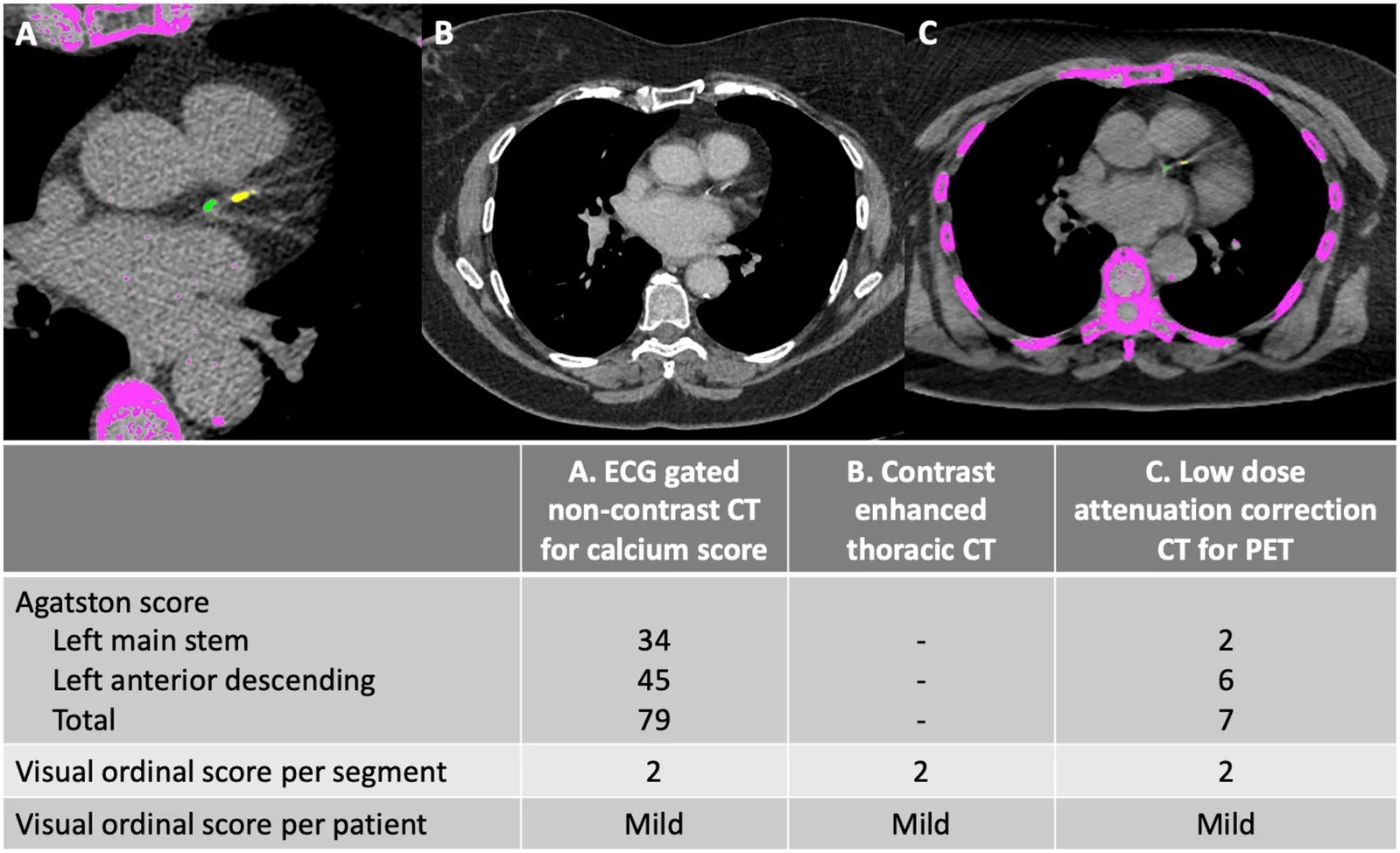
Incidental calcium on nongated CT. Coronary calcium is visible on many chest CT scans performed for other reasons, including lung cancer screening, and visual grading or a validated automated algorithm can classify it. The 2026 guideline incorporates these findings. Incidental coronary atherosclerosis in an adult without ASCVD is considered in the decision to start or intensify LDL-lowering therapy. Moderate to severe incidental calcium makes high-intensity statin therapy reasonable, with goals of LDL-C below 70 mg/dL and non-HDL-C below 100 mg/dL. Mild incidental calcium makes moderate-intensity therapy reasonable, with goals of below 100 and 130 mg/dL. Calcium on a nongated scan is a specific finding, but its absence is not equivalent to a gated score of zero, because thicker slices, motion, and contrast lower sensitivity.
Coronary calcium to guide statin therapy and LDL-C goals
Event risk rises steadily with calcium burden at every age and in each sex and race or ethnicity group. In MESA, 10-year ASCVD event rates ranged from 1.3% to 5.6% across demographic subgroups with a score of zero and from 13.1% to 25.6% with a score above 300. Every subgroup with a score above 100 had an estimated 10-year risk above 7.5%, and each doubling of the score carried a 14% relative increase in risk after adjustment for traditional factors. In the CAC Consortium, asymptomatic patients with a score of 1,000 or more had 5.0-fold cardiovascular and 6.8-fold coronary mortality compared with those with a score of zero. Their risk was also higher than at scores of 400 to 999, with no plateau at the top of the range.
The 2026 guideline converts these gradients into treatment intensity and LDL-C goals, so calcium determines how far LDL-C is lowered as well as whether to treat.
| Gated calcium score | Recommendation (2026 ACC/AHA) | LDL-C reduction | LDL-C goal | Non-HDL-C goal |
|---|---|---|---|---|
| 0 | Deferral of LDL-lowering therapy is reasonable in intermediate- and selected borderline-risk adults who prefer it and have no higher-risk condition (Class 2a); repeat scan in 3 to 7 years | — | — | — |
| 1 to 99, below the 75th percentile | Moderate-intensity statin is reasonable (Class 2a) | 30% to 49% | Below 100 mg/dL | Below 130 mg/dL |
| 100 to 299, or 75th percentile or higher | LDL-lowering therapy recommended (Class 1), statin first line | 50% or more | Below 70 mg/dL | Below 100 mg/dL |
| 300 to 999 | LDL-lowering therapy recommended (Class 1); further lowering reasonable (Class 2a) | 50% or more | Below 70 mg/dL; below 55 mg/dL reasonable | Below 100 mg/dL; below 85 mg/dL reasonable |
| 1,000 or more | LDL-lowering therapy recommended (Class 1), with the same goals as very high-risk ASCVD | 50% or more | Below 55 mg/dL | Below 85 mg/dL |
Coronary calcium–guided LDL-lowering therapy in primary prevention under the 2026 ACC/AHA dyslipidemia guideline. Percentiles refer to the MESA reference distribution for age, sex, and race or ethnicity.
The MESA risk score integrates the calcium score with traditional factors into an absolute 10-year risk of hard coronary heart disease events (myocardial infarction, resuscitated cardiac arrest, fatal coronary disease, and revascularization with adjudicated angina). It was derived in 6,726 MESA participants aged 45 to 84 years, raised the C statistic from 0.75 to 0.80 when calcium was added, and was validated in the Heinz Nixdorf Recall and Dallas Heart studies. Because its outcome is coronary heart disease alone, its estimates are not compared with PREVENT-ASCVD thresholds.
MESA risk score (McClelland et al., J Am Coll Cardiol 2015, Table 2). Risk = 1 − S10exp(x), where x is the sum of age, sex, race or ethnicity, diabetes, smoking, total and HDL cholesterol, lipid-lowering medication, systolic pressure, antihypertensive medication, family history, and 0.2743 × ln(CAC + 1); S10 is 0.99833 with calcium and 0.99963 without. Family history in MESA was a heart attack at any age in a first-degree relative. The verdict applies the 2026 ACC/AHA calcium thresholds; percentile adjustment of scores of 1 to 99 requires the MESA reference distribution.
Deferring therapy after a coronary calcium score of zero
A gated score of zero is the most powerful negative risk marker available in primary prevention. In MESA, 44% of participants eligible for a statin under the 2013 guideline had a score of zero, and their observed ASCVD rate was 4.2 per 1,000 person-years, well below the 7.5% 10-year threshold then used for statin therapy. The low risk persists for years, a period often called the warranty of a zero score, and its length shortens with age, diabetes, smoking, and higher baseline risk.
Under the 2026 guideline, deferral of LDL-lowering therapy is reasonable in an adult at intermediate or selected borderline risk with a score of zero who prefers to avoid therapy, with a repeat scan in 3 to 7 years. Deferral does not apply in the presence of a higher-risk condition:
- familial hypercholesterolemia or LDL-C of 190 mg/dL or more;
- diabetes after age 40 years;
- current cigarette smoking;
- a strong family history of premature ASCVD.
A score of zero reflects the absence of calcified plaque, not the absence of plaque. Noncalcified plaque is more common in younger adults, in smokers, and in people with genetic dyslipidemia, and a young patient with familial hypercholesterolemia can have extensive soft plaque with a zero score. In a symptomatic patient, a zero score does not exclude obstructive disease or an acute coronary syndrome. A zero score also does not alter blood pressure, glucose, smoking, or lifestyle management, all of which reduce stroke, heart failure, and kidney disease that calcium does not predict.
Statin eligibility by risk category
The decision table below consolidates the primary prevention indications of the 2026 ACC/AHA guideline. Drug choice, dosing, nonstatin agents, and monitoring are covered on the LDL cholesterol lowering page.
| Patient group | Statin decision | Typical intensity and goal |
|---|---|---|
| LDL-C 190 mg/dL or more | Maximally tolerated statin without risk calculation; nonstatin therapy added to reach goal | High intensity; goals as for high risk or lower |
| Diabetes, 40 to 75 years | Recommended | Moderate; high when PREVENT 10% or more or multiple risk factors |
| CKD stage 3 or worse, 40 to 75 years | Recommended without calculation | Intensity by PREVENT risk and calcium |
| HIV infection, 40 to 75 years | Recommended without calculation | Intensity by PREVENT risk and calcium; drug interactions with antiretrovirals checked |
| PREVENT 10% or more | Indicated | High; LDL-C below 70 mg/dL |
| PREVENT 5% to below 10% | Recommended after discussion; calcium if uncertain | Moderate to high; LDL-C below 100 mg/dL, or by calcium category |
| PREVENT 3% to below 5% | Reasonable after discussion of risk enhancers; calcium if uncertain | Moderate; LDL-C below 100 mg/dL, or by calcium category |
| PREVENT below 3%, 30 to 59 years | Reasonable (Class 2a) if LDL-C 160 to 189 mg/dL or 30-year risk 10% or more | Moderate; LDL-C below 100 mg/dL |
| Older than 75 years | A moderate-intensity statin may be reasonable with a life expectancy of at least 2.5 years, after discussion of frailty, multimorbidity, and competing risks (Class 2b) | Moderate in most cases |
| Any category with calcium of 100 or more | Recommended | LDL-C below 70 mg/dL; below 55 mg/dL at 1,000 or more |
Statin eligibility in adults without clinical ASCVD under the 2026 ACC/AHA dyslipidemia guideline. High-intensity therapy lowers LDL-C by 50% or more and moderate-intensity therapy by 30% to 49%.
Adults older than 75 years. The trials that established primary prevention statin therapy enrolled few people older than 75, and both PREVENT and the PCE stop at 79 years. LDL-C remains associated with myocardial infarction in this age group: in a Copenhagen primary prevention cohort aged 70 to 100 years, the absolute excess of myocardial infarction associated with higher LDL-C was greatest in the oldest participants. Competing mortality, frailty, polypharmacy, and cognitive decline determine whether a benefit that accrues over years can be realized. Under the 2026 guideline, a moderate-intensity statin may be reasonable in adults older than 75 years with a life expectancy of at least 2.5 years after a clinician–patient discussion (Class 2b), and when the decision is uncertain, a calcium score of zero or 1 to 10 may justify avoiding therapy (Class 2b). Statins already started at a younger age are generally continued.
Task force recommendation. The 2022 recommendation of the US Preventive Services Task Force (USPSTF), used for preventive-service coverage, still rests on the PCE. It recommends a statin for adults aged 40 to 75 years with at least one risk factor (dyslipidemia, diabetes, hypertension, or smoking) and a 10-year risk of 10% or more (grade B). It recommends selective use at 7.5% to below 10% (grade C) and finds insufficient evidence at 76 years or older.
Statin adverse effects in the risk discussion. Muscle symptoms are the most common reason for discontinuation, but blinded n-of-1 trials, including StatinWISE, found muscle symptoms as frequent on placebo as on statin, so most attributed symptoms are not pharmacologic. True myopathy with creatine kinase elevation is rare. Statins slightly increase the incidence of diabetes, mainly in people with prediabetes, an effect outweighed by cardiovascular benefit at intermediate and high risk. Hemorrhagic stroke, cognitive impairment, and cancer have not been increased in randomized trials.
Aspirin for primary prevention
Aspirin reduces nonfatal ischemic events by about one-tenth in primary prevention, and it increases major gastrointestinal and intracranial bleeding by a similar or greater absolute amount. Three trials published in 2018 defined the current position.
| Trial | Population | Efficacy | Bleeding |
|---|---|---|---|
| ARRIVE (aspirin 100 mg) | 12,546 adults at moderate estimated risk, without diabetes; median 60 months | Primary endpoint 4.29% versus 4.48% (HR 0.96, NS) | Gastrointestinal bleeding 0.97% versus 0.46% (HR 2.11) |
| ASCEND (aspirin 100 mg) | 15,480 adults with diabetes and no CVD; mean 7.4 years | Serious vascular events 8.5% versus 9.6% (rate ratio 0.88) | Major bleeding 4.1% versus 3.2% (rate ratio 1.29) |
| ASPREE (aspirin 100 mg) | 19,114 adults aged 70 years or older (65 or older in US Black and Hispanic participants); median 4.7 years | CVD 10.7 versus 11.3 per 1,000 person-years (HR 0.95, NS) | Major hemorrhage 8.6 versus 6.2 per 1,000 person-years (HR 1.38) |
Randomized trials of aspirin for primary prevention, aspirin versus placebo. HR, hazard ratio; NS, not significant.
The 2019 ACC/AHA primary prevention guideline states that low-dose aspirin (75 to 100 mg) might be considered for selected adults aged 40 to 70 years at higher ASCVD risk who are not at increased bleeding risk (Class 2b). Aspirin should not be administered routinely for primary prevention in adults older than 70 years or at any age in adults at increased bleeding risk (both Class 3: Harm). Increased bleeding risk includes prior gastrointestinal bleeding or peptic ulcer disease, thrombocytopenia, coagulopathy, CKD, and concurrent nonsteroidal anti-inflammatory drugs, corticosteroids, or anticoagulants. The 2022 USPSTF recommendation is concordant: an individual decision in adults aged 40 to 59 years with a 10-year CVD risk of 10% or more (grade C) and no initiation at 60 years or older (grade D). Neither recommendation applies to adults with established ASCVD, in whom aspirin remains standard therapy.
A high coronary calcium score raises the expected absolute ischemic benefit of aspirin, but no randomized trial has tested calcium-guided aspirin, and no US guideline recommends it.
Blood pressure, tobacco, diet, and physical activity in primary prevention
Blood pressure is managed by the 2025 AHA/ACC guideline, which treats stage 1 hypertension with drugs when 10-year PREVENT total CVD risk is 7.5% or more or when clinical CVD, diabetes, or CKD is present (hypertension). Every adult is asked about tobacco use at every visit, and those who use tobacco are advised to quit and offered combined behavioral support and pharmacotherapy (Class 1 in the 2019 guideline). Smoking cessation removes much of the excess coronary risk within a few years and is the largest single change available to a smoker.
The 2019 guideline recommends a diet emphasizing vegetables, fruits, legumes, nuts, whole grains, and fish, with replacement of saturated fat by unsaturated fat and limitation of sodium, processed meats, refined carbohydrates, and sweetened beverages. It recommends at least 150 minutes per week of moderate-intensity or 75 minutes of vigorous-intensity aerobic activity, reduction of sedentary time, and weight loss in adults with overweight or obesity. In adults with type 2 diabetes and additional risk factors who need further glucose lowering after lifestyle change and metformin, the guideline states that a sodium-glucose cotransporter 2 inhibitor or a glucagon-like peptide-1 receptor agonist with cardiovascular benefit may be reasonable (Class 2b).
Life's Essential 8 and cardiovascular health metrics
Life's Essential 8, the AHA construct of cardiovascular health published in 2022, scores eight components from 0 to 100 points. The composite score is the unweighted average: 80 to 100 is high, 50 to 79 moderate, and 0 to 49 low cardiovascular health. It replaced Life's Simple 7, added sleep, scored each component on a continuous scale, counted e-cigarette use and secondhand smoke, and replaced total cholesterol with non-HDL cholesterol. The score describes cardiovascular health and does not replace PREVENT in treatment decisions, but it gives patients a defined set of targets.
| Component | Measure | 100 points | 0 points |
|---|---|---|---|
| Diet | DASH-style pattern (MEPA score in individuals) | 95th percentile or higher (MEPA 15 to 16) | Below 25th percentile (MEPA 0 to 3) |
| Physical activity | Minutes of moderate or greater activity per week (vigorous counts double) | 150 or more | None |
| Nicotine exposure | Combustible tobacco or inhaled nicotine delivery systems | Never smoker | Current smoker; 20 points subtracted for an indoor smoker at home |
| Sleep health | Average hours per night | 7 to below 9 | Below 4 |
| Body mass index | kg/m² | Below 25 | 40 or more |
| Blood lipids | Non-HDL cholesterol | Below 130 mg/dL | 220 mg/dL or more; 20 points subtracted if treated |
| Blood glucose | Fasting glucose or HbA1c | No diabetes, glucose below 100 mg/dL or HbA1c below 5.7% | Diabetes with HbA1c 10% or more |
| Blood pressure | Systolic and diastolic pressure | Below 120/80 mm Hg | Systolic 160 mm Hg or more or diastolic 100 mm Hg or more; 20 points subtracted if treated |
Adult scoring of Life's Essential 8 (Lloyd-Jones et al., Circulation 2022). Intermediate levels are scored in steps; for example, blood pressure 120 to 129/below 80 mm Hg scores 75 and stage 1 hypertension scores 50. DASH, Dietary Approaches to Stop Hypertension; MEPA, Mediterranean Eating Pattern for Americans.
Life's Essential 8 scores and risk equations describe the same biology. A person with a high Life's Essential 8 score usually has low 10-year and 30-year PREVENT estimates, and an improvement in the score lowers the estimate through blood pressure, lipids, glucose, smoking, and weight. Diet, activity, and sleep, which do not enter PREVENT, are the components the score adds.
Risk assessment in women, South Asian adults, and other populations
Women. Cardiovascular disease is the leading cause of death in women, yet women are less often offered risk assessment, statins, and intensification. PREVENT models women separately and estimates heart failure, which carries a larger share of cardiovascular risk in older women. Sex-specific factors absent from every equation enter as risk enhancers. Preeclampsia, gestational hypertension, gestational diabetes, preterm delivery, and placental abruption are associated with later hypertension, diabetes, coronary disease, and heart failure. The AHA recommends that the pregnancy history be recorded and used in risk assessment. Premature or early menopause, polycystic ovary syndrome, and autoimmune disease, which is more common in women, also raise risk. Calcium is less prevalent in women at a given age, so a positive score in a younger woman lies at a higher percentile.
South Asian and Filipino adults. South Asian adults in the United States have higher ASCVD rates than most other groups at the same levels of conventional risk factors, with earlier onset, more diabetes and insulin resistance at lower BMI, and higher Lp(a) and triglyceride levels. Neither PREVENT nor the PCE contains an ancestry term, so the 2026 guideline lists South Asian and Filipino ancestry as risk enhancers. Lower BMI and waist circumference cut points identify adiposity-related risk in Asian adults.
Black, Hispanic, and East Asian adults. The PCE overestimated risk most in Black adults and assigned Hispanic and Asian adults to the White equations. PREVENT removed race and was well calibrated across Asian, Black, Hispanic, and White adults in Kaiser Permanente Southern California, where Hispanic adults made up a third of the cohort. In MESA, PREVENT was most accurate in Black participants. Chinese American participants in MESA had lower coronary risk than White participants with the same factors, which the MESA calcium score represents with a negative race coefficient.
Social determinants of health. Neighborhood deprivation, income, education, food and housing insecurity, and access to care predict cardiovascular events independently of measured factors. The full PREVENT model includes a zip-code–based social deprivation index, and the 2019 guideline directs clinicians to assess social determinants that affect the feasibility of treatment.
Chronic inflammatory disease. Rheumatoid arthritis, systemic lupus erythematosus, psoriasis, and inflammatory bowel disease raise ASCVD risk roughly in proportion to disease activity, and none enters PREVENT.
Cancer survivors. Mediastinal radiation, anthracyclines, androgen-deprivation therapy, and some targeted agents increase cardiovascular risk, and treatment-related weight gain, hypertension, and dyslipidemia add to it. Lipid-lowering therapy is continued during cancer treatment unless contraindicated.
Pregnancy. Most lipid-lowering drugs are deferred during conception, pregnancy, and lactation; risk assessment resumes after delivery and uses the pregnancy history.
European, UK, and Canadian risk systems
The 2021 ESC prevention guideline estimates 10-year fatal and nonfatal cardiovascular events with SCORE2 (ages 40 to 69 years) and SCORE2-OP (70 years or older), recalibrated for low-, moderate-, high-, and very high-risk regions. Thresholds rise with age: below 50 years, risk below 2.5% is low to moderate, 2.5% to below 7.5% high, and 7.5% or more very high; from 50 to 69 years the corresponding cut points are 5% and 10%; at 70 years or older they are 7.5% and 15%. The ESC applies a stepwise approach in which treatment intensifies with risk category, and its LDL-C goals (below 55 mg/dL at very high risk and below 70 mg/dL at high risk) are similar to the 2026 US goals. In the United Kingdom, NICE uses QRISK3 and offers a statin at a 10-year risk of 10% or more.
The 2021 Canadian Cardiovascular Society dyslipidemia guideline uses the modified Framingham Risk Score, doubled for premature family history, or the Cardiovascular Life Expectancy Model. Statin therapy is recommended at a Framingham risk of 20% or more and at 10% to 19.9% when LDL-C is 3.5 mmol/L or more or other lipid or risk-factor criteria are met. Canadian guidance recommends Lp(a) measurement once in adulthood and treats a level of 50 mg/dL (100 nmol/L) or more as a risk modifier.
Sources of error in cardiovascular risk estimation
- A risk equation applied to a person with clinical ASCVD, an LDL-C of 190 mg/dL or more, or familial hypercholesterolemia: the estimate is invalid and understates the treatment indication.
- A PREVENT estimate compared with a PCE threshold: PREVENT gives about half the PCE estimate, and the 7.5% PCE statin threshold applied to PREVENT withholds therapy from most intermediate-risk adults.
- Total CVD and ASCVD outputs interchanged: the hypertension threshold (7.5%) applies to total CVD, and the dyslipidemia categories apply to ASCVD.
- Inputs measured on treatment and entered as untreated: blood pressure and cholesterol on therapy lower the estimate unless the treatment fields are completed, and an estimate on a statin describes treated risk.
- A single elevated blood pressure reading or a nonrepresentative lipid panel: risk factors are averaged over repeated measurements, and blood pressure is confirmed outside the office.
- A calcium score of zero used to defer therapy in a smoker, a person with diabetes over 40, a strong family history of premature ASCVD, or familial hypercholesterolemia.
- A calcium score ordered in a symptomatic patient or used to exclude obstructive disease.
- Absence of calcium on a nongated or contrast-enhanced chest CT treated as a score of zero.
- Lp(a) in mg/dL converted to nmol/L with a fixed factor, or Lp(a) repeated to monitor lifestyle change.
- Aspirin started for primary prevention in an adult older than 70 years or with increased bleeding risk.
Self-assessment
A 52-year-old woman who does not smoke and has no diabetes has an untreated LDL-C of 150 mg/dL, an eGFR of 88 mL/min/1.73 m², and a 10-year PREVENT-ASCVD risk of 4.1%. She had preeclampsia in both of her pregnancies. A gated coronary calcium scan shows an Agatston score of 140, below the 75th percentile for her age, sex, and race. Under the 2026 ACC/AHA dyslipidemia guideline, what is her PREVENT risk category, how does the calcium score change management, and what LDL-C and non-HDL-C goals apply?
Cardiovascular Medicine Board ReviewReferences
- Blumenthal RS, Morris PB, Gaudino M, et al. 2026 ACC/AHA/AACVPR/ABC/ACPM/ADA/AGS/APhA/ASPC/NLA/PCNA guideline on the management of dyslipidemia: a report of the American College of Cardiology/American Heart Association Joint Committee on Clinical Practice Guidelines. J Am Coll Cardiol. 2026;87:2624–2757. doi:10.1016/j.jacc.2025.11.016
- Arnett DK, Blumenthal RS, Albert MA, et al. 2019 ACC/AHA guideline on the primary prevention of cardiovascular disease: a report of the American College of Cardiology/American Heart Association Task Force on Clinical Practice Guidelines. Circulation. 2019;140:e596–e646. doi:10.1161/CIR.0000000000000678
- Khan SS, Matsushita K, Sang Y, et al. Development and validation of the American Heart Association's PREVENT equations. Circulation. 2024;149:430–449. doi:10.1161/CIRCULATIONAHA.123.067626
- Goff DC Jr, Lloyd-Jones DM, Bennett G, et al. 2013 ACC/AHA guideline on the assessment of cardiovascular risk: a report of the American College of Cardiology/American Heart Association Task Force on Practice Guidelines. Circulation. 2014;129(25 Suppl 2):S49–S73. doi:10.1161/01.cir.0000437741.48606.98
- Grundy SM, Stone NJ, Bailey AL, et al. 2018 AHA/ACC/AACVPR/AAPA/ABC/ACPM/ADA/AGS/APhA/ASPC/NLA/PCNA guideline on the management of blood cholesterol. Circulation. 2019;139:e1082–e1143. doi:10.1161/CIR.0000000000000625
- Jones DW, Ferdinand KC, Taler SJ, et al. 2025 AHA/ACC/AANP/AAPA/ABC/ACCP/ACPM/AGS/AMA/ASPC/NMA/PCNA/SGIM guideline for the prevention, detection, evaluation, and management of high blood pressure in adults. Circulation. 2025;152:e114–e218. doi:10.1161/CIR.0000000000001356
- Lloyd-Jones DM, Braun LT, Ndumele CE, et al. Use of risk assessment tools to guide decision-making in the primary prevention of atherosclerotic cardiovascular disease: a special report from the American Heart Association and American College of Cardiology. Circulation. 2019;139:e1162–e1177. doi:10.1161/CIR.0000000000000638
- DeFilippis AP, Young R, Carrubba CJ, et al. An analysis of calibration and discrimination among multiple cardiovascular risk scores in a modern multiethnic cohort. Ann Intern Med. 2015;162:266–275. doi:10.7326/M14-1281
- Yadlowsky S, Hayward RA, Sussman JB, et al. Clinical implications of revised pooled cohort equations for estimating atherosclerotic cardiovascular disease risk. Ann Intern Med. 2018;169:20–29. doi:10.7326/M17-3011
- Anderson TS, Wilson LM, Sussman JB. Atherosclerotic cardiovascular disease risk estimates using the Predicting Risk of Cardiovascular Disease Events equations. JAMA Intern Med. 2024;184:963–970. doi:10.1001/jamainternmed.2024.1302
- Diao JA, Shi I, Murthy VL, et al. Projected changes in statin and antihypertensive therapy eligibility with the AHA PREVENT cardiovascular risk equations. JAMA. 2024;332:989–1000. doi:10.1001/jama.2024.12537
- Zhou H, Zhang Y, Zhou MM, et al. Evaluation and comparison of the PREVENT and pooled cohort equations for 10-year atherosclerotic cardiovascular risk prediction. J Am Heart Assoc. 2025;14:e039454. doi:10.1161/JAHA.124.039454
- Murphy BS, Hershey MS, Huang S, et al. PREVENT risk score vs the Pooled Cohort Equations in MESA. JACC Adv. 2025;4:101825. doi:10.1016/j.jacadv.2025.101825
- Lloyd-Jones DM, Leip EP, Larson MG, et al. Prediction of lifetime risk for cardiovascular disease by risk factor burden at 50 years of age. Circulation. 2006;113:791–798. doi:10.1161/CIRCULATIONAHA.105.548206
- Cholesterol Treatment Trialists' (CTT) Collaborators. The effects of lowering LDL cholesterol with statin therapy in people at low risk of vascular disease: meta-analysis of individual data from 27 randomised trials. Lancet. 2012;380:581–590. doi:10.1016/S0140-6736(12)60367-5
- Kronenberg F, Mora S, Stroes ESG, et al. Lipoprotein(a) in atherosclerotic cardiovascular disease and aortic stenosis: a European Atherosclerosis Society consensus statement. Eur Heart J. 2022;43:3925–3946. doi:10.1093/eurheartj/ehac361
- Ridker PM, Danielson E, Fonseca FAH, et al. Rosuvastatin to prevent vascular events in men and women with elevated C-reactive protein. N Engl J Med. 2008;359:2195–2207. doi:10.1056/NEJMoa0807646
- Blaha MJ, Budoff MJ, DeFilippis AP, et al. Associations between C-reactive protein, coronary artery calcium, and cardiovascular events: implications for the JUPITER population from MESA, a population-based cohort study. Lancet. 2011;378:684–692. doi:10.1016/S0140-6736(11)60784-8
- Grinspoon SK, Fitch KV, Zanni MV, et al. Pitavastatin to prevent cardiovascular disease in HIV infection. N Engl J Med. 2023;389:687–699. doi:10.1056/NEJMoa2304146
- Parikh NI, Gonzalez JM, Anderson CAM, et al. Adverse pregnancy outcomes and cardiovascular disease risk: unique opportunities for cardiovascular disease prevention in women: a scientific statement from the American Heart Association. Circulation. 2021;143:e902–e916. doi:10.1161/CIR.0000000000000961
- Volgman AS, Palaniappan LS, Aggarwal NT, et al. Atherosclerotic cardiovascular disease in South Asians in the United States: epidemiology, risk factors, and treatments: a scientific statement from the American Heart Association. Circulation. 2018;138:e1–e34. doi:10.1161/CIR.0000000000000580
- Ndumele CE, Rangaswami J, Chow SL, et al. Cardiovascular-kidney-metabolic health: a presidential advisory from the American Heart Association. Circulation. 2023;148:1606–1635. doi:10.1161/CIR.0000000000001184
- Agatston AS, Janowitz WR, Hildner FJ, et al. Quantification of coronary artery calcium using ultrafast computed tomography. J Am Coll Cardiol. 1990;15:827–832. doi:10.1016/0735-1097(90)90282-T
- Hecht HS, Blaha MJ, Kazerooni EA, et al. CAC-DRS: Coronary Artery Calcium Data and Reporting System. An expert consensus document of the Society of Cardiovascular Computed Tomography (SCCT). J Cardiovasc Comput Tomogr. 2018;12:185–191. doi:10.1016/j.jcct.2018.03.008
- McClelland RL, Chung H, Detrano R, et al. Distribution of coronary artery calcium by race, gender, and age: results from the Multi-Ethnic Study of Atherosclerosis (MESA). Circulation. 2006;113:30–37. doi:10.1161/CIRCULATIONAHA.105.580696
- McClelland RL, Jorgensen NW, Budoff M, et al. 10-year coronary heart disease risk prediction using coronary artery calcium and traditional risk factors: derivation in the MESA (Multi-Ethnic Study of Atherosclerosis) with validation in the HNR (Heinz Nixdorf Recall) Study and the DHS (Dallas Heart Study). J Am Coll Cardiol. 2015;66:1643–1653. doi:10.1016/j.jacc.2015.08.035
- Budoff MJ, Young R, Burke G, et al. Ten-year association of coronary artery calcium with atherosclerotic cardiovascular disease (ASCVD) events: the Multi-Ethnic Study of Atherosclerosis (MESA). Eur Heart J. 2018;39:2401–2408. doi:10.1093/eurheartj/ehy217
- Nasir K, Bittencourt MS, Blaha MJ, et al. Implications of coronary artery calcium testing among statin candidates according to American College of Cardiology/American Heart Association cholesterol management guidelines: MESA (Multi-Ethnic Study of Atherosclerosis). J Am Coll Cardiol. 2015;66:1657–1668. doi:10.1016/j.jacc.2015.07.066
- Peng AW, Mirbolouk M, Orimoloye OA, et al. Long-term all-cause and cause-specific mortality in asymptomatic patients with CAC ≥1,000: results from the CAC Consortium. JACC Cardiovasc Imaging. 2020;13:83–93. doi:10.1016/j.jcmg.2019.02.005
- Yeboah J, McClelland RL, Polonsky TS, et al. Comparison of novel risk markers for improvement in cardiovascular risk assessment in intermediate-risk individuals. JAMA. 2012;308:788–795. doi:10.1001/jama.2012.9624
- Gaziano JM, Brotons C, Coppolecchia R, et al. Use of aspirin to reduce risk of initial vascular events in patients at moderate risk of cardiovascular disease (ARRIVE): a randomised, double-blind, placebo-controlled trial. Lancet. 2018;392:1036–1046. doi:10.1016/S0140-6736(18)31924-X
- ASCEND Study Collaborative Group; Bowman L, Mafham M, Wallendszus K, et al. Effects of aspirin for primary prevention in persons with diabetes mellitus. N Engl J Med. 2018;379:1529–1539. doi:10.1056/NEJMoa1804988
- McNeil JJ, Wolfe R, Woods RL, et al. Effect of aspirin on cardiovascular events and bleeding in the healthy elderly. N Engl J Med. 2018;379:1509–1518. doi:10.1056/NEJMoa1805819
- US Preventive Services Task Force; Davidson KW, Barry MJ, et al. Aspirin use to prevent cardiovascular disease: US Preventive Services Task Force recommendation statement. JAMA. 2022;327:1577–1584. doi:10.1001/jama.2022.4983
- US Preventive Services Task Force; Mangione CM, Barry MJ, et al. Statin use for the primary prevention of cardiovascular disease in adults: US Preventive Services Task Force recommendation statement. JAMA. 2022;328:746–753. doi:10.1001/jama.2022.13044
- Lloyd-Jones DM, Allen NB, Anderson CAM, et al. Life's Essential 8: updating and enhancing the American Heart Association's construct of cardiovascular health: a presidential advisory from the American Heart Association. Circulation. 2022;146:e18–e43. doi:10.1161/CIR.0000000000001078
- SCORE2 working group and ESC Cardiovascular risk collaboration. SCORE2 risk prediction algorithms: new models to estimate 10-year risk of cardiovascular disease in Europe. Eur Heart J. 2021;42:2439–2454. doi:10.1093/eurheartj/ehab309
- Visseren FLJ, Mach F, Smulders YM, et al. 2021 ESC guidelines on cardiovascular disease prevention in clinical practice. Eur Heart J. 2021;42:3227–3337. doi:10.1093/eurheartj/ehab484
- Hippisley-Cox J, Coupland C, Brindle P. Development and validation of QRISK3 risk prediction algorithms to estimate future risk of cardiovascular disease: prospective cohort study. BMJ. 2017;357:j2099. doi:10.1136/bmj.j2099
- Pearson GJ, Thanassoulis G, Anderson TJ, et al. 2021 Canadian Cardiovascular Society guidelines for the management of dyslipidemia for the prevention of cardiovascular disease in adults. Can J Cardiol. 2021;37:1129–1150. doi:10.1016/j.cjca.2021.03.016
- D'Agostino RB Sr, Vasan RS, Pencina MJ, et al. General cardiovascular risk profile for use in primary care: the Framingham Heart Study. Circulation. 2008;117:743–753. doi:10.1161/CIRCULATIONAHA.107.699579
- Mortensen MB, Nordestgaard BG. Elevated LDL cholesterol and increased risk of myocardial infarction and atherosclerotic cardiovascular disease in individuals aged 70–100 years: a contemporary primary prevention cohort. Lancet. 2020;396:1644–1652. doi:10.1016/S0140-6736(20)32233-9
- Herrett E, Williamson E, Brack K, et al. Statin treatment and muscle symptoms: series of randomised, placebo controlled n-of-1 trials. BMJ. 2021;372:n135. doi:10.1136/bmj.n135
- Khan SS, Matsushita K, Sang Y, et al. Correction to: Development and validation of the American Heart Association's PREVENT equations. Circulation. 2026;154:e665. doi:10.1161/CIR.0000000000001491